
Benfica are our strongest early home pick for Europa League Matchday 2 on October 15, 2026. Juventus and Sunderland have narrower away leans, while Lyon?Crystal Palace, Salzburg?Milan and Marseille?Olympiacos look closer. These previews explain the football behind six dated predictions, using the opening European games and the subsequent domestic responses. For completed matches, use the results page; for the Portuguese debutants' background, read our Torreense profile.
Early Matchday 2 predictions for 15 October
Benfica are our clearest home lean, Juventus our preferred away winner, and Lyon–Crystal Palace our closest call. These are early Europa League Matchday 2 predictions made on 30 September 2026. The games take place on Thursday 15 October, not today, and the six scorelines below are editorial forecasts for selected fixtures rather than a claim to predict the entire round.
| Fixture | Early score pick | Main question |
|---|---|---|
| Lyon vs Crystal Palace | 1–1 | Can Palace carry their attacking threat away from home? |
| Salzburg vs Milan | 1–1 | Can Milan progress without exposing their defence? |
| Benfica vs Celtic | 2–0 | Can Celtic restrict the hosts without losing their outlet? |
| Celta vs Juventus | 1–2 | How well will Juventus's opening-round attack travel? |
| Marseille vs Olympiacos | 1–1 | Can Marseille balance a response with defensive control? |
| Torreense vs Sunderland | 1–2 | Will Sunderland manage the first away test? |
The date and pairings follow UEFA's official fixture list. The analysis combines the opening European performances with subsequent club reports, gives the venue meaningful weight, and asks how each side could create or deny chances. It does not assign numerical win probabilities: a proposed 2–0 is one plausible match story, not a calculated chance of that exact score.
There is also no return leg to factor into these selections. Under the league-phase format, each club meets eight different opponents. A team protecting a draw here is protecting one point in the overall table, rather than preserving an aggregate advantage for a second meeting. That distinction matters particularly for the away sides and for clubs already trying to recover from an opening defeat.
The individual previews explain what supports each lean and what could undermine it. Confirmed selections and developments during the intervening fortnight can change the balance; these picks should be read with that time horizon in mind.
Lyon vs Crystal Palace: the closest call
Both clubs began with a European win, but this meeting asks a harder question than either opening score answers. Lyon beat Anderlecht 2–1 away; Palace dispatched Lech Poznań 4–0 at home. The change of venue for Palace and the quality of the opposition make 1–1 our early pick, with less confidence than the Benfica selection below.
Lyon's home strength deserves weight. Ligue 1's September round-up records eight domestic home wins in calendar 2026, alongside two draws and two defeats, and notes Ernest Nuamah's brace against Rennes. That is a broader home sample than one European night. It supports treating Lyon as an opponent capable of imposing a sustained attacking spell, without turning domestic results into a guaranteed European win.
Palace's route through the first line
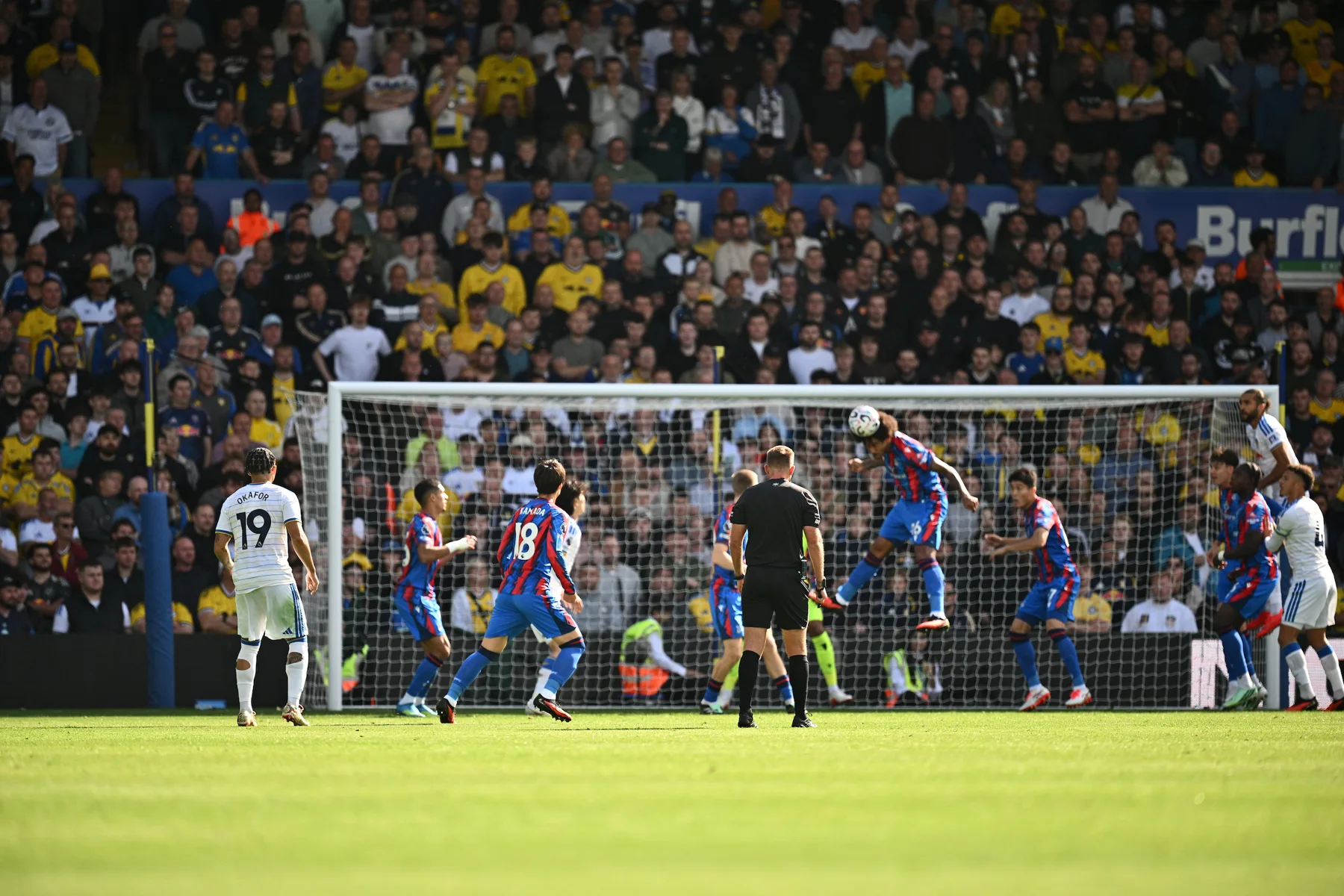
Palace have a concrete route for escaping pressure. Their 0–0 draw at Leeds on 20 September included Adam Wharton finding Jørgen Strand Larsen, who turned and released Daichi Kamada. Quinten Timber also carried forward to supply the striker. If those players are selected in Lyon, the receiving forward and supporting midfielder offer an alternative to repeatedly sending long balls towards isolated attackers.
The tactical question is what happens around the receiver. If a Lyon defender follows Strand Larsen towards midfield, a runner can attack the space behind him; if a midfielder blocks the lay-off, Palace may need to switch wide. That is our forecast of the matchup, rather than a claim that Lyon have already committed to a particular press. The balance between a striker holding the ball and a runner passing him will matter more than possession that never reaches the attacking third.
There is a second route. Palace's opener brought a Yéremy Pino interception, a Chris Richards header from Wharton's corner and a penalty won by Pino. Those goals came before Lech's late dismissal. Palace therefore demonstrated more than numerical superiority against ten men, although an error-led opener and a penalty are poor foundations for expecting another four-goal result.
Why a draw remains the early pick
The Leeds match also shows why the attacking promise needs restraint. Palace created openings without finishing them, and Walter Benítez had to deny a close-range Dominic Calvert-Lewin effort. An away clean sheet can contain vulnerable moments. Lyon's home record makes it difficult to assume those moments will remain unpunished here.
Our draw forecast allows Lyon to score during home pressure and Palace to answer through a central combination, wide attack or dead ball. It would move towards Palace if their creative links remain intact and Lyon cannot control the second pass after the striker receives. It would move towards Lyon if Palace lose both their central outlet and their ability to carry the ball away from pressure.
Salzburg vs Milan: a recovery test on the road
Milan's opening defeat supplies a warning, while their next domestic performance supplies a reason to resist an overreaction. Benfica won 2–0 at San Siro on 16 September, but Milan then beat Lecce 3–0. Our early forecast is Salzburg 1–1 Milan: an away point looks plausible, while the hosts' September results make a comfortable Milan victory difficult to justify.
In Milan's report of the Benfica defeat, the goals came through different problems. Dodi Lukébakio carried the ball across the edge of the penalty area before scoring; Jakub Kamiński finished from an El Karouani cross. Those sequences point to questions around defending a carrier and protecting the box from a wide delivery. Merely replacing an attacker would not necessarily fix either issue.
There was a meaningful response against Lecce. The club's 20 September report describes goals by Christian Pulisic, Adrien Rabiot and substitute Moreira, and an unbeaten league start with eleven points from five matches. Different scorers and a contribution from the bench give Milan more than one way to recover. That evidence is fresher than the immediate post-Benfica description of a team still seeking its first September win.
The pass that can change the game
The most useful attacking example is Pulisic's opener against Lecce: Strahinja Pavlović chipped a pass over the defence for his run. If Salzburg move players forward to squeeze Milan's build-up, a similar pass could turn the pressure around. A back-three system can invite an opponent to step towards one defender, then use the opposite runner. The timing matters: playing over the press works only if the receiver can reach the ball before the defence recovers.
There is a cost to forcing that solution. Milan cannot push every wide player forward and assume a pass will reach its target. A turnover can leave space outside the remaining defenders, the sort of area from which the penalty box becomes exposed to crosses. Our forecast therefore favours selective forward runs, with a midfielder or defender positioned to slow the counter, rather than an all-out response to the opening loss.
Salzburg's official results page lists a 1–0 win at Levski Sofia, a 3–0 home win over Sturm Graz and an earlier 5–1 home win over Rapid. Results alone do not establish a pressing system, but they do undermine the idea that Milan are visiting a side they can dismiss on reputation.
The draw lean would move towards Milan if their October selection preserves the passing quality and well-timed runs shown against Lecce while tightening defensive cover. It would move towards Salzburg if Milan's attempts to recover repeatedly leave the ball carrier unchallenged or the far side of the box open.
Benfica vs Celtic: the strongest home lean
Of these six selections, Benfica 2–0 Celtic is our clearest early home lean. That judgement rests on the opening performances and the problems Celtic must solve, rather than the names on the shirts. Benfica began by winning at Milan; Celtic lost at home to Ferencváros and then lost 1–0 to Rangers, a result confirmed by the SPFL's official results.
Benfica showed two different ways to finish in Italy: Lukébakio carried across the edge of the area, while Kamiński scored from a cross. Their published starting selection placed Aursnes and Palhinha behind three attacking midfielders in a 4-2-3-1. That past arrangement helps explain the range of threats Celtic could face, although the October team remains unconfirmed.
Celtic's difficulty is deciding when an attack needs another runner and when it needs protection. The Hungarian federation's report of their European opener describes early Celtic chances through wide attacks. It also records a goal conceded from a cross just before half-time and another from a quick counter just after it. Later attacking pressure rarely translated into saves. Those are specific incidents, rather than proof that Celtic always play the same way.
Against Benfica, moving a midfielder towards the wing could help combine past the first defender. Moving several players there at once could expose the centre if the delivery is cleared. Celtic would benefit from having an available receiver outside the crowded box, someone able to recover possession or make the next pass. That gives an attack a second phase without making every lost cross the start of a Benfica break.
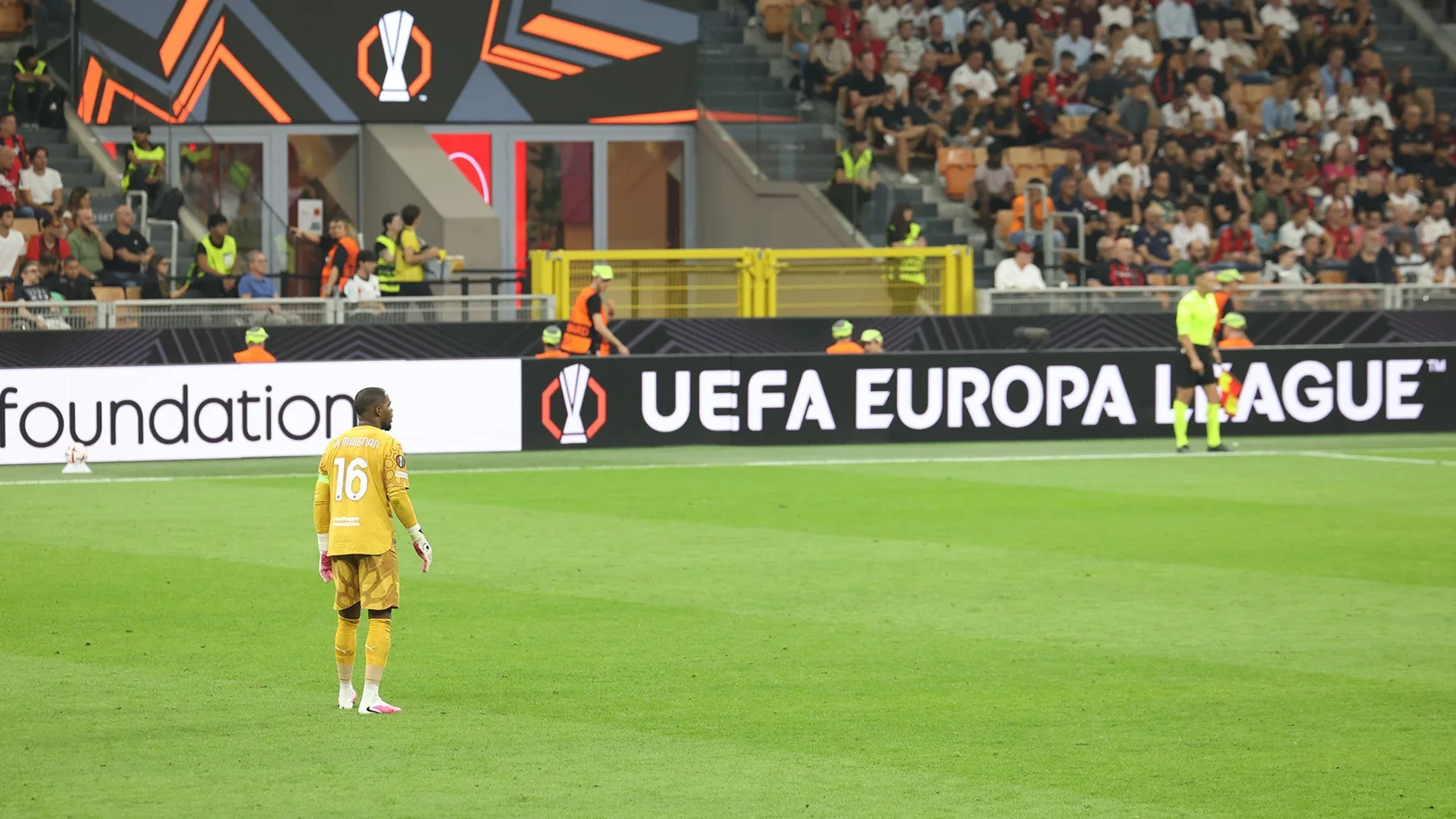
Benfica also carry a recent warning. AS reported their 3–1 defeat at Porto on 20 September, with Lenglet sent off in the first half. Benfica equalised through Bah before conceding twice more. The dismissal complicates comparisons with an eleven-against-eleven game; it does not make the defeat irrelevant.
The clean-sheet element is the least secure part of our pick. Celtic have demonstrated that they can create early chances, so Benfica cannot treat possession as defensive cover by itself. We favour the hosts if they keep support behind their attacking players and make Celtic defend both the carrier and the next receiver. A Celtic selection that retains an effective outlet, or a Benfica line-up missing that balance, would narrow the forecast.
Celta vs Juventus: the scoreline needs context
The opening results suggest a straightforward away pick: Juventus beat NEC 5–0 while Celta lost 1–0 at Omonia. The next domestic games make the comparison more interesting. Celta themselves won 5–0 at home to Racing, while Juventus beat Atalanta 2–0. Our early Celta 1–2 Juventus prediction favours the visitors' demonstrated variety in attack, with greater respect for the hosts than the first-round scores alone would justify.
Juventus's official NEC report gives the useful detail. Grabara's long pass released González for the opener; McKennie and Alajbegović combined at the edge of the box for the second. Later, Kolo Muani created Çelik's goal with a run and cross before scoring himself from another pass behind the defence. The danger came through different distances and angles.
Celta's response deserves equal attention. Racing's own account of the 19 September game describes an initially even contest before González's penalty and Moriba's strike put Celta ahead. Román scored next, then Durán twice. The result demonstrates a scoring response; it does not mean Celta can expect Juventus to provide the same opportunities or concede the same first goal.
Keeping the game compact before chasing it
The decision for Celta is where to put pressure on the ball. If a defender steps high without cover, Juventus have recently shown they can find a runner behind him. If the defence retreats while midfield leaves a gap in front, a short combination can bring an attacker towards shooting range. Keeping those two lines connected would force the visitors to make an additional pass rather than offering an obvious route straight through.
That approach still needs an attacking outlet. Celta cannot reasonably hope to defend every phase for ninety minutes and then manufacture a winner from nothing. A receiver who can hold a pass gives the nearest midfielder time to join; a second runner can then attack the space that Juventus leave while recovering. Sending both runners before possession is secure would increase the chance of another immediate defensive spell.
Juventus also have questions to answer. Their Atalanta report records goals from Çelik's low cross and Bremer's header at a corner, but also a Kolo Muani clearance from the goal line. A clean sheet can contain a dangerous moment. Celta's deliveries and second balls therefore matter even if the visitors have more possession.
The one-goal margin in our forecast reflects that tension. We lean towards Juventus finding a way through, rather than repeating five goals away from home. A Celta performance that protects depth while sustaining enough possession to move the visitors backwards would make the draw much more credible.
Two more games where the favourite can stumble
Marseille's home setting and Sunderland's opening win might attract quick picks, but both fixtures need a closer look. Olympiacos have just found two late winning goals, while Torreense have already won away in this competition. Neither opponent should be reduced to a supporting role in the preview.
Marseille vs Olympiacos: repair the defensive margin
Our early forecast is Marseille 1–1 Olympiacos. Marseille's 4–1 defeat at Beşiktaş makes a routine home-win assumption difficult. Their following 2–1 loss to Paris nevertheless contained an equaliser through Angel Gomes, assisted by Amine Gouiri. There is evidence of a route to goal even in a difficult week.
The more revealing part of PSG's official match timeline is the sequence after that equaliser. Marquinhos scored two minutes later after his initial effort was saved; the earlier goal had come from a cross to Ferran Torres. Weah's dismissal followed the winning goal, so blaming the entire result on the red card would misread the order of events.
That leaves Marseille with two tasks against Olympiacos: reduce the quality of deliveries, and remain organised after the first save or clearance. The defender closing a winger cannot also cover every runner in the box. If the nearest midfielder tracks the arriving player, a centre-back can concentrate on the striker rather than turning between two threats. After a blocked shot, the next challenge matters as much as the first.
Olympiacos's opening comeback report records González's equaliser and substitute Yaremchuk's late winner against Jagiellonia. In their next domestic away win, substitute Saliakas headed Freuler's cross home in stoppage time. Those actual bench contributions make the closing stages part of the forecast. They do not establish that Olympiacos will dominate in France.
The draw depends on Marseille repairing that defensive margin while keeping a useful connection to Gouiri and the next runner. If the hosts repeatedly allow a clean delivery followed by an unchallenged second attempt, the away-win scenario becomes stronger. A goal alone would not show that the underlying problem has been solved.
Torreense vs Sunderland: respect the home side's start
We lean towards Torreense 1–2 Sunderland, with low confidence. Lillestrøm's official match centre confirms Torreense's 2–1 opening win. They led by two goals before the hosts replied; that is a more useful starting point than judging them only by domestic league status.
PortuGOAL's report describes David Bruno's cross for Alejandro Alfaro's header and Javi Vázquez's delivery for Manu Pozo's low finish. Both sides of the pitch contributed. Sunderland therefore need to watch the receiver as well as the player crossing; concentrating every defender around the ball would leave an obvious route at the far side.
Sunderland's 1–0 win over AZ supplies an attacking case and a caution. Sky Sports' report records Le Fée hitting the post before scoring a penalty, but also important early and late Roefs saves. Sunderland created chances without turning the match into a comfortable finish.
Our away lean assumes they can bring Le Fée into threatening positions without leaving the box poorly covered after a turnover. Torreense's wide deliveries could overturn it. A patient Sunderland attack, with one runner joining the receiver while others remain ready to recover, is a more convincing route than pushing forward merely because the opposition are less familiar.
What would change these predictions before kick-off
These are early September 30 judgements about October 15 matches, so the next domestic performances deserve attention. Salzburg's official schedule, for example, includes an away game at GAK on October 10 before Milan visit. That game can provide fresher evidence about the available players and how the team responds under pressure.
The useful update is specific to the matchup. For Lyon–Palace, watch whether Palace can still connect the first pass to a receiver and the next midfield run. For Salzburg–Milan, look for both a runner beyond the defence and cover behind the ball. One spectacular finish would tell us less about that balance than several possessions in which Milan progress without exposing their own penalty area.
For Benfica–Celtic and Celta–Juventus, the attacking selection should affect the forecast. A side missing the player who makes a run or holds an outlet may have to change how it creates space. A previous squad list, such as Juventus's September 17 announcement, confirms that game's choices; it cannot confirm the October 15 starting eleven.
Marseille's handling of crosses and rebounds, and Sunderland's ability to defend Torreense's deliveries while keeping their own threat, are the other two decisive checks. The confirmed teams and fresh official club updates should take precedence over this early score table if they change those conditions.
There is also another European game soon afterwards: UEFA lists Matchday 3 on October 22. That proximity adds a selection question; it does not prove any coach will rotate. Until the newer evidence arrives, Benfica are our strongest home lean, Juventus and Sunderland our cautious away leans, and the three draws reflect matchups with meaningful arguments on both sides.

Matchnight discussion
Ask a question or share your thoughts with other fans. Comments are reviewed before they appear. Please keep it friendly and leave out personal details.
Read our privacy policy and comment guidelines.
Loading comments…