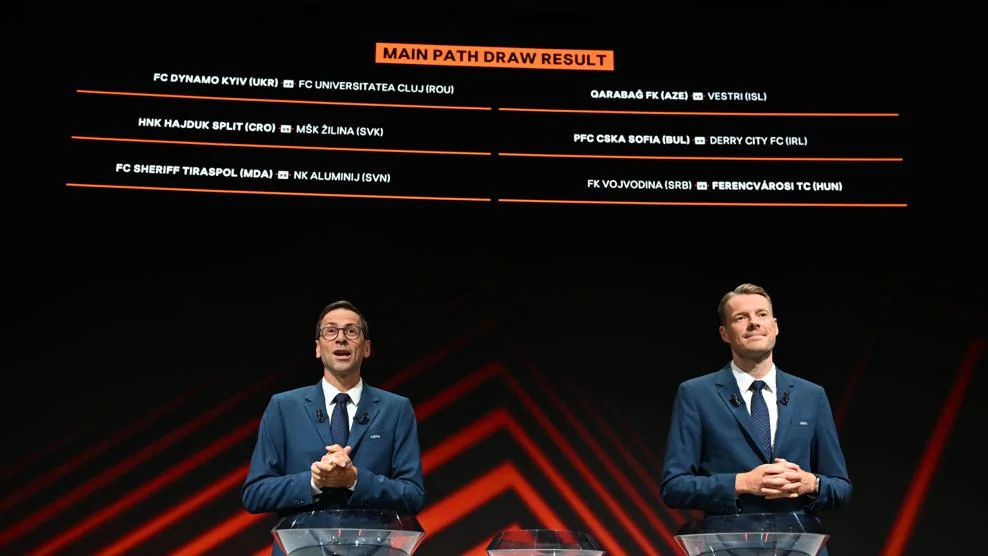
The 2026/27 Europa League qualifiers ended on 27 August with 12 play-off winners joining the league phase. The completed route involved 52 clubs, four rounds and a transfer system connecting Champions League defeats to Europa League entry and Europa League defeats to the Conference League. It was a knockout ladder, not a standings competition, so searches for a “qualifiers table” are best answered by a bracket of ties and aggregate scores.
This review gives the results first, then explains the paths and rules that produced them. It also identifies the ties that carried the strongest sporting lessons into September, without treating a dramatic summer win as proof of what a club will do against eight new opponents.
Europa League qualifying results at a glance
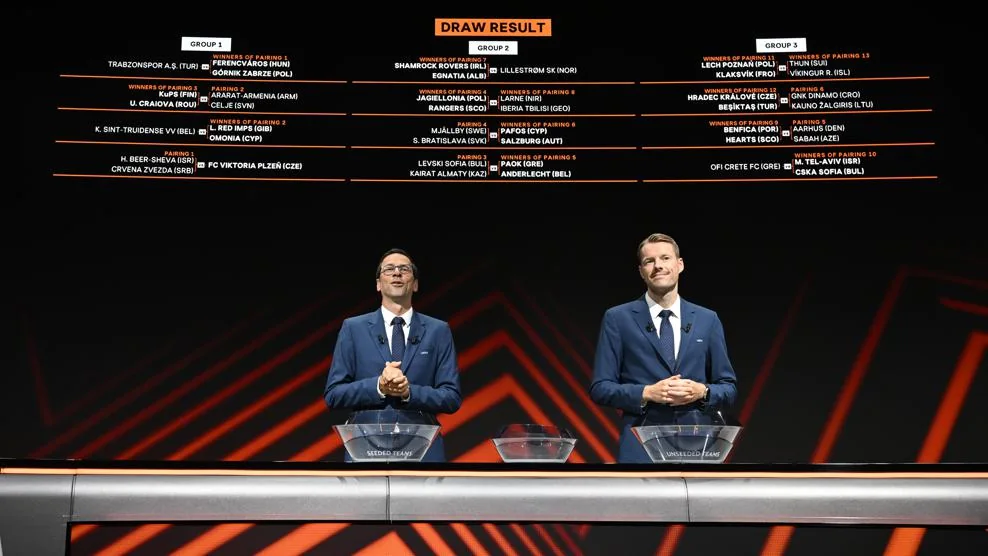
Europa League qualifying for 2026/27 is finished. Fifty-two clubs took part between 9 July and 27 August, and the play-offs produced the final 12 qualifiers: Anderlecht, Jagiellonia Białystok, Salzburg, Ferencváros, Ararat-Armenia, Lillestrøm, Beşiktaş, Lech Poznań, Omonia, Viktoria Plzeň, OFI Crete and Benfica. Those clubs joined 13 direct entrants and 11 sides transferred after Champions League qualifying to complete the 36-team league phase.
Four rounds compressed into seven summer weeks
The first qualifying round was played on 9 and 16 July, the second on 23 and 30 July, the third on 6 and 13 August, and the play-offs on 20 and 27 August. Every date represented one leg of a home-and-away tie. For clubs entering in July, the route could mean eight competitive European matches before September. For the five sides that entered at the play-off, the exposure was only two matches. “Qualified through qualifying” therefore does not describe one equal workload.
The schedule also collided with different domestic rhythms. Summer leagues supplied teams already in their competitive season; clubs from autumn-to-spring leagues were integrating new players and building fitness. That context helps explain why a supposed favourite might manage a tie cautiously rather than chase a spectacular first-leg score. The objective was survival across 180 minutes, not producing a statement every Thursday.
The play-off winners, with the decisive aggregate scores
| Qualified | Opponent | Aggregate |
|---|---|---|
| Viktoria Plzeň | Crvena Zvezda | 5–4 |
| Omonia | Sint-Truiden | 4–3 |
| Lillestrøm | Egnatia | 2–1 after extra time |
| Ararat-Armenia | Universitatea Craiova | 2–1 |
| Lech Poznań | Thun | 9–2 |
| Benfica | Aarhus | 6–2 |
Anderlecht also advanced 6–0, OFI Crete 5–0, Ferencváros 5–0 and Salzburg 4–0. Beşiktaş protected a 3–0 first-leg lead despite losing the return, while Jagiellonia won 6–1 overall. The defeated teams did not leave Europe immediately: UEFA placed them in the Conference League league phase. For the full match-by-match archive, use the site's qualifier results page.
Main path, champions path and transfers explained
The qualifying draw was not one open tournament containing all 52 clubs from the start. UEFA's access list staggered entry by association ranking and domestic qualification. It also connected the Champions League, Europa League and Conference League into a controlled transfer ladder. A team could lose one European tie and continue at a lower level, but where it landed depended on both the competition and route from which it came.
The main path carried cup winners and league qualifiers
The Europa League main path ran through the first, second and third qualifying rounds before merging into the play-offs. Domestic cup winners have a privileged place in UEFA's entry logic, while league finishers enter according to their association's access position. Vacancies can move clubs forward, so a published early-summer projection is not always the final entry list. UEFA issues a final adapted access list once domestic and European outcomes are known.
The main path also accepted certain clubs eliminated from the Champions League league path. That detail matters: a club's Europa League campaign may begin after a Champions League defeat, even though it is not in the separate Europa “champions path.” Labels describe the route through the draw, not a permanent status attached to the badge.
The champions path began at the third qualifying round
UEFA's 2026/27 competition stages show a champions path only in the Europa League third qualifying round. It was populated by domestic champions eliminated from the Champions League champions path. Those clubs were still national titleholders; the route simply acknowledged that they had lost at a higher European level. Winners moved to the Europa League play-off, while losers moved again into the Conference League play-off.
This mechanism widens representation without pretending every association has equal entry strength. It also produces unusual tactical meetings. A champion already used to carrying possession domestically may suddenly face a more expensive non-champion comfortable pressing high. The label “champions path” tells you how the tie was assembled, not which side will control the ball.
The Champions League transfer ladder had several landing points
The official Article 3 table is the cleanest way to follow movement. Champions-path losers from Champions League Q2 entered Europa League Q3; Q3 losers entered the Europa play-off; Champions League play-off losers went straight into the Europa League league phase. On the league path, Champions League Q2 losers entered Europa Q3, while Q3 and play-off losers moved directly into the Europa league phase.
That is why the final Europa field included 11 Champions League qualifying transfers even though they never contested the Europa play-off. Conversely, every Europa League play-off loser entered the Conference League league phase. There was no qualifying “table” to climb. The competition was a sequence of paired, two-leg gates, with a club's next destination predetermined by the access system.
How the two-leg rules decided ties
Every 2026/27 Europa League qualifying tie was scheduled over a home leg and an away leg. The scores were added; the team with the higher aggregate advanced. That sounds basic, yet it creates a different game from a league fixture. A 1-0 first-leg win is useful without being safe, and a team trailing 3-0 can still change the tie because the return begins with 90 minutes rather than an obligation to score immediately.
Aggregate score changes risk, not the value of a goal
The away-goals rule was not part of this competition. A goal scored in Prague, Yerevan or Lisbon counted once, wherever it was scored. When aggregate scores were level after the second leg, location did not supply a hidden tiebreak. That removes an old incentive to protect a supposed double-value away goal, although home and away conditions still affect how coaches manage the tie.
Game state becomes the tactical compass. The first-leg home team may press aggressively to build a margin, but conceding in transition still erases part of that work. In the return, the leading club can defend deeper, yet surrendering territory for 90 minutes is dangerous. The chasing team must decide when to commit full-backs and an extra midfielder without offering the counterattack that ends the contest. Aggregate football rewards patience and punishes confusion about how much time remains.
Extra time and penalties were genuine parts of the route
If the aggregate was level after normal time in the second leg, the regulations required two 15-minute periods of extra time. A team ahead after those 30 minutes qualified; if the aggregate remained level, a penalty shoot-out decided it. There was no separate advantage for the side playing the return at home, beyond the practical support and familiarity of its stadium.
Lillestrøm and Viktoria Plzeň both needed extra time in their play-off second legs. Earlier, CSKA Sofia and Qarabağ completed 210 goalless minutes across their Q2 tie before CSKA won the shoot-out 5-4. Those examples matter when reading the results page: “aet” means the second-leg score includes extra time, while the shoot-out score decides qualification but is not added to the match or aggregate goal total.
That distinction keeps statistics honest. Plzeň's 5-1 second-leg win after extra time produced a 5-4 aggregate comeback over Crvena Zvezda. A penalty victory, by contrast, would still leave the aggregate level. For a supporter reconstructing the tie, read first-leg score, second-leg score, aggregate and decider in that order. The notation is compact, but each line describes a different layer of the contest.
The ties that shaped the qualifying story
A list of 12 winners hides the radically different ways they qualified. Some controlled both legs and could manage minutes. Others reached the league phase only after a second-leg tactical and emotional swing. Those routes do not determine what happens next, but they reveal which squads have already solved specific problems under elimination pressure.
Viktoria Plzeň produced the comeback of the play-offs
Crvena Zvezda carried a 3-0 lead into the return. Plzeň responded with a 5-1 victory after extra time and advanced 5-4 on aggregate. The numbers show the scale without requiring invented detail: Plzeň had to erase three goals before finding the decisive margin in the additional half-hour. A normal league match rewards a recovery with points; this one required a recovery big enough to reverse an entire previous night.
Omonia's reversal was smaller but still severe. After losing 1-0 at Sint-Truiden, they won the second leg 4-2 and the tie 4-3. Their path earlier included one-goal aggregate wins over Lincoln Red Imps and then another narrow third-round progression. That sequence suggests familiarity with protecting and chasing fine margins, while also showing how little room they had for a flat spell.
Several qualifiers removed doubt early
Anderlecht beat Kairat 3-0 in each leg. OFI Crete followed a 3-0 home win with a 2-0 away win over CSKA Sofia. Ferencváros won 1-0 in Trabzon and then 4-0 at home, while Salzburg turned a 1-0 away advantage into a 4-0 aggregate result. Those ties allowed the leaders to treat the second leg as controlled game management rather than a chase.
Lech Poznań's 7-0 first leg against Thun made the return almost ceremonial, though the 2-2 second leg still counted toward form and coefficient records. Benfica also built a clear play-off cushion against Aarhus. Comfortable aggregate scores can protect legs and nerves, but they can also conceal the difficulty of earlier rounds. Benfica, for example, lost the first leg to St Gallen in Q2 before winning the return 5-0; they later beat Hearts 7-2 overall in Q3.
A long route can create rhythm as well as fatigue
Jagiellonia beat Rangers 3-2 in the third round and then dispatched Iberia Tbilisi 6-1 in the play-off. Ferencváros had been in the competition since Q1, while Benfica entered later. The former accumulated several competitive European weeks; the latter managed fewer total ties but faced the expectation attached to a larger club.
That distinction is useful before the league phase. Qualifying survivors have already rehearsed away-leg restraint, second-leg adjustments and the pressure of one decisive mistake. The cost is physical: travel and extra fixtures arrive before the main calendar begins. There is no universal advantage. Coaches must preserve the behaviours that carried qualification while refreshing players whose season started in early July.
What qualification changes for the 12 winners
Qualifying ended one competition and began another with a different logic. Through August, each club had one opponent, an aggregate score and a clear survival condition. From 16 September, the 12 winners join 24 other teams in one league table. They play eight different opponents, four at home and four away. There is no aggregate score linking those matches and no safety transfer into the Conference League after elimination.
The tactical shift is substantial. In a second leg, protecting a two-goal lead can justify conceding possession and reducing risk. In the league phase, every win is worth three points and goal difference is the first final tiebreak after points. A team leading 2-0 may still benefit from attacking for a third, provided it manages counterattacks. A draw away to a Pot 1 club can be valuable, but its worth is only understood when all 36 teams' results are compared.
The table has two important cuts. The top eight qualify directly for the round of 16. Positions nine to 24 enter a two-leg knockout play-off in February. Positions 25 to 36 are eliminated. The middle band is therefore survival with a cost: two additional matches and a harder route. A qualifier that spent eight summer games reaching the league phase has a powerful incentive to avoid adding another round, even if a top-eight finish demands consistency against a broad opponent set.
Supporters should also reset how they evaluate a narrow defeat. In qualifying, losing one leg could still be repaired in the return against the same opponent. In the league phase, the lost points are final, although goal difference and subsequent fixtures offer a different route to recovery. There is no immediate rematch to settle a tactical argument. Coaches must take lessons from one style and apply them to a completely different team days or weeks later.
The completed qualifier results remain useful because they show pressure experience, not because they forecast the table. Plzeň proved it could rescue an apparently lost tie; Anderlecht and OFI showed they could control large aggregate leads; Ararat-Armenia handled a one-goal margin. Those are capabilities, not guarantees. Squad depth, opponent quality and the sequence from September through January will test them in new ways.
Use the Europa League results to follow what happens next and the league-phase table to see the consequences. The qualifier archive explains how these 12 arrived. From here, they are judged on the same points scale as Milan, Juventus, Leverkusen and every direct entrant.
The summer route is now an archive, but it remains the best evidence of how these clubs respond to aggregate pressure. The league phase asks a different question: who can turn that resilience into points while rotating through domestic and European weeks?
Matchnight discussion
Ask a question or share your thoughts with other fans. Comments are reviewed before they appear. Please keep it friendly and leave out personal details.
Read our privacy policy and comment guidelines.
Loading comments…