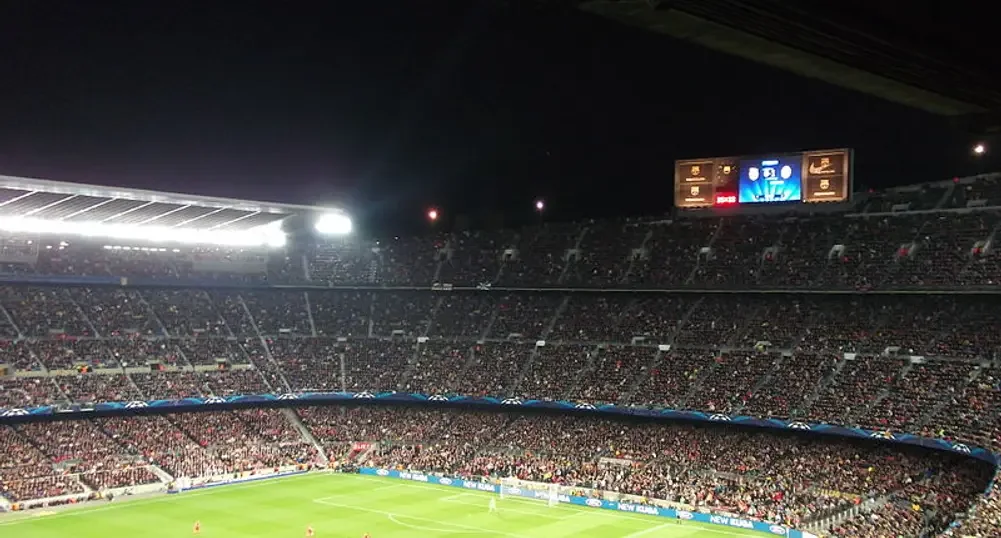
Conference League qualifying ended on 27 August 2026. This guide puts the finished results into one usable story: the four-round calendar, the champions and main paths, the play-off ties decided after extra time or penalties, and every club in the 36-team league phase.
Status on 7 September 2026
Qualifying is complete and the league-phase draw has been made. The 2026/27 season ends with the final in Istanbul on 2 June 2027.
For supporters, the useful distinction is between a match result and a tie result. The score from one evening may show who played better at home; the aggregate shows who advanced. This review therefore keeps first and second legs together and states when extra time or a shoot-out supplied the decision.
The route matters too. Some clubs entered through domestic league or cup positions, some were champions redirected from a higher competition, and others arrived after a Europa League defeat. They did not all play the same number of rounds. By following the official access points and completed results, we can compare those journeys without pretending that every qualifier started from the same place.
The 2026/27 qualifying calendar at a glance
The 2026/27 Conference League qualifiers are finished. They began on 7 July and closed on 27 August, a seven-week sprint in which clubs could play as many as eight European matches before the league phase had even been drawn. That completed status matters when you read an older fixture list: every qualifying result is now known, and the 36-team league-phase field has been settled.
| Round | First legs | Second legs |
|---|---|---|
| First qualifying round | 7–9 July | 14–16 July |
| Second qualifying round | 21–23 July | 28–30 July |
| Third qualifying round | 4–6 August | 11–13 August |
| Play-offs | 20 August | 26–27 August |
Four rounds, one aggregate score in each tie
Every tie had a home leg and an away leg. Add the goals from both matches and you have the aggregate score. If that total was level after the second 90 minutes, the teams played extra time and, if still tied, took penalties. Away goals did not act as a tiebreaker. That simple rule is the key to reading the results: a club could lose one night and still advance by winning the other leg by a larger margin.
The gaps between rounds were short. Second-leg winners often had less than a week before their next first leg, so travel, squad depth and recovery shaped the campaign almost as much as tactical quality. For supporters, the cleanest way to follow the story is by tie rather than by isolated match. The score beside “aggregate” tells you who actually survived.
That pace also changed the meaning of a summer schedule. A club starting in round one could not treat July as a warm-up: elimination ended the campaign immediately, while victory moved it into another draw and another two-leg test. Domestic seasons started at different times across Europe, so one opponent might already have competitive rhythm while another was still building fitness. The calendar was common; the preparation behind it was not.
Why there were no direct league-phase places
Unlike the 2026/27 Europa League, the Conference League gave no club a direct ticket to its league phase. All 36 places passed through the wider qualifying system. Twenty-four clubs won Conference League play-offs; another 12 arrived after losing Europa League play-offs. That is why the phrase “came through qualifying” covers two different experiences, and why a list of Conference League play-off winners contains only two-thirds of the final field.
A club’s starting round depended mainly on its association’s position in UEFA’s club coefficient ranking and on how it entered through domestic competition. Some sides started in early July; others joined in a later round. Reaching the play-offs did not provide a fallback inside this competition: the winners advanced, while the losers’ European season ended.
The league-phase draw followed on 28 August. From that point, the calendar became a six-match league-phase programme rather than another home-and-away knockout. If you also track the competition above it, our Europa League qualifiers guide explains the parallel route, while the Europa League calendar keeps its key dates together. The Conference League season itself now runs toward the final at Beşiktaş Park in Istanbul on 2 June 2027.
How the champions path, main path and transfers worked
The hardest part of Conference League qualifying is not the scoreline; it is understanding why two clubs can reach the same round by completely different routes. UEFA kept the champions path and main path separate through the draws. The labels describe how clubs entered the European qualifying system, not two divisions with different prizes. Win the final tie in either path and the destination was the same league phase.
The champions path protected a route for domestic title winners
The champions path was the smaller branch. It was populated principally by domestic champions whose attempt to progress in a higher UEFA competition had ended. Twelve clubs or pairings were involved when this path opened in the second qualifying round. Six winners reached round three, where two more clubs entered. Four third-round winners survived into the play-offs, and six clubs defeated in the Europa League third qualifying round joined them to make ten. Five play-off winners reached the Conference League proper.
That protected route matters. A champion from a lower-ranked association can run into a stronger champion early in the Champions League structure, yet still have a defined way to earn league-phase football at another level. It is not a free place: each transfer only presents another knockout tie. Lincoln Red Imps, Inter Club d’Escaldes and their rivals still had to settle two-legged contests under pressure.
The main path was bigger and more varied
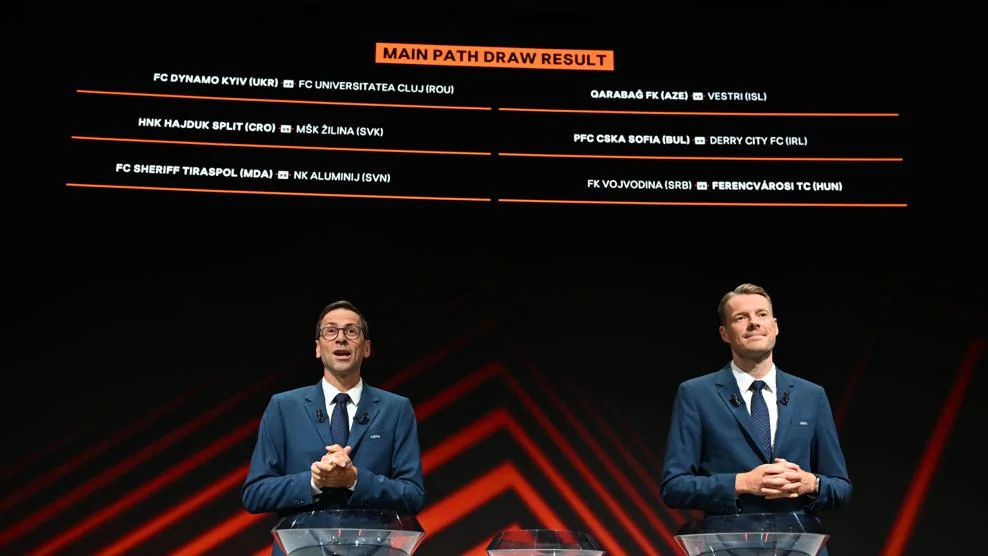
The main path began with 52 clubs in round one. At round two it expanded to 86: the 26 first-round winners met a wave of new entrants that included six clubs dropping from the Europa League first qualifying round. Round three then contained 52 sides, made up of 43 Conference League second-round winners and nine Europa League second-round losers. By the play-offs, 38 remained or entered: 26 third-round winners, five clubs beginning at that stage and seven teams transferred from the Europa League third round.
This route mixed domestic cup winners, clubs rewarded for their league position and teams redirected from the Europa League. Their precise starting point reflected UEFA’s access list and the relative ranking of their national association. A later starting point meant fewer ties, but often a stronger opponent. Seeding helped organize the draw; it never guaranteed an easy night. Getafe, for example, entered the play-off conversation as an unseeded main-path club despite representing Spain.
The quickest way to read the route
- A Conference League win moved a club to the next round in its path.
- A defeat usually ended the campaign; selected Europa League losers entered at specified Conference League rounds.
- Conference League play-off winners claimed 24 league-phase places.
- The 12 Europa League play-off losers took the other 12 league-phase places directly.
That last transfer explains an apparent mismatch in the numbers. There were 48 clubs in the Conference League play-offs, producing 24 winners, yet the league phase has 36 teams. The missing dozen did not play those Conference League play-off ties; they arrived immediately after losing at the same stage of Europa League qualifying. This was an access-list mechanism decided in advance, not a discretionary rescue after the results.
Seen as one connected ladder, the system makes more sense. A defeat can redirect a club downward during qualifying, while a win keeps it on its current route. Once the league phases start, that movement stops. UEFA’s broader aim is to keep a wide range of associations represented across its three men’s club competitions, and the Conference League is where that design is most visible.
The play-off ties that decided the league-phase field
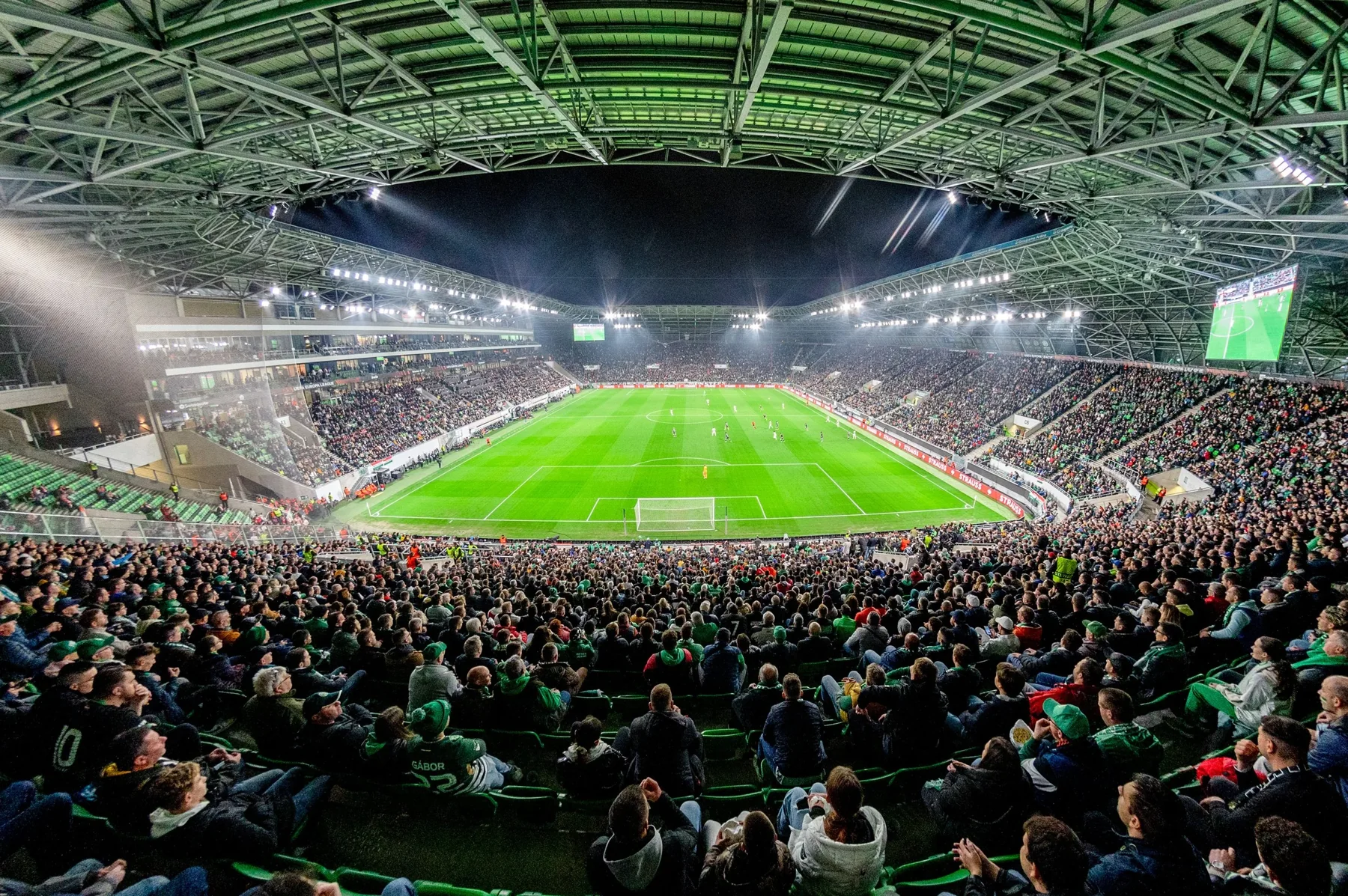
The play-offs produced three shoot-outs, a comeback from two goals down and several one-sided aggregates. They also showed why the first-leg score is only half a story. Supporters checking a result after the return match should read the second-leg score, the aggregate and any shoot-out score as three separate pieces of information.
Three shoot-outs, three different kinds of tension
Hearts and SK Rapid could not be separated over 210 minutes. The first leg ended 2-2 and the return in Vienna also finished 2-2 after extra time, leaving an extraordinary 4-4 aggregate. Hearts then won the shoot-out 4-3. It was a tie in which neither home advantage nor an additional half-hour created daylight; one converted penalty finally did.
Jablonec’s route against Rangers followed a more defensive pattern. Rangers carried a 1-0 lead from the first leg, but Jablonec matched it in the return. The Czech side’s 1-0 second-leg win after extra time made the aggregate 1-1, and Jablonec advanced 4-3 on penalties. Inter Club d’Escaldes and Drita had already shared four goals in their opener. A goalless return, even after extra time, preserved a 2-2 aggregate before Inter won the shoot-out 4-2. That result delivered the first appearance by an Andorran club in a UEFA men’s league or group stage.
Comebacks rewarded the teams that kept the tie alive
Lincoln Red Imps returned home 2-0 down to Larne and had no margin for another concession. They won the second leg 3-0 after extra time and the tie 3-2 on aggregate. Twente also reversed a first-leg defeat. After losing 1-0 away to Qarabağ, the Dutch side scored four in the return and advanced 4-2 overall. Those were not away-goals escapes; each club had to finish ahead on the combined total.
Pafos needed extra time to complete a 5-3 aggregate victory over Dinamo City. At the other end of the scale, several established sides removed most of the jeopardy with heavy scoring across the two legs. Ajax beat Sion 9-5 on aggregate, Monaco defeated Górnik 7-3 and Freiburg went through 7-2 against Motherwell. Brighton’s 4-0 aggregate win over Tromsø was more controlled but just as conclusive.
Closest possible finish
Level aggregate after extra time, followed by penalties: Hearts, Jablonec and Inter Escaldes survived this way.
Clear aggregate control
Ajax, Monaco, Freiburg and Brighton built cushions that made a shoot-out unnecessary.
For a fan scanning completed qualifiers, the aggregate is the result that answers “who went through?” The individual legs still explain how. A 0-0 can be the tense final chapter of a 2-2 tie; a 3-0 can be a comeback rather than a comfortable night built on an earlier lead. The 24 winners moved into the league phase, while the defeated clubs left this competition.
Who qualified and what the 36-team field tells us
The completed field combines clubs with deep European histories and teams for whom simply reaching this stage changes what is possible. Twenty-four won a Conference League play-off; 12 arrived after losing a Europa League play-off. Together they represent 30 national associations, giving the league phase a breadth that no glance at the biggest names can capture.
The complete 2026/27 league-phase field
Western and southern Europe
- England: Brighton
- Italy: Atalanta
- Spain: Getafe
- Germany: Freiburg
- France: Monaco
- Portugal: Braga
- Netherlands: Ajax, Twente
- Belgium: Gent, Sint-Truidense
- Switzerland: Lugano, Thun
Northern Europe
- Denmark: Aarhus, Copenhagen, Midtjylland, Nordsjælland
- Norway: Brann
- Sweden: Mjällby
- Finland: KuPS Kuopio
- Scotland: Hearts
- Latvia: Riga
- Lithuania: Kauno Žalgiris
Central, eastern and south-eastern Europe
- Czechia: Jablonec
- Greece: Panathinaikos
- Türkiye: Trabzonspor
- Croatia: Hajduk Split
- Serbia: Crvena zvezda
- Romania: Universitatea Craiova
- Bulgaria: CSKA Sofia
- Bosnia and Herzegovina: Borac
- Albania: Egnatia
- Georgia: Iberia 1999 Tbilisi
Mediterranean, Caucasus and smaller associations
- Cyprus: Pafos
- Kazakhstan: Kairat Almaty
- Gibraltar: Lincoln Red Imps
- Andorra: Inter Club d’Escaldes
Why the geography is part of the football story
Denmark has four representatives, more than any other association in this field, while the Netherlands, Belgium and Switzerland each have two. Most countries have one. That creates a league phase in which Ajax and Atalanta can share a competition with Mjällby, Egnatia and Iberia Tbilisi without erasing the domestic route that brought each club there.
Inter Club d’Escaldes carries the clearest milestone. Its penalty victory over Drita made it the first Andorran club to reach a UEFA men’s league or group stage. Lincoln Red Imps brings Gibraltar into the same field, while clubs from Finland, Kazakhstan, Latvia, Lithuania, Albania, Bosnia and Herzegovina and Georgia underline how much qualifying expands the map of meaningful European nights.
The field should still be read with one administrative caveat: UEFA’s published team list is subject to final admission and licensing confirmation. For match-going fans, qualification also starts a new planning problem. The draw determines six different opponents, three home and three away, rather than a familiar round-robin group. Dates, kickoff times and travel details should therefore be checked when UEFA and the clubs confirm each fixture.
What qualifying settled was the cast, not the hierarchy. A famous badge does not carry bonus points, and an early-round survivor begins the league phase level with a late entrant. The six-match table will now decide who reaches the knockouts. For more deep guides built around European match planning, visit the UEFA Schedule blog.
What to remember after the qualifiers
The clearest summary is numerical: four rounds ran from 7 July to 27 August; 24 Conference League play-off winners and 12 Europa League play-off losers formed the final 36; and those clubs came from 30 associations. Behind those numbers were very different journeys, from a single late entry to four rounds of two-legged jeopardy.
Use aggregate scores when reviewing a tie, and use the official fixture entry when planning a league-phase match. Kickoff details can move. The names are settled subject to UEFA’s final admission process, but the next sporting question is now straightforward: which clubs can turn a difficult summer route into a knockout place?
The qualifiers also leave a useful form guide. Clubs that survived extra time or penalties have already handled elimination pressure, while emphatic winners arrive with attacking confidence. Neither guarantees autumn success, because the league phase replaces repeat opponents with six different tests. It does, however, tell fans which teams have learned to manage travel, short recovery windows and a changing aggregate game state before September.

Matchnight discussion
Ask a question or share your thoughts with other fans. Comments are reviewed before they appear. Please keep it friendly and leave out personal details.
Read our privacy policy and comment guidelines.
Loading comments…