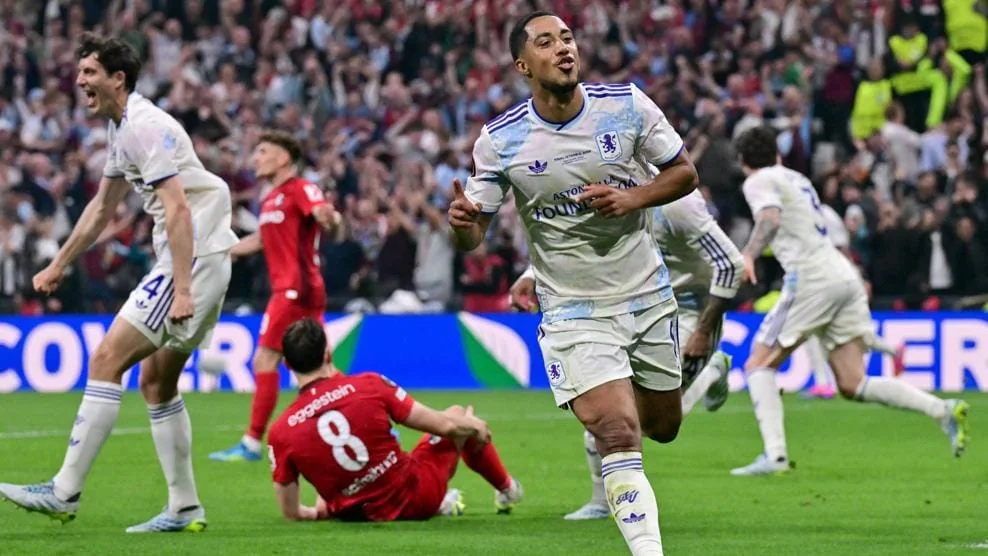
Aston Villa won the 2025/26 UEFA Europa League by beating Freiburg 3-0 in Istanbul on 20 May 2026. That clean final score was the end of a knockout stage defined by untidy, changing ties: four round-of-16 teams recovered from first-leg defeats, both finalists lost the first leg of their semi-final, and several survivors needed extra time or penalties.
This review follows the completed bracket from February?s play-offs to Villa?s trophy lift. It keeps the results visible, then asks what a score grid cannot answer: when did the game state change, how did a team respond, and why did the eventual champions look increasingly secure while the surrounding ties remained volatile?
The answer is not one formation or one statistic. The 2026 knockout stage rewarded teams that could alter their tempo without losing structure. Villa became the clearest example, but Freiburg, Braga, Forest and Bologna each demonstrated a different survival skill before the field narrowed.
How the 2026 Europa League knockout bracket began
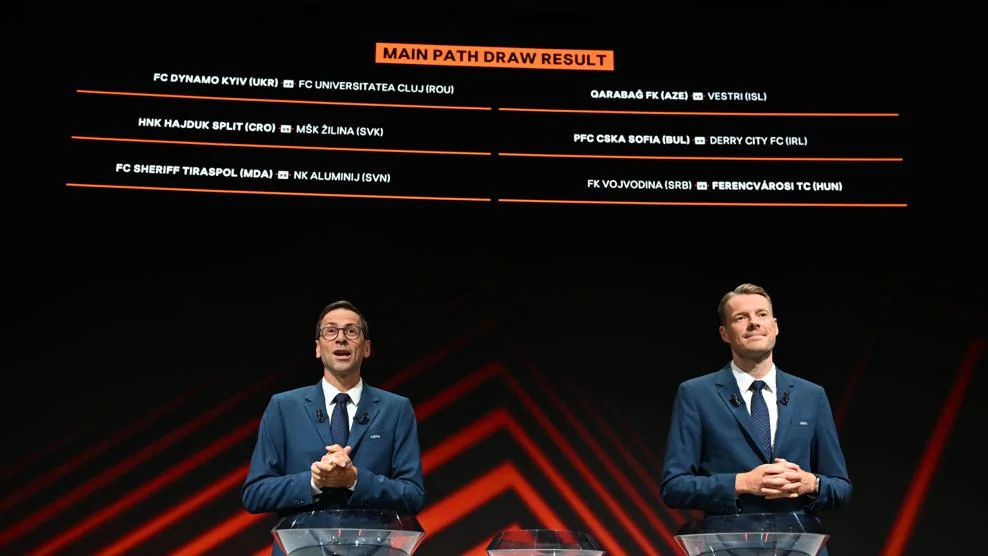
The knockout phase started with 24 clubs but not on equal terms. Lyon, Aston Villa, Midtjylland, Real Betis, Porto, Braga, Freiburg and Roma had finished in the league-phase top eight, so they skipped February’s knockout play-offs and entered directly in the round of 16. The clubs placed ninth to 24th had to survive another two-match tie on 19 and 26 February.
The top eight earned more than a convenient bye
Two fewer European matches meant two fewer nights of travel, suspension risk and recovery work. It also gave the direct qualifiers a week to observe how their two possible round-of-16 opponents handled pressure. That did not make the top eight unbeatable, but it was the practical reward for treating all eight league-phase fixtures seriously rather than viewing January qualification as enough.
The draw paired the play-off field through league positions. Clubs from ninth to 16th were seeded against the lower block from 17th to 24th, and the seeded side was scheduled, in principle, to host the second leg. UEFA allowed same-association ties and repeat meetings from the league phase. Once the play-off and round-of-16 places were drawn into the bracket, the route ahead became much less open-ended: the later quarter-final and semi-final path was already waiting.
Play-off scorecard and the first bracket warning
| Winner | Opponent | Aggregate outcome |
|---|---|---|
| Panathinaikos | Viktoria Plzeň | 3-3; 4-3 on penalties |
| Ferencváros | Ludogorets | 3-2 |
| Lille | Crvena Zvezda | 2-1 after extra time |
| Stuttgart | Celtic | 4-2 |
| Bologna | Brann | 2-0 |
| Genk | GNK Dinamo | 6-4 after extra time |
| Nottingham Forest | Fenerbahçe | 4-2 |
| Celta | PAOK | 3-1 |
The results exposed the weakness in reading one leg as the verdict. Lille lost 1-0 at home, then won 2-0 in Belgrade after extra time. Forest and Stuttgart took three-goal first-leg cushions home, lost the return and still advanced. Panathinaikos needed a shoot-out, while Genk and Dinamo packed ten aggregate goals into a tie that reached extra time. A bracket records the survivor; it hides how many different game states that survivor had to solve.
The eight winners joined the rested top eight with no reset of context. Some arrived carrying the confidence of an away rescue, others the fatigue of 120 minutes. That difference would become visible immediately in a round of 16 filled with first-leg deficits and second-leg reversals. The official UEFA result ledger is the complete score reference; the next sections explain what those numbers did to the competition.
Round of 16: the second leg changed the tournament
The last 16 was the stage at which the bracket stopped rewarding a simple first-leg reading. Braga, Freiburg, Real Betis and Nottingham Forest all lost the opening match and still reached the quarter-finals. Bologna needed extra time in Rome, while Celta eliminated league-phase winners Lyon. Only Porto and Aston Villa moved through without trailing at any point in their ties.
Four first-leg losers advanced
Braga produced the sharpest numerical reversal. Ferencváros won 2-0 in Budapest, yet Braga were already ahead on aggregate by half-time in the return and finished 4-0 winners. Freiburg’s response was just as emphatic: a 1-0 loss at Genk became a 5-2 aggregate victory after a 5-1 home leg. Matthias Ginter first levelled the tie and then helped turn the match before Freiburg’s transition goals stretched the margin.
Betis also brought a one-goal deficit home and beat Panathinaikos 4-0. Aitor Ruibal erased the deficit in eight minutes; Sofyan Amrabat’s added-time strike changed the emotional shape of the interval, and two more goals closed a 4-1 aggregate win. Forest’s escape was different. Midtjylland had beaten them twice in the competition and took a 2-2 aggregate tie through extra time in Herning. Forest then converted all three of their kicks while the Danish side scored none.
Elsewhere, Bologna and Roma turned a 1-1 first leg into seven goals in Rome. Nicolò Cambiaghi’s 111th-minute winner sent Bologna through 5-4 on aggregate. Celta won 2-0 at Lyon, where an early Moussa Niakhaté dismissal changed the hosts’ task; Porto followed a 2-1 away win at Stuttgart with a 2-0 home victory. The pattern was variety rather than one universal formula: early momentum, red cards, transition attacks and extra-time nerve all created different routes into the same last-eight line.
Villa found the cleanest route through the chaos
Aston Villa’s 3-0 aggregate win over Lille was the controlled exception. Ollie Watkins supplied the only goal in France with a looping header, giving Villa a lead without forcing them to chase the return. At Villa Park, Lille threatened from a Nabil Bentaleb free-kick, but Emiliano Martínez did more than protect his goal. UEFA’s report identifies his long distribution as the launch point for the counterattacks finished by John McGinn and Leon Bailey.
Villa were the only round-of-16 winner to win both legs and concede no goal. That is a small sample, but it matters to the developing story: while other contenders spent emotional and physical reserves repairing a damaged tie, Villa kept controlling when and where the risk appeared. Their quarter-final against Bologna would turn that control into a much larger scoreline. Fans can review every tie in UEFA’s official round-of-16 report.
Quarter-finals: Villa and Freiburg separate from the field
The quarter-finals split into two landslides and two ties that stayed alive deep into the second legs. Aston Villa beat Bologna 7-1 on aggregate and Freiburg eliminated Celta 6-1. Nottingham Forest needed a one-goal home win over Porto, while Braga travelled to Seville level with Real Betis and survived a night that seemed lost after 26 minutes.
Quarter-final scorecard
| Tie | First leg | Second leg | Aggregate |
|---|---|---|---|
| Bologna–Aston Villa | 1-3 | 0-4 | Villa 7-1 |
| Freiburg–Celta | 3-0 | 3-1 away | Freiburg 6-1 |
| Porto–Nottingham Forest | 1-1 | 0-1 | Forest 2-1 |
| Braga–Real Betis | 1-1 | 4-2 away | Braga 5-3 |
Big margins came from controlling the next event
Villa’s 3-1 win in Bologna gave them control, but their response at Villa Park prevented the tie from drifting. Ollie Watkins scored after 16 minutes from Morgan Rogers’ pass. Even after Rogers had a penalty saved, Emiliano Buendía struck a minute later and Rogers made it 3-0 before half-time. Bologna had arrived with five wins from five Europa League away matches; Villa removed that source of belief before the visitors could create a sustained chase. Ezri Konsa’s late fourth completed the largest aggregate margin of the round.
Freiburg used a similar method. Three goals at home forced Celta to attack in Vigo, then Igor Matanović’s 33rd-minute volley and two Yuito Suzuki finishes made the comeback requirement impossible. The interesting point was not only Freiburg’s six goals. It was their refusal to defend the first-leg lead as if it were enough. Scoring three more away carried them into their first Europa League semi-final with the identity of an attacking side intact.
The other ties warn against equating the final score with comfort. Betis led Braga 2-0 after 26 minutes and appeared to have taken control, but Pau Víctor’s 38th-minute reply cut the aggregate deficit before the interval. Braga then scored three times in the second half to win 5-3 overall. Forest faced ten-man Porto from the eighth minute and went ahead through Morgan Gibbs-White four minutes later, yet Porto hit the bar twice after half-time. The scorecard says 2-1; the match says Forest still had to endure uncertainty.
By the final whistle, Villa and Freiburg had delivered the two clearest statements, but Braga had shown the strongest mid-match recovery and Forest the ability to live inside a narrow margin. Those four different profiles created two semi-finals in which every eventual finalist would first have to recover from defeat.
Semi-finals: both finalists had to reverse defeat
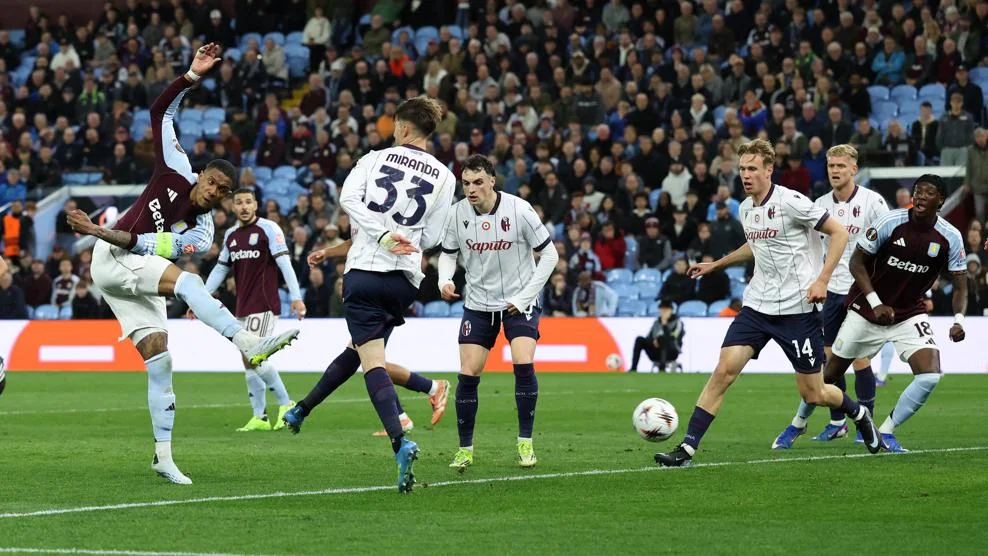
The two quarter-final heavyweights did not stroll into Istanbul. Nottingham Forest beat Aston Villa 1-0 at the City Ground, and Braga beat Freiburg 2-1 in Portugal. Thirteen days before the final, both trailing teams returned home and reversed their ties. The shared outline was simple; the football inside it was completely different.
Villa changed the tie without rushing it
Forest’s first-leg advantage came from Chris Wood’s 71st-minute penalty after a Lucas Digne handball. They had pressed with energy, protected the clean sheet and carried a manageable lead to Villa Park. Omari Hutchinson even curled the first notable return-leg chance just wide. Villa therefore needed control more than an emotional first ten minutes, and they spent the opening half-hour building pressure without exposing the space Forest wanted.
The breakthrough at 36 minutes joined patience to individual craft. Emiliano Buendía worked past two defenders and cut back for Ollie Watkins to level the aggregate score. Buendía’s penalty on 58 put Villa ahead in the tie for the first time. Forest now had to release players forward, changing the spaces available to Unai Emery’s side. John McGinn used them twice in three minutes, bending in from Watkins’ pass on 77 and finishing from Morgan Rogers on 80. A 1-0 deficit had become a 4-1 aggregate win and Villa’s first major UEFA final since 1982.
That sequence was an important development from the round of 16. Against Lille, Villa had protected an away lead and countered through Emiliano Martínez’s distribution. Against Forest, they had to create a lead at home and then exploit the opponent’s response. Different game state, same clarity about when to accelerate.
Freiburg used the red card, then survived Braga’s reply
Freiburg’s comeback was shaped in the seventh minute when Mario Dorgeles impeded Jan-Niklas Beste and was sent off. Lukas Kübler forced in the equaliser on aggregate after 19 minutes, and Johan Manzambi’s curling finish on 41 put Freiburg ahead in the tie. The numerical advantage was decisive context, but it was not the whole match: Braga hit the post before half-time and kept trying to make the contest unstable.
Kübler’s second goal, a 72nd-minute header from Vincenzo Grifo’s free-kick, created a two-goal aggregate cushion. Pau Víctor answered seven minutes later, leaving Braga one goal from extra time despite having played almost the entire night with ten. Freiburg protected the 4-3 aggregate lead and reached their first European final. Their eleventh consecutive Europa League home win equalled the competition record cited by UEFA, but the final minutes showed why the streak should not be confused with ease.
The semi-finals completed the season’s central lesson: a first-leg lead was a position to manage, not a qualification certificate. Villa changed tempo as Forest’s needs changed; Freiburg attacked a player advantage but still had to defend one last surge. Both earned Istanbul by solving a damaged tie in front of their own supporters.
Freiburg 0-3 Aston Villa: how the final was won
Aston Villa beat Freiburg 3-0 at Beşiktaş Park on 20 May 2026, but the score was created in a short, decisive passage rather than through 90 minutes of constant attack. The first 40 minutes were tight. Youri Tielemans and Emiliano Buendía then scored around half-time, and Morgan Rogers added the third on 58 minutes. Villa had transformed a balanced final before Freiburg could reorganise.
Two dead-ball sequences broke a tight first half
Tielemans’ 41st-minute opener came from a rehearsed short-corner routine. Rogers supplied the cross, teammates occupied and blocked markers, and Tielemans delayed his run into the space instead of arriving too early. UEFA technical observer Gaizka Mendieta highlighted that timing: the finish was a superb volley, but the chance existed because several movements pulled Freiburg’s player-to-player references apart.
The second goal arrived at 45+3 after another corner was kept alive. Buendía scanned, moved behind the defender and received with enough room to curl beyond Noah Atubolu. The source was not a first-contact header; it was Villa’s ability to maintain the attack through a later phase. Freiburg entered the break two down after conceding twice from situations that had initially looked containable.
Buendía then created the third, moving down the left and crossing for Rogers to finish at the near post. His goal and assist, plus his work between lines and attacking intensity, earned UEFA’s Player of the Match award. Amadou Onana later headed against the post, but Villa no longer needed to chase another statement.
Villa mixed their build-up, then locked the door
Freiburg’s man-to-man pressure asked Villa to make the first move in each duel. Villa refused to give one repeatable answer. Emiliano Martínez could hold the ball while the forwards stayed high, play short as midfielders moved away from markers, or go long into a stretched front line. That mixture mattered because a pressing opponent wants a predictable trigger. The goalkeeper’s pause forced Freiburg to reveal whether they would continue the press before Villa chose the route.
After the lead, Villa’s shape without the ball became the other half of the win. UEFA’s performance analysis describes a clear 4-4-2 block with tight distances, collective movement and pressure that directed Freiburg towards the outside. The tactical story therefore ran in sequence: vary the build-up to escape individual references, use a set play to break the scoreless state, then reduce central space when Freiburg must attack.
What the completed 2026 bracket tells us
First, two-leg football rewarded adaptation. Four round-of-16 teams and both finalists advanced after losing an opening leg. Second, the league-phase top-eight bye had real value without becoming a guarantee: Villa and Freiburg used it to reach the final, while Lyon, Midtjylland, Betis, Porto and Roma still went out earlier. Third, the most convincing teams attacked their advantages. Villa scored four at home after winning in Bologna; Freiburg scored three in Vigo after a 3-0 first leg; neither invited a comeback by defending the penalty area for an entire return.
Villa’s own knockout line reads 3-0 against Lille, 7-1 against Bologna, 4-1 against Forest and 3-0 in the final. They also finished the competition with nine clean sheets and a tournament-leading 31 goals. Those numbers fit the football: control did not mean low ambition. It meant recognising when a patient phase, direct pass, set play, counterattack or compact block best served the current score.
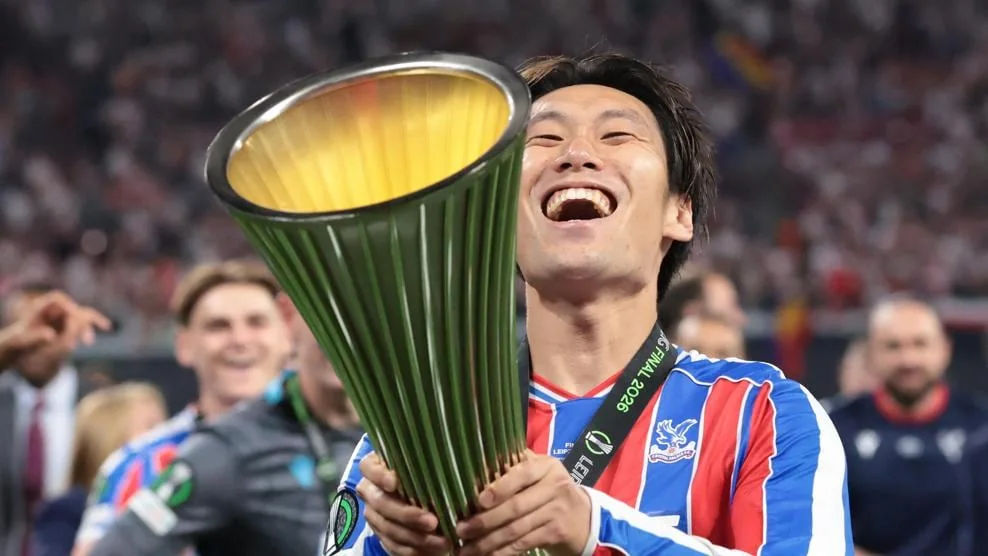
The title was Villa’s first continental trophy since the 1982 European Cup and their first Europa League. It also gave Unai Emery a record fifth title in the competition, after three with Sevilla and one with Villarreal, making him the first coach to win the UEFA Cup or Europa League with three clubs. The record matters because this campaign displayed the transferable skill behind it: his team repeatedly changed the match without losing its structure. UEFA’s technical final analysis provides the clearest visual explanation of that adaptability.
The lasting picture of the 2026 knockout stage
The bracket looks inevitable only after it is complete. In real time, Forest and Braga held semi-final leads, Betis were two goals up in their quarter-final return, and four last-16 first-leg winners still went out. Villa?s achievement was to make each new state legible. They could wait, go direct, build short, attack a set play or close central space, and those choices arrived at the moments the tie demanded them.
For supporters revisiting the season, that is the thread to follow alongside the goals. The champion did not avoid adversity; Villa responded to it more clearly, then produced their most complete score when the trophy was on the line.
Matchnight discussion
Ask a question or share your thoughts with other fans. Comments are reviewed before they appear. Please keep it friendly and leave out personal details.
Read our privacy policy and comment guidelines.
Loading comments…