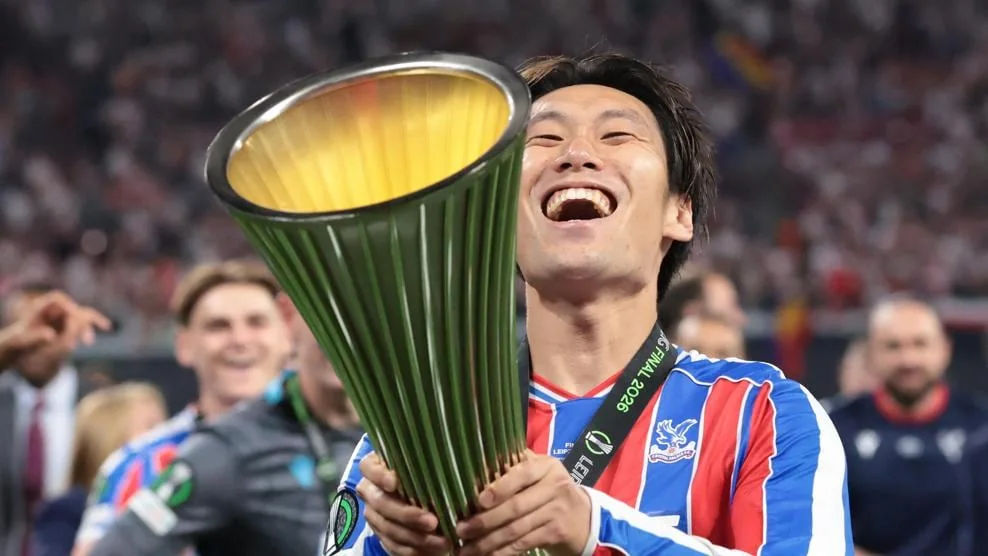
Crystal Palace beat Rayo Vallecano 1-0 in the 2026 Conference League final, Jean-Philippe Mateta converting a 51st-minute rebound in Leipzig. The score was simple; the contest behind it was tighter. Rayo had more possession, Palace created the clearer shots, and Adam Wharton gave the winners the midfield progression they needed.
This review rebuilds the decisive minutes, then examines the tactical mechanics, both clubs’ routes and the result’s place in their histories. All match details and statistics are checked against UEFA reports through 7 September 2026. The label “2026 final” refers to the end of the 2025/26 season.
Final answer
Crystal Palace 1-0 Rayo Vallecano — Mateta 51', Leipzig Stadium, 27 May 2026. Adam Wharton was UEFA’s Player of the Match.
Crystal Palace 1-0 Rayo Vallecano: the final at a glance
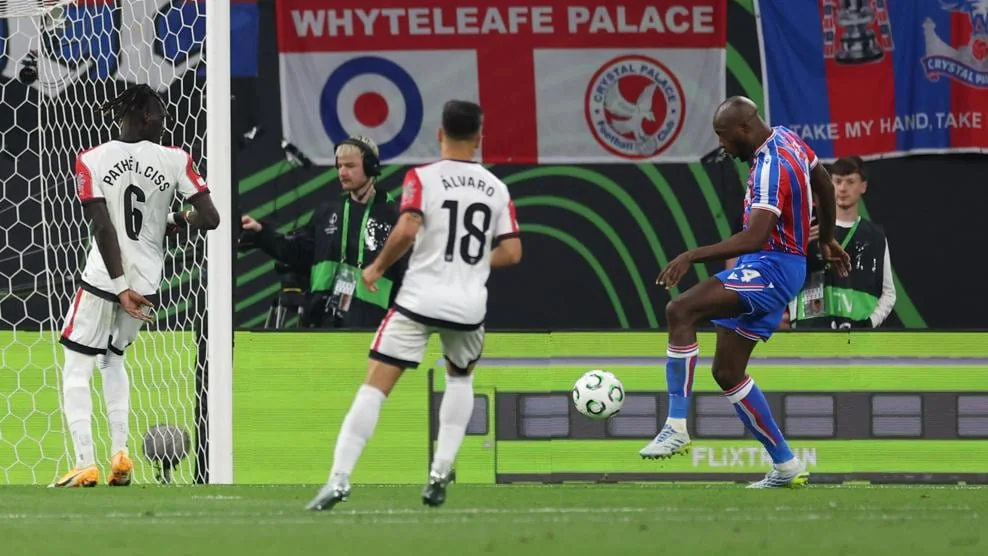
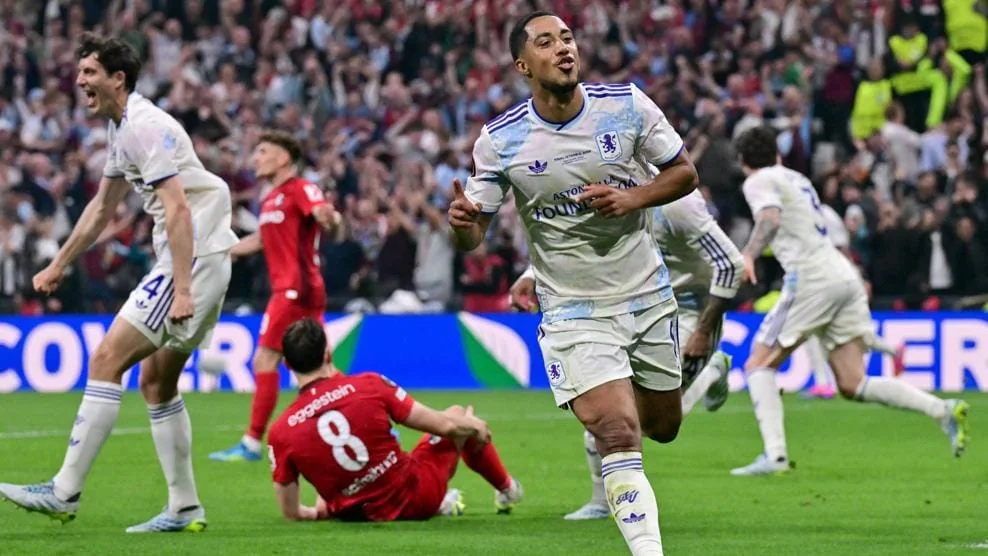
Crystal Palace won the 2026 UEFA Conference League final 1-0 against Rayo Vallecano at Leipzig Stadium on 27 May. Jean-Philippe Mateta scored the only goal in the 51st minute, reacting first after Rayo goalkeeper Augusto Batalla pushed out Adam Wharton’s shot. One sharp second-phase action separated two first-time European finalists.
Result
Palace 1-0 Rayo
Goal
Mateta 51'
Venue
Leipzig Stadium
Date
27 May 2026
A first half in which Rayo set the questions
Rayo produced the first serious opening after 25 minutes. Pep Chavarría crossed and Alemão flicked the ball wide. Fourteen minutes later, Álvaro García found Unai López near the edge of the box, but his attempt also passed the upright. Those moments fit Rayo’s approach: press with conviction, force the next pass and attack quickly when Palace’s shape opened.
Palace’s clearest first-half chance arrived in added time. Wharton supplied a precise cross and Tyrick Mitchell reached it with his head, but could not direct the finish on target. The goalless interval reflected a close contest. Rayo had made Palace uncomfortable; Palace had begun to find a route around the pressure.
Eight second-half minutes that decided the trophy
- 51 minutes: Wharton carried forward and shot when a pass seemed more likely. Batalla saved, but the rebound fell into the danger area and Mateta forced it in.
- 56 minutes: Yeremy Pino’s free-kick struck both posts without crossing the line, an extraordinary near miss that could have given Palace immediate control.
- 57 minutes: Batalla denied Mateta as the striker chased a second, keeping Rayo one action from extra time.
The score stayed narrow, and that kept the final alive. Rayo pushed bodies toward the Palace area and created disorder, but clean final contacts were scarce. Palace protected the central spaces and accepted that the closing phase would be more about duels, clearances and concentration than chasing possession for its own sake. Alemão’s late effort flew wide, and the final whistle confirmed the 1-0.
The starting line-ups show the different shapes behind that tension. Palace used Dean Henderson behind a three-player defence, with Daniel Muñoz and Mitchell providing width and Wharton partnering Daichi Kamada centrally. Ismaïla Sarr, Mateta and Pino formed the front line. Rayo placed Batalla behind Andrei Rațiu, Florian Lejeune, Pathé Ciss and Chavarría, with Óscar Valentín and López connecting midfield to a mobile attack around Alemão.
This was the final of the 2025/26 Conference League, even though it is commonly searched as “Conference League final 2026.” That distinction prevents a calendar mix-up: the 2026/27 competition ends in Istanbul in June 2027.
Why Adam Wharton and Palace's pressure decided the final
Rayo had 58% of the ball and completed 349 passes to Palace’s 248, but possession did not give them the more threatening locations. Palace won the central contest at the moments that mattered, moved forward quickly once the first pressure line broke and then defended the penalty area with a compact back five. Adam Wharton connected those phases.
Wharton and Kamada found the spaces around Rayo’s press
Oliver Glasner retained his 5-2-3, but Palace adjusted their build-up to the spaces Rayo offered. On the left, centre-back Chadi Riad could carry the ball forward, while Daichi Kamada sometimes moved wide. That movement pulled attention away from the central lane and created a choice for Rayo’s front four: follow the midfielder outward or leave a receiver free.
Wharton and Kamada exchanged 12 passes, a modest number with a large structural effect. A sideways connection could move the press before the next pass went forward. UEFA’s analysis counted 22 forward passes from Wharton and 13 from Kamada; Wharton also produced 18 passes that ended in the final third. Palace did not need long spells of circulation. They needed the right angle once Rayo committed.
The winning goal came at the end of a 14-pass move. Palace escaped the first line, Kamada found Wharton and the midfielder drove into the space ahead. He initially saw Muñoz at the far post but moved close enough to shoot. Batalla got down to save; Mateta had stayed alive between defenders and converted the rebound. It looked opportunistic at the finish, yet the opportunity grew from patient possession followed by one decisive carry.
Palace controlled danger without controlling the ball
The full-time numbers explain the difference between possession and penetration. Palace led 11-10 in attempts and 3-1 in shots on target. Rayo took seven of their ten shots from outside the box. UEFA’s team report also recorded 11 Palace entries into the penalty area and five for Rayo. The Spanish side moved the ball more often, but Palace more frequently reached zones where a shot could test the goalkeeper.
After Mateta scored, Palace’s defensive line slid across as a unit. The wing-back nearest the ball stepped out; the opposite wing-back tucked inside so the back line still protected the width of the box. Wharton, Kamada and the front three blocked central passes and prepared the transition. That shape invited Rayo to go around or shoot from distance, which is exactly where most of their attempts came from.
Rayo still made the closing minutes uncomfortable. They played with speed, put loose balls into crowded areas and forced Palace to defend second actions. The limitation was the final clean strike. Their only shot on target across the match illustrates how effectively Palace protected Dean Henderson, even while the game felt alive.
Wharton received UEFA’s Player of the Match award because his influence went beyond the assist. The technical observers credited him with two key passes and involvement in Palace’s three largest chances. He recovered the ball before Mitchell’s first-half header, created the goal and soon released Mateta for the chance Batalla saved. His performance joined awareness, forward intent and the physical work required by a difficult midfield battle.
The tactical lesson is not that fewer passes are automatically better. Palace’s passes had direction once they found the free player, and their defensive structure reduced the value of Rayo’s possession. Efficiency came from the relationship between the two phases: win or receive centrally, progress before the block resets, then protect the middle when the ball is lost.
How Palace and Rayo reached Leipzig
The finalists arrived through different rank bands and different knockout rhythms. Palace finished tenth in the league phase and had to play in February. Rayo finished fifth and went directly to the round of 16. By Leipzig, both had proved they could protect an aggregate lead, win away and survive a match that turned against them.
Palace took the longer knockout route
Ten league-phase points placed Palace just outside the top eight. Their knockout phase therefore began against Zrinjski: a 1-1 away draw followed by a 2-0 home win, 3-1 on aggregate. AEK Larnaca made the round of 16 far less comfortable. After a scoreless first leg in London, Palace needed extra time to win 2-1 in Cyprus.
Their strongest statement came in the quarter-final first leg. A 3-0 home win over Fiorentina created enough protection to absorb a 2-1 defeat in Florence; Palace advanced 4-2. In the semi-final, they beat Shakhtar Donetsk in both legs, 3-1 away in Krakow and 2-1 at home, for a 5-2 aggregate.
The route mixed control with recovery. Palace did not go unbeaten, and their tenth-place finish meant two extra matches, but they repeatedly produced decisive home performances. Entering the final, UEFA listed them as the leading scorers in the competition proper with 25 goals. Ismaïla Sarr carried the individual threat, scoring nine to finish as the tournament’s top scorer.
Rayo's top-eight finish removed one obstacle
Rayo earned 13 points and fifth place in the league phase. That ranking allowed them to skip the knockout play-offs and wait for Samsunspor in the round of 16. A 3-1 away win in Türkiye provided the cushion; even a 1-0 home defeat in the return left Rayo ahead 3-2 on aggregate.
The quarter-final followed a similar arc. Rayo beat AEK Athens 3-0 at home, then lost 3-1 away and advanced 4-3. Those ties showed the value of building a first-leg lead, but they also revealed how quickly control could narrow on the return night. Against Strasbourg, Rayo changed the pattern: Alemão scored the only goal in both legs, producing two 1-0 wins and a composed 2-0 aggregate.
| Stage | Crystal Palace | Rayo Vallecano |
|---|---|---|
| League phase | 10th, 10 points | 5th, 13 points |
| Knockout play-off | Zrinjski, 3-1 agg | Bye |
| Round of 16 | AEK Larnaca, 2-1 agg aet | Samsunspor, 3-2 agg |
| Quarter-final | Fiorentina, 4-2 agg | AEK Athens, 4-3 agg |
| Semi-final | Shakhtar, 5-2 agg | Strasbourg, 2-0 agg |
The final was the clubs’ first meeting and the first UEFA final for either. That shared novelty is striking because both had appeared in Europe only once before: Palace’s 1998 Intertoto Cup run ended in its opening tie, while Rayo reached the 2000/01 UEFA Cup quarter-finals. Leipzig was not the latest chapter in routine continental participation. It was the high point of two rare European journeys.
What the victory meant for Crystal Palace and the competition
Palace left Leipzig with the first European trophy in the club’s history. They did it in their debut season in a major UEFA competition, against another club playing its first continental final. That is the kind of outcome Conference League was created to make possible: a recognised domestic side can turn a rare European entry into a complete trophy run rather than a brief summer appearance.
A new name on the trophy and a new standard at Palace
Palace became the fifth Conference League champion, following Roma, West Ham, Olympiacos and Chelsea. They were the third English winner, with all three coming from London, and UEFA recorded them as the 12th different English club to win a major men’s European competition. The achievement widened English football’s list of continental winners beyond the clubs most often associated with the Champions League.
For Palace, the timing deepened the meaning. The club had won the FA Cup in 2025 and then the Community Shield, so Leipzig delivered a third trophy across two seasons. It also came in Oliver Glasner’s final match in charge. His side completed a 60-game campaign by applying the same structural ideas that had carried them through earlier rounds: wing-backs for width, two central midfielders able to progress the ball and a back line comfortable defending deeper once ahead.
The trophy also changed the following season. UEFA awarded the Conference League titleholders a place in the 2026/27 Europa League league phase, and Palace appear in that field as the 2025/26 champions. Their next European campaign therefore starts one level higher and without another Conference League qualifying route. Fans following that transition can use the Europa League qualification guide and current Europa League results.
Rayo's run mattered beyond the medal
Rayo’s defeat was painful because the margin was so small. One save that fell to Mateta and one Pino free-kick that ricocheted between the posts shaped the final. Yet the campaign remained the club’s deepest European run and its first final, achieved in only a second UEFA season. Fifth place in the league phase, a knockout win in Türkiye and two disciplined semi-final victories had already carried Vallecas into unfamiliar territory.
Spanish coverage described more than 11,000 Rayo supporters travelling to Leipzig and framed the run as pride for a neighbourhood as well as a club. After the loss, messages of gratitude toward captain Óscar Trejo showed that supporters did not measure the entire season by the last scoreline. Palace received the cup; Rayo returned with evidence that its identity could travel through a European campaign.
Why this final fits the Conference League
Five editions produced five different champions through 2026. The list spans clubs with major European histories and a Palace side whose previous UEFA experience amounted to one Intertoto Cup tie in 1998. That turnover gives the competition a valuable uncertainty. Qualification offers an opportunity, but reputation cannot finish a rebound, manage an away second leg or protect a one-goal final lead.
The 2026 final will be remembered through one score and one scorer, but its deeper football story sits in the routes. Palace needed the extra February play-off and found a midfield solution in the final. Rayo used a top-eight league finish to shorten its path and made narrow margins a strength until the last night. Both showed that a first European final can feel earned long before the teams walk out in Leipzig.
Keep the season labels straight when revisiting it: Crystal Palace won the 2025/26 Conference League final in May 2026. The 2026/27 final is a different match, scheduled for Istanbul in June 2027. More match reviews and format guides are available in the UEFA Schedule blog.
The final in one football lesson
A close final can turn on the quality of the action after the first action. Wharton broke the line and forced a save; Mateta anticipated where the rebound might fall. Palace then made the one-goal lead sufficient by protecting the middle and forcing Rayo’s shots away from the best areas.
That sequence crowned a longer journey. Palace had needed a February play-off, while Rayo earned a top-eight bye. Both reached their first European final in only a second continental season. One lifted the trophy, but both supplied a strong argument for why Conference League matters to clubs and supporters whose European nights are rare.
Matchnight discussion
Ask a question or share your thoughts with other fans. Comments are reviewed before they appear. Please keep it friendly and leave out personal details.
Read our privacy policy and comment guidelines.
Loading comments…