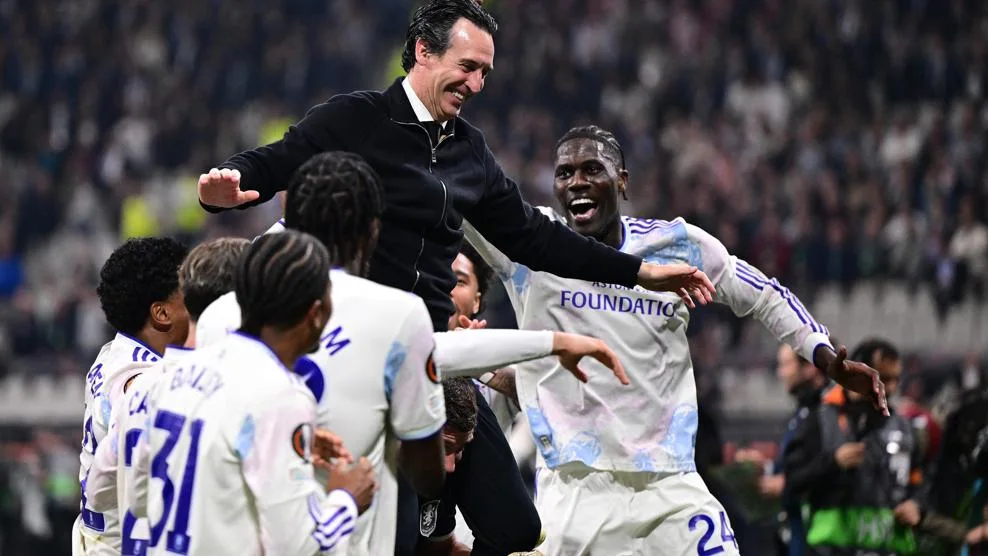
Unai Emery has won the UEFA Cup/Europa League more often than any other manager: five titles through the 2026 final. Giovanni Trapattoni follows on three, with five coaches sharing the next place on two. The figures become more revealing when the winning clubs, formats and different routes to repeat success are considered together.
Which manager has won the Europa League most often?
Unai Emery leads with five titles, ahead of Giovanni Trapattoni on three. The count combines the UEFA Cup and UEFA Europa League: the competition changed its name in 2009, but its history continues across that boundary. Emery won with Sevilla in 2014, 2015 and 2016, Villarreal in 2021 and Aston Villa in 2026. That last victory extended his own record rather than breaking a tie. UEFA's final records confirm the five-title total.
The word “wins” needs a definition before any comparison. Here it means winning the tournament as the final's head coach. It does not mean individual victories in qualifying or the league phase, and it does not combine trophies from the Champions League or Conference League. A coach with a longer career in European football can have more match victories while remaining below another manager on this honours list.
| Titles | Manager | Winning clubs and final years |
|---|---|---|
| 5 | Unai Emery | Sevilla 2014, 2015, 2016; Villarreal 2021; Aston Villa 2026 |
| 3 | Giovanni Trapattoni | Juventus 1977, 1993; Inter 1991 |
| 2 | Luis Molowny | Real Madrid 1985, 1986 |
| 2 | Juande Ramos | Sevilla 2006, 2007 |
| 2 | Rafael Benítez | Valencia 2004; Chelsea 2013 |
| 2 | José Mourinho | Porto 2003; Manchester United 2017 |
| 2 | Diego Simeone | Atlético de Madrid 2012, 2018 |
The five managers on two trophies share the same position; their order is not a judgement about coaching quality. The older entries are verified against UEFA's historical records. Final years are used throughout, so 1993 means the season ending in 1993. Keeping that convention avoids counting a single campaign twice when one source uses a season and another uses a calendar year.
The interesting comparison lies behind the totals. Consecutive trophies test whether a team can stay effective after opponents have learned its approach. Wins separated by years test whether a coach can rebuild a successful European campaign with a changed squad. Success with different clubs adds another challenge: players, recruitment, expectations and domestic competition all change. The record therefore offers several ways to understand achievement without pretending that a simple numerical ranking explains every match.
How Emery built five titles across three clubs
Three consecutive Sevilla titles
Sevilla's first Emery final offered almost no resemblance to the third. In Turin in 2014 they survived 120 goalless minutes against Benfica before Beto's saves helped settle the shoot-out. UEFA's contemporary report describes defenders repeatedly intervening when Benfica threatened. That is a reminder that lifting the trophy can require surviving a difficult attacking night, rather than establishing control through an uninterrupted stream of chances. The winning manager still depends on the goalkeeper and the final execution of individual players.
A year later the final became a much more open contest. Sevilla beat Dnipro 3-2, with Carlos Bacca scoring twice. A detail in UEFA's Warsaw report is particularly useful: introducing Coke for José Antonio Reyes gave Emery a response to Yevhen Konoplyanka's threat. A coach could improve the side's protection while retaining enough attacking quality to win. The final was not reduced to a choice between attacking ambition and defending the score.
Against Liverpool in 2016, Sevilla were behind at the interval and won 3-1. Gameiro's equaliser immediately after the restart changed the conditions of the contest, before Coke scored twice. UEFA's Basel report supports the comeback itself; the broader coaching lesson is an interpretation. Three consecutive titles did not arise from three identical finals. One demanded resistance, another adjustment within an open game, and another a decisive recovery from a losing position.
Villarreal and Aston Villa tested a transferable method
Villarreal's 2021 final ended 1-1 against Manchester United before an 11-10 penalty victory. The official match history records a title earned outside Sevilla. That matters because a successful club can preserve habits and institutional knowledge when individuals change. Taking the trophy elsewhere makes it harder to explain Emery's record solely through Sevilla's relationship with the competition. It does not establish that one manager alone caused the outcome, but it widens the evidence for a method that can work with a different squad.
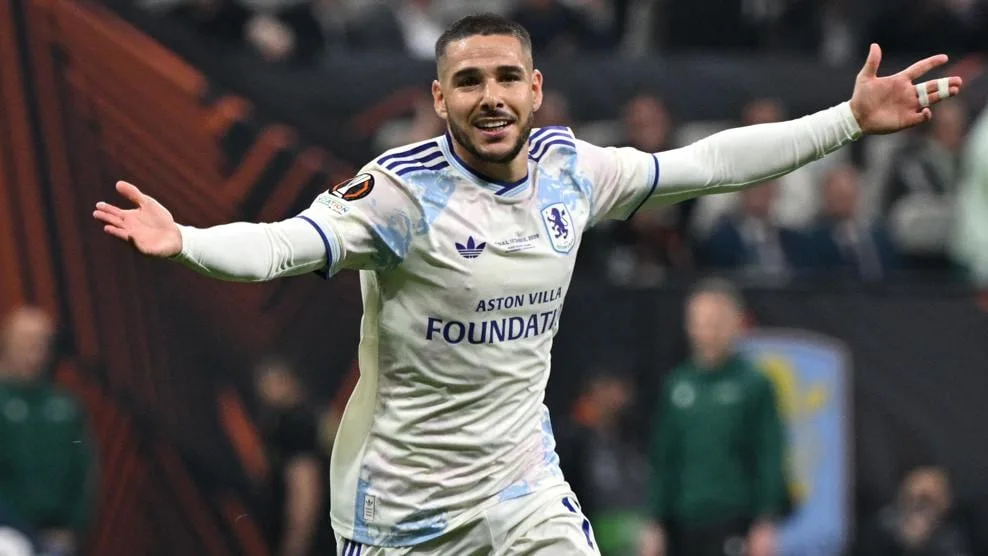
Emery's fifth title, won with Villa, supplied a more concrete example of preparation. UEFA technical observer Gaizka Mendieta highlighted the timing of Tielemans' run at a corner and the way Villa kept an attack alive before Buendía's goal. The technical analysis credits coordinated movement and outstanding finishing. These are complementary explanations: coaching creates a situation worth exploiting; players must recognise it and execute. A prepared routine has no automatic value if the pass, run or contact arrives at the wrong moment.
The sensible inference across these campaigns is adaptability, not a secret formation that guarantees trophies. Opponent pressure, game state and available players shape the next decision. Emery's five wins are compelling because those decisions produced success in different circumstances. They are not evidence that every decision was correct, or that the next European campaign can be forecast from his name alone.
Trapattoni set the benchmark in the two-legged final era
Giovanni Trapattoni's three titles came with Juventus in 1977 and 1993, and Inter in 1991. UEFA's historical account of the record explicitly identifies the clubs in that order. His victories belong to the era when the final itself was a home-and-away tie. Treating them as equivalent tournament titles does not mean pretending that the decisive test was identical to Emery's neutral-ground finals.
A two-legged final asks a manager to carry information and a score from one match into the next. The team can no longer approach the return fixture as an isolated contest. A lead changes the opponent's incentives: the trailing side must create scoring opportunities, while the leader must decide how much territory and initiative to concede. Those choices are also present earlier in a modern knockout campaign, but Trapattoni had to manage them at the final hurdle itself. The trophy was not decided by one evening of football followed immediately by a ceremony.
The time between his first and last wins is another important part of the record. Sixteen years separated the 1977 and 1993 final years. That span makes it a different achievement from three consecutive editions with the same club. A successful coach has to respond to changes in personnel and the wider competitive environment; experience can help, but cannot substitute for selecting a side suited to the next opponent. Returning to the honours board after a long gap is evidence of renewed success, rather than a continuation that should be taken for granted.
Inter's place between the two Juventus victories also matters. The record is attached to the coach across employers, while each title remains an achievement of its particular team. It would be misleading to give Trapattoni credit for every Juventus UEFA Cup triumph simply because he is strongly associated with the club. Equally, a club's total cannot reveal whether the same manager or a succession of managers delivered its trophies. That distinction is why a manager comparison deserves more than copying the club winners list.
Trapattoni remains the clearest historical counterweight to Emery. He establishes that repeated success predates the Europa League name, while his long span and two-club record provide a different kind of continuity. The appropriate comparison is the number and context of complete winning campaigns. Ranking the men solely by how spectacular one remembered final looked would replace a record with a preference.
The five managers tied on two titles
Molowny and Ramos won consecutive editions
Luis Molowny won with Real Madrid in 1985 and 1986; Juande Ramos followed with Sevilla in 2006 and 2007. Both retained the UEFA Cup, although the finals belonged to different formats. UEFA's account of Madrid's second title provides an especially striking example of why tournament trophies are not a match-win ranking: Madrid lost five away games in that campaign and still won the competition. Their recovery against Mönchengladbach turned a 5-1 first-leg defeat into advancement after a 4-0 home win under the away-goals rule then in force.
That example shows the value of interpreting a score in the context of its tie. A single defeat could leave the tournament open; a sufficiently strong response could change the outcome. It would be wrong to describe every loss as irrelevant, because each created an additional problem to solve. It would be equally wrong to remove a winning campaign from the record because its route contained defeats. The tournament rewards the team that meets its advancement conditions, rather than the team that wins the largest percentage of separate evenings.
Ramos' two finals also warn against expecting a repeat performance to look the same. Sevilla beat Middlesbrough 4-0 in 2006, then needed penalties after a 2-2 draw with Espanyol in 2007. UEFA's season review records both outcomes. Retaining the cup meant finding another successful answer, not reproducing the previous final's margin.
Benítez, Mourinho and Simeone repeated success differently
Rafael Benítez won with Valencia in 2004 and Chelsea in 2013. José Mourinho won with Porto in 2003 and Manchester United in 2017. Their records cross both a club boundary and the competition's name change. UEFA's Benítez profile confirms the Valencia and Chelsea sequence, while the historical coaching table confirms Mourinho's pair. Winning elsewhere adds evidence that success can survive a change of employer, although it still cannot separate the manager's contribution from the abilities of the particular players.
Diego Simeone's titles in 2012 and 2018 both came with Atlético. A six-year interval makes his record different from consecutive retention: the club remained the same, but the winning campaigns were separated by several seasons. None of these three patterns deserves an invented tiebreaker. Two trophies with different clubs, two consecutive trophies and two trophies across a long period each answer a slightly different question about repeat success. A reader can admire those distinctions while keeping the factual table level.
Why UEFA Cup titles belong in the same record
A combined honours list respects the competition's official history. UEFA's timeline traces the UEFA Cup from 1971/72 through the Europa League era. A reader searching for the most successful coach usually wants that whole story, rather than an arbitrary cut at a branding change. The table above therefore includes both names and explicitly states the scope.
The 2009 rename did not reset the honours board
The Europa League name began with the 2009/10 season. Separating an era can still be useful, provided it is labelled. Emery has five wins under that name and Simeone two. Benítez and Mourinho each have one UEFA Cup title and one Europa League title. Molowny, Ramos and Trapattoni won before the rename. That narrower comparison changes the table's composition, but it does not make the earlier trophies disappear from the combined competition record.
Name and format are also different variables. UEFA changed the final to a single match at a neutral ground in 1998, years before the Europa League rebrand. UEFA's historical feature places that transition in its proper chronology. Ramos' trophies were UEFA Cups decided by one-off finals; Trapattoni's UEFA Cups had two-legged finals. Using the old name as shorthand for one particular format would conceal that difference.
The record should remain narrow in another respect. Champions League wins, Conference League wins, UEFA Super Cups and domestic cups do not enter this table. They may be relevant when discussing a manager's broader career, but adding them would answer a different question. A familiar coach with several types of European trophy can sit below Emery here without any implication about which career is better overall.
This clarity makes a records article more useful when it is shared outside its original context. The title should say what is being counted; the table should say which clubs and years produced the count; and the accompanying explanation should acknowledge format changes. Readers can then compare the accomplishments without accidentally comparing a modern-era-only statistic with an all-time one.
Final wins, match wins and appearances answer different questions
Emery's five titles came from six Europa League finals. The missing victory is Arsenal's 4-1 defeat by Chelsea in 2019, recorded in the official match history. Reaching a final is an accomplishment, but it must not become a trophy in the count. Otherwise a manager who consistently reaches the last match but loses would be indistinguishable from one who wins it. The difference is particularly important in graphics that display appearances beside medals without clearly labelling each column.
The reverse error is treating a penalty victory as an ordinary match win without checking the dataset's convention. Sevilla's 2014 and Villarreal's 2021 finals remained level after extra time. A shoot-out identified the champion; its kicks were not additional goals in the match score. For a trophy table those campaigns add one title each. For a statistical match record, the result may be classified as a draw. Neither convention is contradictory when the measure is named correctly.
An individual win total also depends on opportunity. Qualifying matches, group matches and different formats create different numbers of fixtures. A manager can accumulate victories through repeated participation without reaching another final. Another can win a trophy after a route containing draws or defeats in ties. Comparing raw match totals therefore requires checking which stages are included, the period covered and the number of matches available. This article makes no claim that the trophy leader also tops every match-based statistic.
UEFA's May 2026 review is a useful example of a dated statistical snapshot. Its match record describes the sample available to that article, rather than automatically updating every time a new fixture is played. Before repeating such a number, a reader should check its date and scope. A trophy total through the completed 2026 final is easier to maintain because a new champion can only be added when another edition ends.
Finally, a record is not a probability forecast. Winning five of six finals does not mean a future Emery team has a fixed five-in-six chance of lifting the next cup. Those finals involved different opponents and players, and the next team must first reach the decisive match. The record tells us what happened. Predicting what happens next requires evidence about the actual campaign.
What the coaching record tells supporters about winning knockouts
The record's most useful lesson is that a winning campaign contains several kinds of problem. A side may need to break a compact defence one week, protect space behind its own attack the next, and recover a tie after conceding early. The historical examples above show that repeated champions do not always dominate the score from the first whistle. They find a way to meet the challenge that exists, rather than the one they would prefer to face.
Villa's 2026 title provides a useful boundary to the manager-centred story. UEFA's winning-team profile records nine clean sheets and emphasises the contributions of Martínez, Konsa and the attacking creators. A manager can organise relationships between those roles, but the record does not mean that defensive concentration or the quality of a finish belongs to him alone. The players' execution is part of the explanation, not a footnote to a coach's reputation.
For supporters watching the next knockout match, that shifts attention towards observable decisions. Does the team change how it approaches a lead? Does a substitution answer a specific opponent threat? At a corner, which run creates the space, and which player attacks it? When a side loses the ball, is there protection against the next pass? These questions help a viewer understand the contest without needing invented statistics or assuming that every successful sequence was predetermined.
It is also worth resisting the tendency to explain all winning actions retrospectively as inevitable. A well-prepared routine can produce a missed shot; an imperfect passage can end in a remarkable goal. Trophy records reward the eventual outcome, while analysing the football requires looking at the quality of the choices and the opponent's response. Both perspectives matter, but they should not be collapsed into the claim that the winner must have controlled every aspect of the match.
Emery's lead is clear, and Trapattoni's benchmark and the five two-time winners make the comparison richer. Their campaigns illustrate retention, rebuilding and success across clubs. They do not provide a universal recipe. To follow today's competition, use the results and league-phase table alongside the actual performances. History supplies context; the next tie is still decided by the teams on the pitch.
Matchnight discussion
Ask a question or share your thoughts with other fans. Comments are reviewed before they appear. Please keep it friendly and leave out personal details.
Read our privacy policy and comment guidelines.
Loading comments…