The College Football Playoff will feel partly familiar to a Europa League supporter: teams compete for entry, a high position can remove an early knockout round, and a bracket eventually produces a champion. The key difference comes before the knockout games. UEFA’s league phase uses points, while the CFP uses committee rankings and specific qualification rules. This guide explains the 2026 college-season format alongside the 2026/27 Europa League, then shows how to follow the games without mistaking a projection for a confirmed fixture.
How a league table differs from a selection ranking
Europa League positions begin with points
A Europa League supporter can usually explain a move in the table by starting with the latest result. Under UEFA’s 2026/27 league-phase rules, a win earns three points, a draw one and a defeat none. The 36 clubs share one classification, although each plays only eight opponents: four at home and four away. It is a common table without a complete round-robin schedule.
That last distinction already gives you a useful bridge to American college football. Teams can be compared without having played identical opponents. In Europe, however, the points attached to an individual result remain fixed. Beating a particularly strong opponent does not turn three league-phase points into four. The difficulty of the draw can shape your judgment of a performance, while the competition’s published ranking rules determine the actual position.
When watching a late league-phase match, you can therefore follow the live table and ask what a goal does to the club’s place. It is a concrete calculation involving the club’s result and the other relevant matches. You may still argue about which team looks stronger, but that opinion does not replace the points system. The distinction between a personal assessment and the competition table is familiar to anyone who has watched a talented side finish below a more consistent opponent.
The CFP committee evaluates a season
The College Football Playoff uses a selection committee to rank teams. Its published protocol considers factors such as strength of schedule, head-to-head competition and results against common opponents when comparing similar teams. It does not create a national league table by awarding three points for each win. The ranking is an evaluation of performances across different schedules, followed by the application of the playoff’s selection and seeding rules.
Imagine two programs that have each lost once. Their records tell you something important, but they do not show who the teams played or whom they beat. A committee comparison asks those further questions. A supporter can disagree with the conclusion without assuming that an arithmetic error occurred. The disagreement may concern the weight given to a difficult opponent, a direct meeting or another part of the season’s evidence.
This changes what makes an autumn broadcast interesting. In addition to wanting your chosen team to win, you can watch how its opponents perform elsewhere and how a result affects the wider comparison. A win is still a win on the schedule; its significance in the national discussion can develop over time. Keep that discussion separate from qualification guarantees. A ranking describes where the committee places a team, while the rules determine how that position translates into a playoff opportunity.
Qualification, seeding and byes are three decisions
Apply the current automatic-entry rules first
For the 2026 college season, the official CFP format guarantees places to the ACC, Big Ten, Big 12 and SEC champions. Another automatic place goes to the highest-ranked team from the American, Conference USA, MAC, Mountain West, Pac-12 or Sun Belt. That fifth route does not require the team to be a conference champion. The remaining seven places are at-large selections, subject to Notre Dame’s provision.
Notre Dame receives an automatic place if it finishes in the committee’s top 12 on Selection Day; in that case, six at-large places remain. The field still contains 12 teams. This matters when reading a guide from an earlier season: a familiar diagram can conceal a different entry rule. For this season, do not substitute the earlier explanation that simply admitted the five highest-ranked conference champions.
Rank and seed can consequently differ near the cutoff. Suppose, purely as an illustration, an automatic qualifier sits outside the committee’s top 12. The rules still place that team in the playoff, at the bottom of the seeding in the appropriate order. A non-automatic team ranked 12th cannot treat that number alone as an unconditional ticket. First identify the qualifiers; then read the seeds assigned within the selected field.
A bye saves a round, not the whole knockout campaign
The four highest-ranked CFP teams receive seeds one through four and skip the first round. Championship status by itself does not award that bye. The official bracket then pairs seeds five through eight at home against twelve, eleven, ten and nine respectively. That creates several distinct goals for a contender: enter the field, secure a home first-round game, or finish high enough to avoid that round altogether.
The Europa League comparison is useful if you preserve the different numbers. Its top eight league-phase clubs advance directly to the round of 16, while places nine through 24 enter the knockout phase play-offs and the remaining clubs are eliminated. In that competition, finishing eighth instead of ninth removes a two-legged tie from the route. In the CFP, earning the fourth seed instead of the fifth removes one first-round game. Both rewards reduce the number of elimination hurdles, but they are not identical formats.
For a supporter, this explains why a qualification race continues after a team looks likely to get in. The next result can affect the difficulty and location of its opening knockout assignment. Watch the boundary relevant to that team instead of treating every movement in the ranking as equally important. A club protecting a Europa League top-eight place and a college team pursuing a top-four seed are chasing a similar practical benefit: reaching a later round without first having to survive an additional contest.
What changes when the knockout game starts
A Europa League knockout tie normally gives each club a home leg and an away leg. Under Article 20, the greater aggregate score decides which team progresses. If the aggregate is level, Article 21 provides extra time after the second leg, followed by penalties if necessary. Away goals do not supply an extra tiebreaking advantage.
This makes the score of one match only part of the story. A team can lose the second leg and still advance because of its first-leg advantage. You might see it defend more cautiously late in a match even though the scoreboard on that night shows it behind. To judge that decision, look at the aggregate score and remaining time. Reading only the current match score can make a sensible approach look unnecessarily passive.
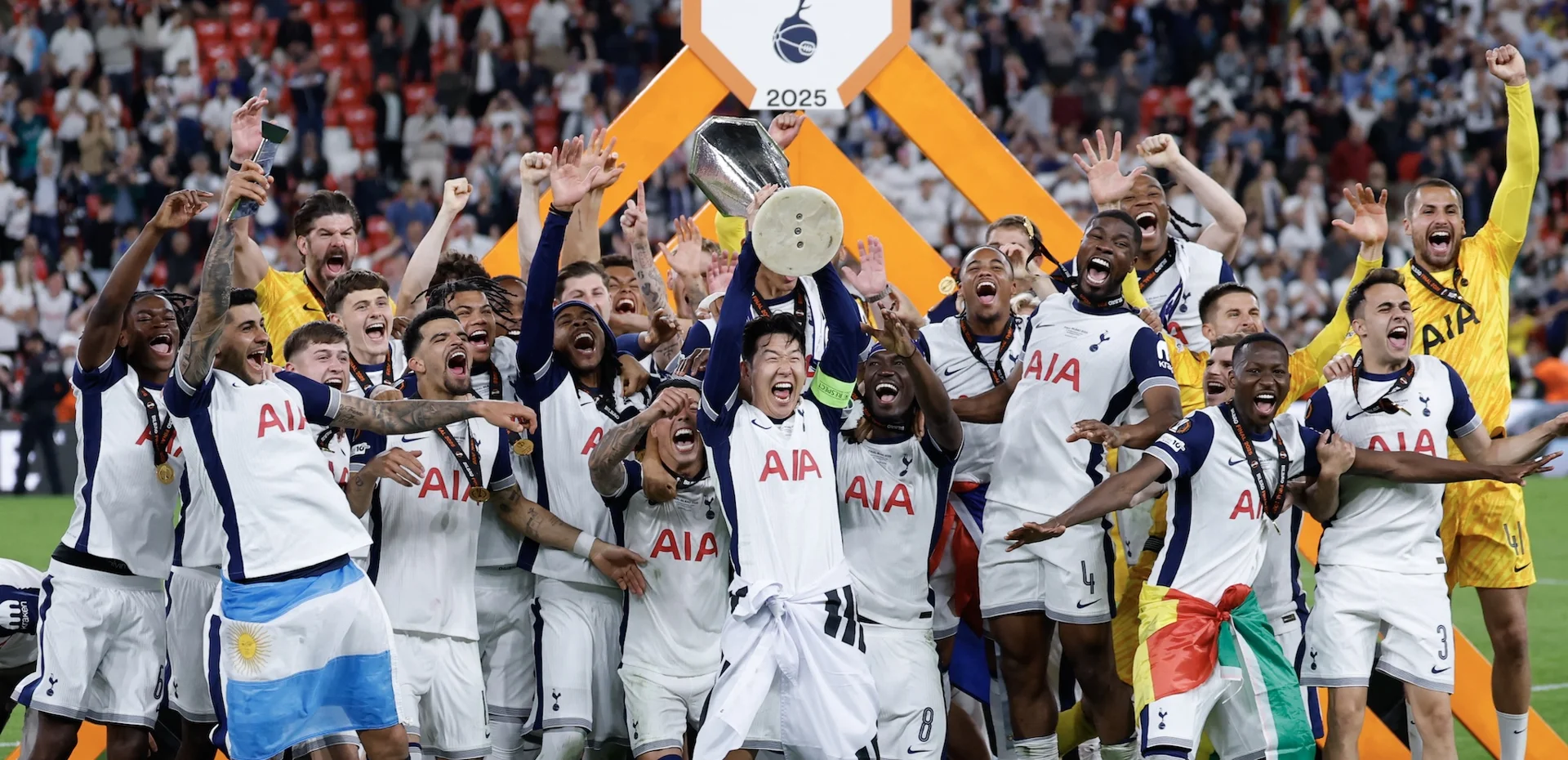
The CFP has no return leg. Each playoff game eliminates its loser, so a team cannot carry a deficit into a second meeting at home. A strong ranking helped create its opportunity or its seed; it does not protect the team after a knockout defeat. The nearest Europa League comparison for that finality is the single-match final. Tottenham’s 1–0 victory over Manchester United in May 2025 settled the trophy that night, rather than setting up a return match.
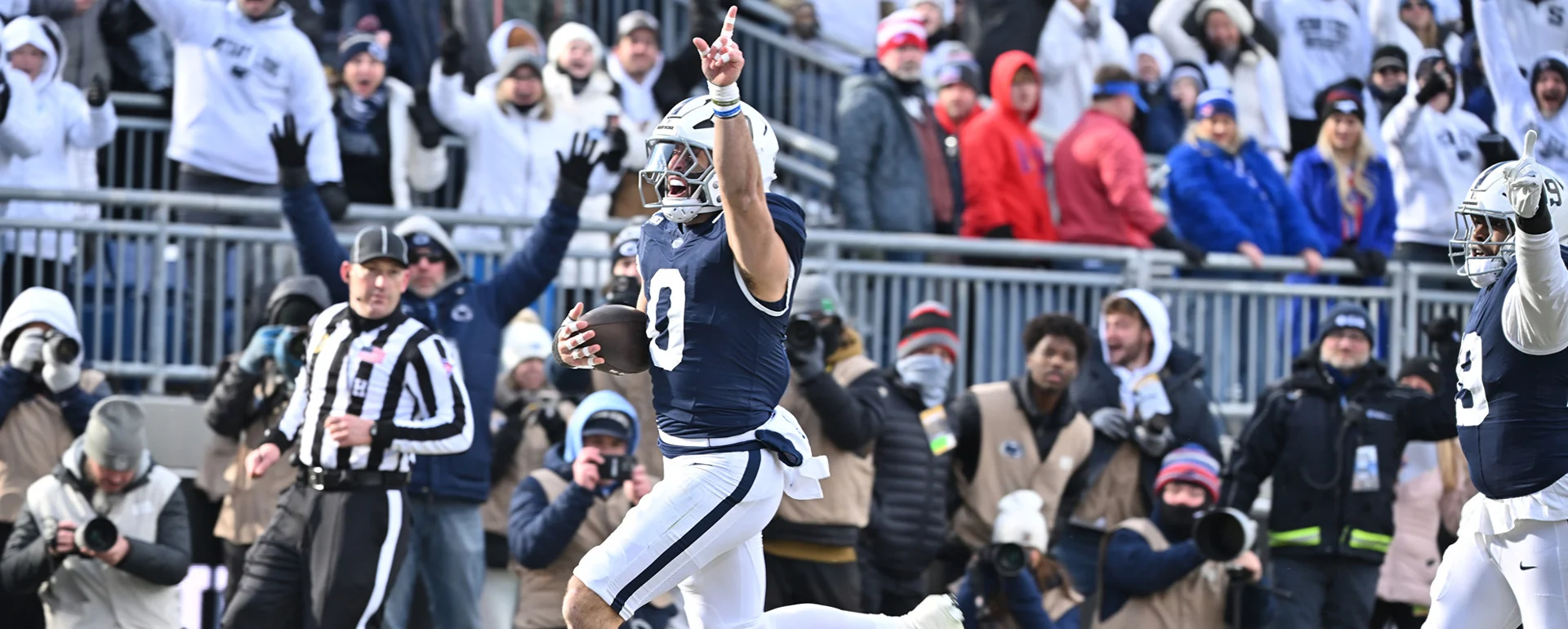
A real campus playoff example makes the distinction tangible. On December 21, 2024, sixth-seeded Penn State beat eleventh-seeded SMU 38–10 at Beaver Stadium. The official match report describes three first-half interceptions, including two returned for touchdowns. Penn State advanced to a quarterfinal; SMU’s playoff run ended. That is a historical example of the game’s consequences, not a claim that all of the 2024 selection rules remain unchanged in 2026.
For a first-time viewer, turnovers are therefore worth following as changes in the immediate contest, not as something a team can repair in a later leg. An interception transfers possession and may also create a scoring opportunity. You do not need to know every tactical term to see why two defensive touchdowns can transform an elimination game. Start with who has the ball, where the next possession begins and how much time remains.
The CFP bracket also stays fixed rather than being reseeded after each round. An upset changes the team occupying a place on the route; it does not trigger a new arrangement designed to give the highest surviving seed a different opponent. Follow the connecting lines from the original bracket. That turns a collection of bowl names into a sequence of possible opponents and makes the next game’s relevance easier to understand.
Read a projection differently from a confirmed bracket
The AP poll and CFP ranking answer different questions
A number beside a college team’s name needs a label. The AP Top 25 is a media poll; the CFP rankings come from the playoff selection committee. They can place the same team differently because they are separate assessments. A television graphic or article that uses an AP position is not announcing that team’s official playoff seed. Before debating whether a team belongs at number eight or number twelve, check which ranking the discussion actually uses.
The timing helps. The official 2026 CFP rankings schedule begins on November 3. An October playoff prediction can be informed analysis, but it cannot be this season’s already-announced committee ranking. Later weekly CFP releases are more directly relevant to selection, yet they remain interim assessments until the final decision. A team still has games to play and a body of evidence that can change.
For a Europa League fan, distinguish that from a live league-phase table. A live table describes the competition position created by results so far. A projected CFP bracket may instead be an author’s forecast of future results and selections. Both can be useful, but you read them for different purposes: one tells you the current arithmetic, while the other lets you explore a possible outcome.
Check the edition before following the route
For finding autumn games to watch, CollegeFootballSchedule.net offers team, week, conference and TV filters. Its playoff bracket page lets you follow a team’s possible route. Both are part of the same publishing project as UEFA Schedule, so this is a recommendation of a related tool. The bracket edition available while preparing this guide was explicitly labeled an October 8 editorial projection, not official selections.
That label is useful information rather than something to overlook. Check the edition date, whether the page says projected or confirmed, and whether a particular game assignment remains undecided. You can use a projection to learn which seed feeds into which quarterfinal without treating its named teams as a purchased-ticket itinerary. A team highlight shows the path represented by that edition; it does not establish that the team has qualified.
The final 2026 field is scheduled to be announced on December 6, with the official Selection Day program listed from noon to 3 p.m. Eastern. Once the organizers publish the pairings and sites, replace your provisional plan with those actual fixtures. Keep the distinction visible when sharing a bracket with friends: naming its season, edition and status makes a short message much clearer than forwarding a screenshot whose date has been cropped away.
Build a viewing plan around the confirmed round
The 2026 college season reaches its playoff in December and finishes in January 2027. That is why the event is described as the 2026–27 CFP, while a university’s regular-season schedule may simply say 2026. The official schedule places first-round games on December 18 and 19, quarterfinals on December 30 and January 1, semifinals on January 14 and 15, and the national championship on January 25. Keep the season label and the actual calendar date together.
Those dates let you reserve viewing time before all team assignments are known. A calendar entry can initially say “CFP first-round window” and later be replaced by the selected matchup and kickoff. That is more useful than attaching a predicted opponent to an apparently confirmed event. If you plan to attend, the location becomes just as important: a first-round game at a selected team’s home ground is a different journey from a quarterfinal at a bowl site.
There is a helpful January connection for Europa League followers. UEFA’s 2026/27 competition guide lists the final two league-phase matchdays on January 21 and 28. The college championship sits between them on January 25. That gives you three different kinds of sporting stakes within a short period: a league-phase position still being decided, a national title settled in one game, and the final European table taking shape.
Use our Europa League calendar to keep your own club’s dates visible alongside the American games you choose. A subscribed calendar and a one-time downloaded copy behave differently when fixtures change; check which option you added and revisit important appointments. You do not need every possible match on one crowded screen. A small selection with the right round, team and timezone is easier to follow than a complete schedule that you never review.
Finally, separate the clock from the broadcaster. Our USA Europa League TV guide concerns viewing in the United States, even when a reader changes the displayed timezone. The same principle applies to college football: converting an Eastern kickoff into your local time does not establish which service can show it where you live. Check the actual event listing with your local provider after the matchup is confirmed.
Once the game begins, use the competition question that fits it. In a Europa League league-phase match, ask how the result changes qualification position. In a CFP game, ask who survives and where the fixed bracket sends the winner. Understanding that change in stakes lets you enjoy the unfamiliar sport without forcing it into a format you already know.
Cover: Tottenham’s celebrations after the 2025 Europa League final, from the club’s official match gallery / Getty Images.


Matchnight discussion
Ask a question or share your thoughts with other fans. Comments are reviewed before they appear. Please keep it friendly and leave out personal details.
Read our privacy policy and comment guidelines.
Loading comments…