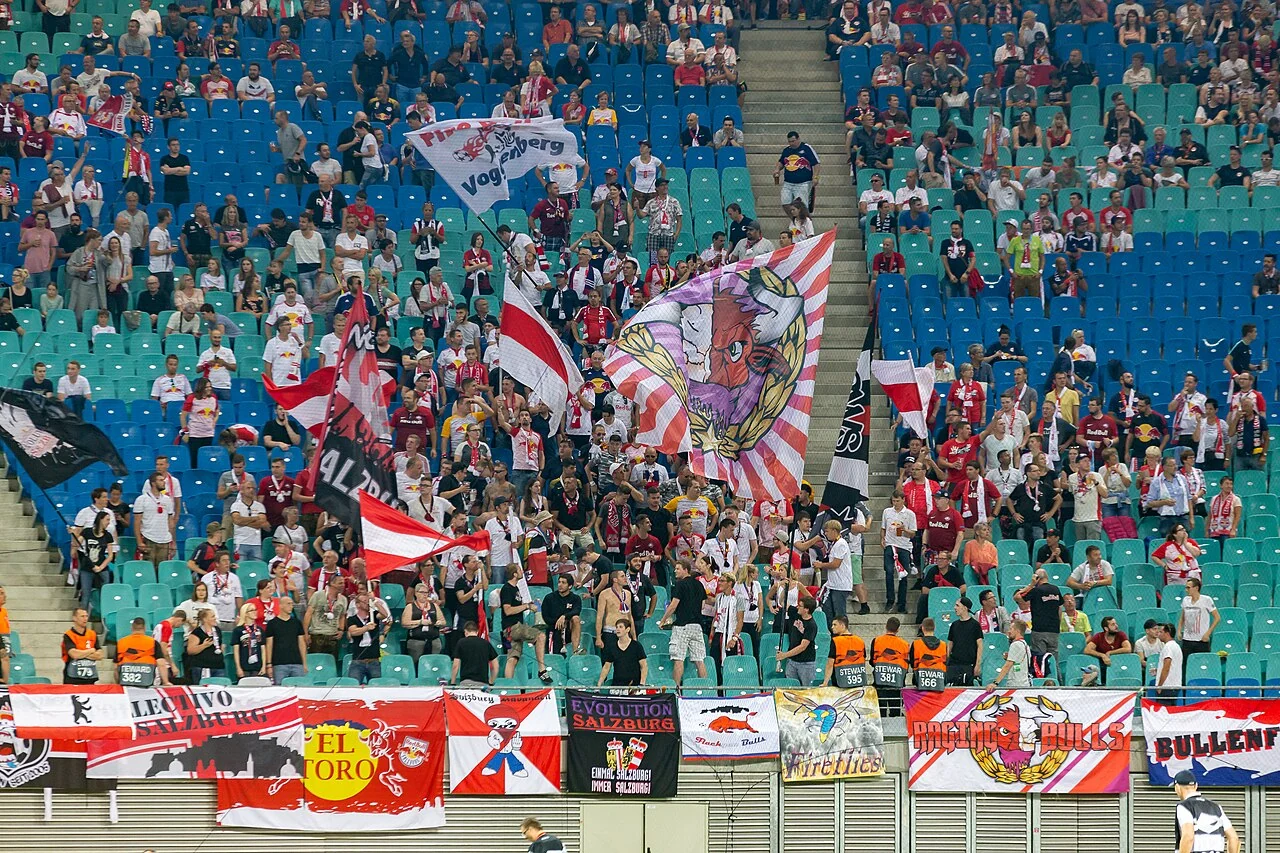
Buy Europa League tickets from the organisation that controls the inventory: the host club for home seats, the travelling club for the away end, and UEFA plus the finalists for the final. Official hospitality is a separate authorised product. A search listing, resale badge or confirmation screenshot does not prove that a seller can issue a valid ticket.
This guide turns that split into a practical purchase sequence. It explains club account and priority rules, the baseline away allocation, UEFA's final application, accessible seating, mobile delivery, official resale and the checks to make before booking travel.
Rules vary by club, match and season. Examples below show how current official processes work, while the responsible seller's latest notice remains the controlling instruction for your fixture.
Start with the right Europa League ticket seller
The safest buying route depends on the inventory, not simply on the competition logo. For a normal league-phase or knockout match, the host club controls home seats and the travelling club distributes its away allocation. A Europa League final is different: UEFA runs the public process and provides allocations to the finalists. Official hospitality follows the supplier named by UEFA or the club for that specific event.
| Ticket wanted | Start here | What to verify |
|---|---|---|
| Home section | Host club's official ticket site | Account, membership, sale phase and home-sector restrictions |
| Away section | Travelling club's official ticket site | Eligibility, loyalty priority, named traveller and collection rules |
| Final public ticket | UEFA's official ticket portal | Application window, applicant account and mobile delivery |
| Official hospitality | Supplier linked by UEFA or the club | Exact match, package inclusions and official-domain trail |
That split explains why the UEFA tickets hub is the correct starting point for finals but not a universal box office for every Thursday club match. Club sites publish their own sale windows, priority rules, exchanges and accessible-ticket routes. Always open the match notice from the club's main domain rather than trusting a marketplace result that happens to rank highly in search.
A listing is not proof of valid inventory
Before payment, trace the seat back to the host club, travelling club, UEFA portal or an explicitly named official hospitality provider. If the seller cannot show that route, pause. UEFA warns that unauthorised final tickets can be cancelled and may lead to refused entry.
Use the official notice for the exact fixture as the controlling document. It should tell you who may buy, when the window opens, how many seats can be purchased and how delivery works. The rest of this guide follows the same decision tree—home, away, final, accessibility, delivery and resale—without pretending that one club's rules apply everywhere.
How to buy home tickets for an ordinary Europa League match
For a league-phase or knockout match at a club stadium, begin with the host club's official ticket announcement. It may offer a multi-match package, individual seats or both. The important part is not copying another club's process; it is completing the account and eligibility steps named for your fixture before inventory reaches your sale phase.
Create the club account before the sale window
Build your account from the club's main website, then verify the email address, personal details and any required supporter number. Add friends or family only through the club's official relationship tool. Crystal Palace, for example, requires guest tickets to be assigned to supporters with a client reference number. AC Milan's 2026/27 Europa League package required each package in a transaction to be assigned to a different valid CRN Card.
Those are club examples, not UEFA-wide rules, but they reveal the checkout risk. If the intended attendee does not have the required account or linked reference, finding an available seat may not be enough to complete the purchase. Preparing legitimate accounts early also avoids clicking an unfamiliar “registration” link sent by a marketplace or social-media seller.
Read the priority ladder, not just the on-sale date
The headline “tickets on sale Friday” may describe only one rung. For AC Milan–Benfica in September 2026, the official notice listed windows for Plus season ticket holders, other season ticket holders and Milan Club members before general sale. Crystal Palace's home policy gives certain premium members an early window before other members and possible guest sales. In both examples, later access remains subject to availability.
Read a sale notice in this order
- Which buyer category qualifies in each phase?
- How many tickets may that account purchase and assign?
- Which time zone controls the opening time?
- Is general sale confirmed, or only possible if seats remain?
Membership can improve access without guaranteeing a ticket. Use the earliest phase your account genuinely qualifies for, log in before the window and keep the club's support contact available in case a valid entitlement is missing.
Check sales restrictions before choosing a seat
Eligibility comes before the seat map. Check whether the ticket is named, whether purchase history or a supporter card is required, whether it can be transferred, and whether the buyer must attend. Most importantly, do not assume any home-sector seat is suitable for a visiting supporter. AC Milan's official Benfica booking page warned that away fans were forbidden from buying in local sectors and could be refused access even with a purchased ticket.
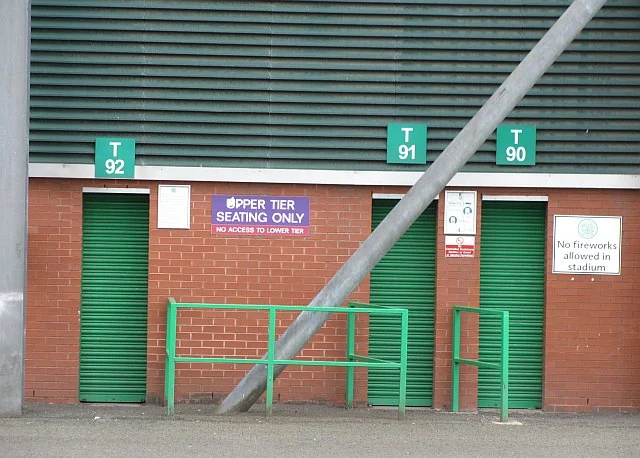
Only after those checks should you compare blocks and prices. Save the match notice and terms with the confirmation: they define the exact fixture, attendee, entrance and conduct conditions that determine whether the ticket works at the gate.
Away-end tickets belong to the travelling club
If you want to stand with the visiting support, follow the away club's ticket office. The host creates a segregated allocation under UEFA rules, but the travelling club decides how its supporter inventory is distributed. That is why the host's home-seat map is the wrong place to solve an away-ticket problem.
The five-percent allocation is a baseline, not a promise to every fan
Article 45.01 of the 2026/27 Europa League regulations requires a home club to make at least 5% of UEFA spectator capacity available to visiting supporters, in line with stadium and safety rules. It also caps visiting-supporter tickets at €35 and prevents the comparable away ticket from costing more than an adult home ticket in a similar sector.
That percentage governs what the host makes available to the visiting club; it does not guarantee a seat to every member or to the first 5% of applicants. Demand can exceed supply many times over. The visiting club may request zones, return unused inventory by UEFA's deadline and publish its own eligibility ladder. Article 45.05 also permits the clubs to alter most arrangements by written agreement, although not the away price cap; a reduction from the standard allocation should be tied to a specific lack of visiting demand.
What the rule does—and does not—do
It creates a protected visiting allocation and a current price ceiling. It does not override a travelling club's loyalty thresholds, ballots, ticket limits, identity checks or deadlines.
Loyalty points and travel registration shape the queue
Read the travelling club's match notice from top to bottom. Crystal Palace, for example, says away tickets use loyalty points and that limits vary by game. Its member ballot depends on the allocation received, while its waiting-list rules may rank returned seats by points or by joining time depending on the phase in which the match sold out. AC Milan gives a separate 2026/27 example: Plus season ticket holders receive priority access to Europa League away fixtures.
Neither model is universal. Your notice may require a points threshold, a ballot entry, a named traveller, passport details, official travel registration or collection with photo ID. Confirm which person earns the eligibility and which person must use the seat. If an official travel package is involved, check whether the ticket and transport are inseparable before booking another route.
Priority still is not a guarantee. Celtic's current hospitality terms, for example, explicitly make away-ticket purchase rights subject to availability and allow ballots or proportional distribution. Treat every deadline as a chance to apply under stated rules, not as a reservation.
Do not use a home ticket as an away-sector substitute
UEFA's segregation logic closes the supposed workaround. Article 45.03 says returned or unrequested away tickets may be reallocated only with safety measures in place and not to visiting supporters. A host can also restrict local sectors: AC Milan warned Benfica supporters that buying in home areas was forbidden and that entry could be blocked even if they possessed a ticket.
Do not hide your affiliation, buy through a stranger or assume quiet behaviour makes the ticket valid. If the away sale is exhausted, use the travelling club's authorised waiting list or returned-ticket process. Missing a match is frustrating; being refused at the gate after paying for the wrong sector is worse.
The Europa League final uses a different sales process
A final is not an ordinary home fixture. UEFA controls the ticket rights, determines allocations and prices, and sets event-specific conditions. The finalists help distribute their supporter allocations, but the transaction still follows the UEFA route announced for that final. Treat any previous year's dates and quantities as examples, never as a promise for the next event.
UEFA's public application is separate from club allocations
For the 2026 club finals, UEFA opened general-public applications only through UEFA.com/tickets and used a lottery after the window closed. Applicants were not rewarded for clicking first. Valid applications were ranked, selected applicants had to register the mobile phone they would use at the stadium, and the same email address had to connect the ticket application and UEFA Mobile Tickets registration.
The scale illustrates the split. At the completed 2026 Europa League final, 27,500 of 37,500 tickets were available directly for fans and the general public; each finalist could receive up to 11,000, while the remaining public inventory was sold worldwide by UEFA. Those are 2026 figures, not an advance allocation for Frankfurt in 2027.
For the current venue, date and release-status facts, use our Europa League Final 2027 guide. Do not buy because an advert claims to know an unannounced public-sale date or allocation. UEFA's official event notice is the controlling source.
Finalist clubs apply their own supporter priority
A finalist's official ticket office decides which of its supporters may use the club allocation. UEFA's 2026 terms describe “Participating Club Allocation Rules” set by each club and note that membership or an access code may be required. One finalist may rank loyalty points while another uses season-ticket status, ballots or a different threshold.
Wait for the club's announcement, then follow its link into the UEFA portal. Check who receives the code, whether it is personal, which window it unlocks and whether the named applicant must attend. Never post or buy a code. Club eligibility does not turn an unofficial checkout into an authorised sale, and a code from the other finalist has no legitimate use in your allocation.
The clean distinction
UEFA operates the final ticket platform and issues the event conditions. Each finalist applies its own supporter-priority rules to the allocation UEFA gives it.
Hospitality is official inventory, not a resale loophole
Official hospitality combines a match ticket with catering and event services. UEFA's current Europa League hospitality page identifies the UEFA-managed route for the 2027 final. That official-domain chain—not a seller's use of words such as VIP, lounge or premium—is what establishes legitimacy.
UEFA's hospitality FAQ says the purchaser must attend and may not resell the package, bundle it with another product, use it for marketing or offer it as a prize. In the completed 2026 process, UEFA Events SA reviewed the purchase request, issued email confirmation and later delivered packages through the UEFA Mobile Tickets app. A third party cannot convert an unauthorised resale into official inventory merely by adding a hotel, meal or transport.
If standard tickets are unavailable, hospitality may be a genuine official alternative for a buyer who wants the included services and accepts the terms. It is not a back door around identity, transfer or resale restrictions.
Accessible tickets and companion seats need their own route
Accessible inventory is not simply a standard seat with a note added after checkout. The ticket type, entrance, location and companion arrangement may all be linked. Start through the dedicated accessibility route, describe what is needed and wait for confirmation before treating the place as secured.
Ask the seller responsible for that inventory
For an ordinary home match, contact the host club's disability access or ticketing team. For an away section, follow the travelling club because it distributes that allocation. For a final public application, use the accessibility options and support linked from UEFA's official portal; a finalist may separately apply its supporter-priority rules to club-allocation requests.
Select the correct type rather than buying any available seat. UEFA's 2026 final support distinguished Wheelchair tickets from Easy Access tickets. Easy Access covered disabled supporters who did not use a wheelchair but required minimal stepped access and proximity to accessible entrances and toilets. The guidance included people with sensory impairments and supporters attending with guide or assistance dogs; it was not limited to one visible mobility condition.
A standard sector may not be convertible. AC Milan's current accessibility page, for example, uses a dedicated portal and warns that buying elsewhere in the stadium does not provide wheelchair or other mobility-aid access. That is a club-specific rule with a universal lesson: ask before purchase, not at the turnstile.
Prepare evidence and access requirements early
Check which eligibility document the responsible seller accepts, how it must be uploaded and when verification must finish. UEFA's 2026 final terms required an official document in the form and by the deadline communicated to the applicant; missing it after selection could result in cancellation. AC Milan requires registration, document upload and club confirmation through its dedicated process. Another club or event can use different evidence, so there is no single certificate to recommend across Europe.
State the practical need, not only the ticket label
- Wheelchair space or minimal-step Easy Access seating
- Companion or personal-assistant seat
- Assistance dog, mobility aid or accessible toilet route
- Parking, drop-off, audio description or hearing support where offered
Companion conditions must be checked at the same time. For the 2026 Europa League final, UEFA priced accessibility tickets at the lowest category and offered one complimentary companion ticket on request, placed close to the accessible space. AC Milan's cited home-match offer also included a companion. Neither example proves that every future final or club match will use identical pricing, evidence or companion terms.
Keep medical or eligibility documents inside the official UEFA or club process and use the contact channel linked there. Do not send sensitive evidence to an email or form supplied by a resale seller.
Verify identity, delivery and payment before travelling
A successful checkout is the start of the delivery process, not proof that any image on a phone will open the gate. Match the buyer, attendee, email, device and delivery method to the issuing seller's instructions. Resolve discrepancies while the ticket office can still trace the order.
Mobile delivery is not the same as a screenshot
UEFA's 2026 club-final rules were unambiguous: tickets were delivered in the official UEFA Mobile Tickets app, while screenshots, paper tickets and print-at-home copies were invalid. The app required the email associated with the purchase or authorised transfer, an emailed registration code and completed personal details. At the entrance, the supporter needed the app open on the phone rather than a static QR image.
Do not panic merely because a ticket or code is not visible months in advance. UEFA says distribution can happen in stages and the ticket becomes available after a notification email. Near matchday, follow the event checklist: charge the phone, enable Bluetooth if instructed, set its time to the local zone and open the app before reaching the scanner.
That example applies to UEFA's mobile product. A host club may instead use Apple Wallet, Google Wallet, a club app or another controlled method. Use the issuer's instructions and never treat a seller's screenshot as equivalent to the live credential.
Names, devices and transfers can be controlled
UEFA's 2026 final warning prohibited account sharing and tied access to the phone used to download the tickets. General UEFA mobile guidance also says an account cannot be active on two phones at once. For public-sale tickets at those finals, the purchaser had to attend and could not transfer their own place; when unable to go, the proper route was official resale. Guest transfers or assignments were available only where the event terms allowed them.
Do not improvise a transfer
Never hand over an account password, forward a screenshot or log several buyers into one device. Use only the transfer, assignment or resale control inside the issuing app or ticket portal.
If the registered phone is lost, use official support. For the 2026 final, UEFA directed affected buyers to an in-person ticketing centre with their original ID or passport, smartphone and order confirmation or transfer email. Incomplete details could prevent help. Club procedures may differ, which is another reason to record the issuer before travelling.
A confirmation email is part of the audit trail
Keep the official match notice, order number, buyer and attendee names, amount and currency, payment receipt, confirmation email, delivery instructions and any support case number. UEFA uses the purchase-associated email and registration code to activate mobile access; its lost-phone process asks for order confirmation. The completed 2026 hospitality process likewise sent an email after UEFA Events SA accepted the request and later sent app instructions.
The record helps legitimate support locate the transaction and reveals mismatches before the trip. Check that the merchant and sender domains follow the official club or UEFA route. A generic invoice, emailed PDF or payment to an unrelated personal account does not prove ticket inventory.
Finally, remember the difference between evidence and entry. A confirmation email proves that a message was sent about an order; it is not the ticket. The active credential in the specified app, wallet or club delivery system remains the item the gate will validate.
Official resale is narrow; ticket scams are not
A resale page is safe only when the organisation controlling that particular inventory identifies it as an authorised route. The word “official,” a familiar logo or a face-value price proves nothing by itself. Trace the offer from UEFA or the responsible club before money changes hands.
What “official resale” actually means
For the 2026 UEFA club competition finals, UEFA stated that its resale platform was the only authorised channel for reselling and buying final tickets. The route was controlled rather than permanently open: only selected supporters who had failed in the public lottery could buy returned tickets. A public-sale purchaser who could no longer attend could relist through UEFA instead of transferring the purchaser's ticket privately.
An ordinary home game follows the host club's system, not the final platform. Crystal Palace, for example, allows eligible season-ticket holders to list a home seat on the club's official exchange; eligible members or season-ticket holders then buy through the normal club checkout. Another participating club may use a different eligibility tier, resale window or refund rule.
The reliable test
Begin on the issuer's own ticket page and follow its link to the resale or exchange. If the club or UEFA does not name that route for the exact match, do not infer authorisation from the marketplace's advertising.
Warning signs before payment
UEFA warns that unauthorised final tickets may never arrive, may be cancelled and may lead to refused entry or ejection. For the 2026 Europa League final, its support page expressly said third-party ticketing websites and secondary platforms were not authorised. That is a final-specific rule, but the verification lesson carries across the competition: the seller must be connected to the owner of that allocation.
Stop when a seller cannot identify whether a ticket comes from the home club, visiting allocation, UEFA public sale or hospitality inventory. Other serious conflicts include offering only a screenshot when the issuer requires a live mobile credential, requesting access to your ticket account, promising a transfer the event rules forbid, or being unable to explain the seat category and delivery method.
Do not let price substitute for verification. An unauthorised seller can advertise “face value,” while genuine official hospitality normally costs more than standard admission. The issuer's published sales route and terms—not a discount, urgency claim or polished receipt—decide whether the purchase can produce a valid ticket.
What to do if a seller cannot prove the route
Pause the transaction. Open a new browser tab, navigate independently to the club ticket office or UEFA's ticket portal, and ask whether the named seller, transfer process or exchange is authorised for that exact fixture. Do not use a telephone number or support link supplied only by the questionable listing.
Keep the listing URL, messages, claimed block and seat, delivery promise and payment request. Those details help the official ticket office identify the mismatch and preserve an accurate record. Never send a password, registration code or account access merely so a seller can “prove” ownership.
If you have already paid, contact the payment provider promptly and report the listing to the marketplace plus the relevant club or UEFA support channel. Recovery is not guaranteed, and a receipt cannot turn invalid inventory into admission. Do not commit non-refundable travel while the ticket route remains unverified.
Book the trip in the same order as the evidence
A fixture, a ticket allocation and an active matchday credential are three different levels of certainty. Build the trip in that order. This reduces the chance that an early flight or hotel decision turns a failed sale, revised time or delivery problem into a larger loss.
Before the sale: keep travel flexible
Use the draw and competition calendar for planning, not as a guarantee. UEFA's 2026/27 season overview says dates are subject to change, and its league-phase list labels times in CET. Confirm the stated zone before converting the kick-off for your location. A match on the calendar also says nothing about whether you will clear a club priority tier, receive an away allocation or succeed in a final ballot.
Before sales open, create the correct account, satisfy any membership or identity requirements, note the official window and monitor the seller responsible for your inventory. If you research transport and accommodation, prefer options whose change and cancellation conditions you have actually read. “Refundable” is not a universal promise: suppliers can set deadlines, retain fees or exclude parts of a booking.
A sensible commitment ladder
- Official fixture published.
- Correct ticket seller and eligibility confirmed.
- Allocation or order confirmation received.
- Delivery instructions and attendee details verified.
- Travel commitments locked in under terms you accept.
For a final or high-demand away game, do not travel merely because an unauthorised listing promises a later handover. UEFA has specifically advised supporters not to go to its club-final stadiums without valid tickets. A speculative journey does not create inventory at the gate.
After allocation: recheck the match and ticket conditions
When the order succeeds, return to the latest UEFA fixture page and the issuing club or UEFA ticket notice. Match the two teams, home/away designation, calendar date, local kick-off and venue. Then check the named holder, sector, entrance, delivery channel, ID condition and accessibility arrangement against the order.
Build one secure match file containing the order number, payment record, ticket-office contact, current travel booking and the issuer's latest instructions. Keep useful information available offline, but remember that a saved image is not a substitute for an active mobile credential when the event requires one. Charge the registered device and allow time to reach the correct entrance or ticket-support point.
Finally, use the rules for the ticket you actually hold. A club wallet, an away ticket distributed by the visiting club and a UEFA final ticket can have different activation, transfer and identity controls. The issuer's current matchday notice overrides any general example in this guide.
A final pre-payment checklist
Stop at checkout and answer these questions from the current official notices—not memory, a search-result snippet or a reseller's assurances. One unknown answer about seller authority is enough to pause the purchase.
- Seller and inventory: Is this the host club, visiting club, UEFA portal or an official hospitality route, and can you reach the checkout from that organisation's own site?
- Eligibility: Does the account meet the stated membership, loyalty, ballot or sales-window requirement, and is the permitted quantity clear?
- Exact match: Have you checked both teams, home/away status, date, local kick-off, venue, block or sector and any supporter restriction?
- Complete cost: Are the price, currency, booking or delivery fees and displayed cancellation/refund terms acceptable before you authorise payment?
- Attendee and access: Are purchaser and attendee details correct where names are controlled, and are the accessible category, companion place and evidence route confirmed?
- Delivery: Do you know which app, wallet or collection point will issue the active credential, which email/device it uses and whether transfer is permitted?
- Resale: If this is a returned ticket, does the responsible club or UEFA name the exchange for this event and say that your buyer category can use it?
- Travel: Are you avoiding inflexible bookings until allocation, and have you rechecked the latest fixture and matchday notice after confirmation?
- Record: Can you securely retain the order number, receipt, confirmation and support trail without sharing passwords, codes or ticket images?
If every answer is supported by the issuer, complete the purchase and preserve the record. If seller authority, allocation, transfer or delivery is vague, leave the checkout and verify directly. Missing out on one sale is disappointing; paying for a ticket that cannot be issued or admitted is worse.
The safest Europa League ticket journey is a chain of evidence: correct inventory owner, eligible account, confirmed allocation, valid delivery method and then travel. Home, away and final tickets do not share one universal checkout, so begin with the route that matches the seat you want.
Recheck the official fixture and ticket notice whenever the sale status changes. Current dates belong on the site's Europa League schedule pages, while final-specific timing belongs in the dedicated final guide. This purchasing guide supplies the durable decision process: if the issuer cannot verify the route, do not pay.



Matchnight discussion
Ask a question or share your thoughts with other fans. Comments are reviewed before they appear. Please keep it friendly and leave out personal details.
Read our privacy policy and comment guidelines.
Loading comments…