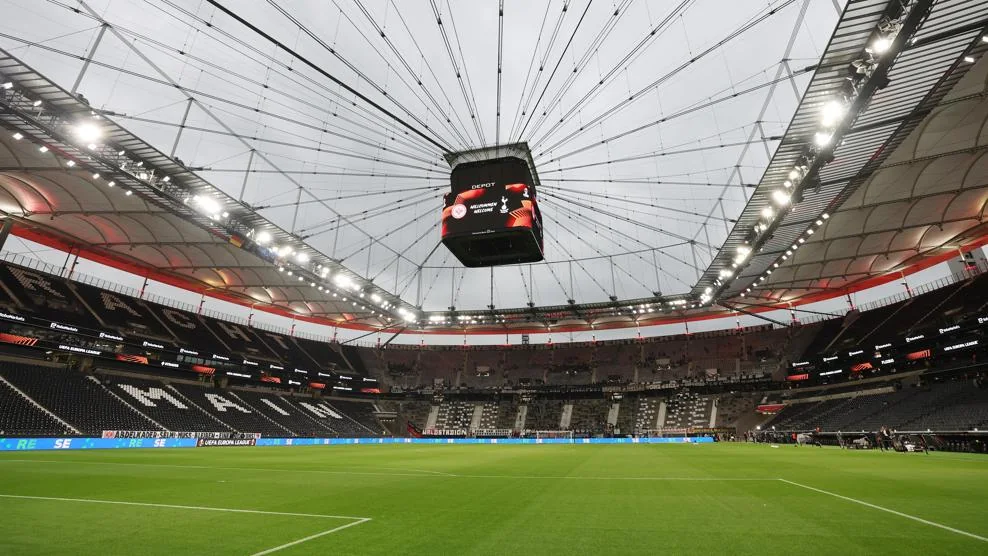
The 2027 UEFA Europa League final is confirmed for Wednesday 26 May at Stadion Frankfurt in Frankfurt, Germany. At the 15 September 2026 cutoff, the two teams, exact kickoff time, territory broadcaster assignments, standard-ticket application dates and face-value prices had not yet been announced.
This guide separates those confirmed facts from the items still pending. It follows the competition path that will produce the finalists, explains the three official ticket routes, identifies resale risks, and turns Frankfurt's airport and rail geography into a practical trip plan. Whenever a recent final is used as precedent, it is labelled as precedent rather than presented as a 2027 promise.
What is confirmed about the 2027 Europa League final?
The 2027 UEFA Europa League final will be played at Stadion Frankfurt on Wednesday 26 May 2027. UEFA has confirmed the date, city and venue on its official final page. The match will decide the 2026/27 competition, the 56th season in the continuous UEFA Cup and Europa League history.
| Final detail | Status at 15 September 2026 |
|---|---|
| Date | Confirmed: Wednesday 26 May 2027 |
| Venue | Confirmed: Stadion Frankfurt, Frankfurt, Germany |
| Finalists | Pending: decided by the semi-finals in May 2027 |
| Kickoff time | Pending: no exact local time announced |
| Standard tickets | Pending: application dates, categories and face values not announced |
| TV and streaming | Pending: territory listings to be confirmed |
This distinction is important because search results and resale pages may display plausible-looking times or ticket offers long before UEFA publishes final details. A past final's kickoff convention is not a 2027 announcement, and a seller listing is not evidence that official standard inventory has opened.
The safest planning rule is simple: book around the confirmed date and city only on terms you can change, and wait for UEFA or the finalists to confirm the fields still marked pending.
Why Stadion Frankfurt is the final venue
Stadion Frankfurt gives the final an established football setting rather than a temporary event site. It is Eintracht Frankfurt's home and has already operated through several major international tournaments. UEFA has confirmed the selection; the venue record explains its event experience, although it should not be mistaken for UEFA publishing a detailed selection scorecard.
Eintracht's home and a proven tournament stadium
Eintracht play their home matches at the ground, giving it regular experience with Bundesliga crowds and European nights. For the final, UEFA calls it Stadion Frankfurt. Supporters may also encounter the historic Waldstadion name or a commercial stadium name in maps and travel material; these references point to the same venue complex.
The international-event list is substantial. The stadium hosted matches at the 2006 FIFA World Cup and the 2011 FIFA Women's World Cup, then staged five games during UEFA EURO 2024. That history supports the description “proven tournament stadium”: the venue and city have handled neutral supporters, controlled perimeters and major-event operations before.
It does not, however, reveal how many final tickets will reach the public. A domestic match capacity or a figure from another tournament is not the same as the 2027 sellable inventory. UEFA's final configuration must also account for media, hospitality, security, finalists' allocations and operational seats.
A ground rebuilt across a century
The sporting site opened as the Waldstadion in 1925, but the modern ground should not be imagined as a century-old structure preserved unchanged. UEFA's venue history records rebuilding or renovation milestones in 1937, 1953, 1974 and 2005. Each phase adapted the site for a later generation of spectators and events.
The stadium sits within a wider city-owned sports complex south of central Frankfurt. That setting matters for trip planning because the final journey is to a large event precinct, not a compact city-centre ground. Matchday access routes and security zones will be published closer to the event and can differ from an ordinary Eintracht fixture.
When will the two finalists be known?
The finalists are scheduled to be decided on Thursday 6 May 2027, when the semi-final second legs are played. That leaves 20 days between the scheduled decision point and the final in Frankfurt. Until those ties finish, any list of “final teams” is a prediction rather than a confirmed pairing.
From the league phase to the round of 16
The 36 clubs begin with eight league-phase matches between 24 September 2026 and 28 January 2027. Positions one to eight advance directly to the round of 16. Clubs finishing ninth through 24th enter a two-legged knockout phase play-off, while positions 25 to 36 are eliminated.
Those play-off legs are scheduled for 18 and 25 February. The eight winners join the top eight league-phase clubs in the round of 16 on 11 and 18 March. A strong September result can improve a club's route, but it cannot make that club a confirmed finalist; several rounds still stand between the league phase and Frankfurt.
League phase ends
28 Jan 2027
Round of 16 ends
18 Mar 2027
Semi-finals end
6 May 2027
The quarter-finals and semi-finals decide Frankfurt
The quarter-final legs are scheduled for 8 and 15 April, followed by the semi-finals on 29 April and 6 May. Each tie is decided across two matches. Once the second semi-final legs finish, the surviving clubs have earned the two places at Stadion Frankfurt.
The timing also explains why finalist ticket information arrives late. UEFA can plan the neutral sale independently, but each finalist must identify its own eligible supporters, allocation process and deadlines after qualification. Membership status, loyalty points and ballot rules are club decisions; supporters should not assume one club's process will apply to the other.
Dates remain subject to UEFA confirmation and administration. Our 2026/27 schedule guide is the better place to recheck the full match calendar as the competition progresses.
How official 2027 final ticket sales should work
No 2027 standard-ticket application dates had been announced by 15 September 2026. Recent UEFA finals provide a useful map of the likely channels, but not a guaranteed Frankfurt timetable. Treat the organiser's public allocation, the two finalists' allocations and official hospitality as three separate products.
The UEFA general-public application
UEFA has recently opened a defined application window through its official ticket portal. Applicants select from the available categories under that edition's rules; when demand exceeds supply, allocation can involve a ballot. This means “application open” may not mean an immediate confirmed purchase.
Do not assume the 2027 sale will be first come, first served or that submitting in the first minute will improve ballot odds. UEFA will state the method, account requirements, limits, payment steps and accessibility process when the sale launches. Use the official UEFA ticket portal and read the Frankfurt rules rather than copying a previous final's instructions.
Tickets distributed through the two finalist clubs
A second allocation normally goes to each finalist for its supporters. The clubs administer those tickets under their own published criteria. Membership, season-ticket status, away attendance or loyalty points can matter, but the thresholds and deadlines are not universal.
The identity of those clubs will not be settled until the semi-finals. Only then can supporters know which ticket office, account history and eligibility rules apply. A message claiming to offer a named club's official final allocation before that club has qualified deserves immediate scrutiny.
Official hospitality is a separate product
UEFA hospitality combines a match ticket with specified premium services and is sold through the organiser's hospitality channel. Its launch timing, price and availability can differ from the standard public application. Seeing hospitality inventory therefore does not mean ordinary seats have also gone on sale.
Official-channel checklist
- General public: follow UEFA's ticket portal and the final page.
- Qualified-club supporters: follow that club's own ticket office after qualification.
- Hospitality: use UEFA's official hospitality service and compare the included package, not just the seat.
Prices, resale and the checks that protect buyers
There was no official 2027 standard-ticket price table at the cutoff. That makes a precise “Europa League Final 2027 ticket price” premature. It also makes the distinction between face value, hospitality package price and an unauthorised seller's asking price especially important.
Face-value prices have not been announced
Face value is the organiser's published price for a defined ticket category. UEFA must first release the Frankfurt categories, accessibility arrangements, purchase limits, fees and sales terms. Until that document exists, figures copied from another final are historical examples, not 2027 prices.
The same caution applies when a premium package appears early. Hospitality combines a ticket with listed services, so its package price cannot be used to estimate the cheapest standard seat. Compare like with like only after UEFA publishes both products for this specific final.
Build a flexible budget around travel and accommodation rather than an unsupported ticket estimate. If you reserve a room before prices are known, check cancellation terms and the real journey to Stadion Frankfurt. A low advertised room rate can lose its value if it is non-refundable or poorly connected on matchday.
Why an early resale listing is not official availability
A page can list a future seat before the seller has received an official allocation. That is speculative inventory, not proof of a valid ticket. UEFA warns supporters that tickets bought through unauthorised third parties may be cancelled and that the holder may be refused entry.
The risk is broader than a counterfeit PDF. Final tickets may use mobile delivery, named-holder details and controlled transfer functions. A genuine original purchase can still become unusable if it is transferred outside the rules, duplicated, cancelled or delivered to the wrong account.
Before paying, check all five
- Reach the sale from UEFA's official site or a confirmed finalist's official ticket office.
- Inspect the domain carefully; a familiar logo does not verify a website.
- Read the published mobile-ticket, name and transfer conditions.
- Keep the order confirmation private and never share a QR code or barcode publicly.
- If the seller asks you to bypass the official transfer process, stop.
This does not prove that every secondary listing is counterfeit. It means the buyer takes extra authenticity, transfer, cancellation and price risk without UEFA's authorised sales protection. For a high-demand final, that difference is material.
Planning a final trip to Frankfurt
Frankfurt's airport and rail network make the city accessible, but similar station names can send an itinerary in the wrong direction. Build the trip around four separate points: the airport regional station, the airport long-distance station, Frankfurt Hauptbahnhof and Frankfurt am Main Stadion.
Airport and main-station connections
Frankfurt Airport's regional station handles local and regional services, including S8 and S9 trains toward the city. The airport's long-distance station is a different facility used by ICE and other intercity trains. Check the station printed on the ticket before following signs, especially when a connection has a short transfer time.
Frankfurt Hauptbahnhof is the central-city main station and a useful interchange for hotels and onward travel. It is not the same place as either airport station. An itinerary reading “Frankfurt Flughafen Fernbahnhof” ends at the airport long-distance station; one reading “Frankfurt (Main) Hbf” ends at the city main station.
Reaching the stadium on matchday
The rail stop for the venue area is Frankfurt am Main Stadion. From there, supporters follow the marked walking approach to the sports complex. Local routes can also involve tram or bus services, but the correct choice will depend on the event plan, where a fan is travelling from and any temporary crowd controls.
Do not rely on an ordinary Eintracht match itinerary as a guaranteed final timetable. UEFA, the city, RMV and the stadium will publish event-specific information closer to 26 May. Security checks, bag restrictions, supporter segregation and road closures can add time after the train arrives, so the station arrival time is not the gate-entry time.
Where to base yourself
City centre
Best for broad rail, food and city access. Expect strong demand and allow for busy post-match services.
Airport area
Convenient for an early flight or short stay, but less convenient for central fan activity and sightseeing.
Stadium vicinity
Shorter final approach, with fewer of the choices and connections concentrated in the centre.
Whichever base you choose, compare the full door-to-gate route, late-night return and cancellation terms—not just map distance. Reserve changeable travel where possible until the ticket, kickoff and official supporter guidance are confirmed.
What time is the final and where can fans watch?
UEFA had confirmed the Wednesday date but not the exact Frankfurt kickoff time at the cutoff. Broadcast assignments were also incomplete. Those two unknowns are related, but they should be checked separately: first establish the official local kickoff, then find the rights holder and programme start in your territory.
The kickoff time is still awaiting confirmation
Frankfurt observes Central European Summer Time in late May, normally UTC+2. That tells us the venue's time zone; it does not tell us the hour at which UEFA will start the match. A familiar kickoff from another season remains a convention, not a 2027 announcement.
Once UEFA publishes the local time, convert from the Europe/Berlin time zone rather than manually subtracting a fixed number of hours. That approach lets a calendar or time-zone tool apply daylight-saving rules for both Frankfurt and the viewer's location. It also reduces errors for audiences whose clock changes occur on different dates.
TV and streaming rights depend on territory
Europa League rights are sold by market, so there is no single worldwide answer to “what channel is the final on?” The service carrying the match in the UK may differ from the one in the United States, and access may require a television package, streaming subscription or provider login.
Near matchday, verify the listing with UEFA's broadcast-partner page and the rights holder's schedule. US viewers can use our USA viewing guide, while viewers in Britain can use the UK viewing guide. Both should be rechecked after the final channel assignment appears.
What happens if the final is level, and what does the winner receive?
The final must produce a champion on the night. A draw after normal time extends the match, while victory brings more than the trophy: it also carries entry to the next UEFA Super Cup and, where needed, the following Champions League league phase.
Extra time and penalties
If the score is level after 90 minutes, the teams play two 15-minute periods of extra time. If the score remains level after those 30 minutes, a penalty shoot-out decides who lifts the trophy. There is no replay and no second leg.
The shoot-out result is recorded separately from the football score. A final that is 1–1 after extra time remains a 1–1 draw in the match record, followed by wording such as “won 5–4 on penalties.” Adding the five successful kicks to create a 6–5 score would misdescribe what happened.
The trophy and the next European season
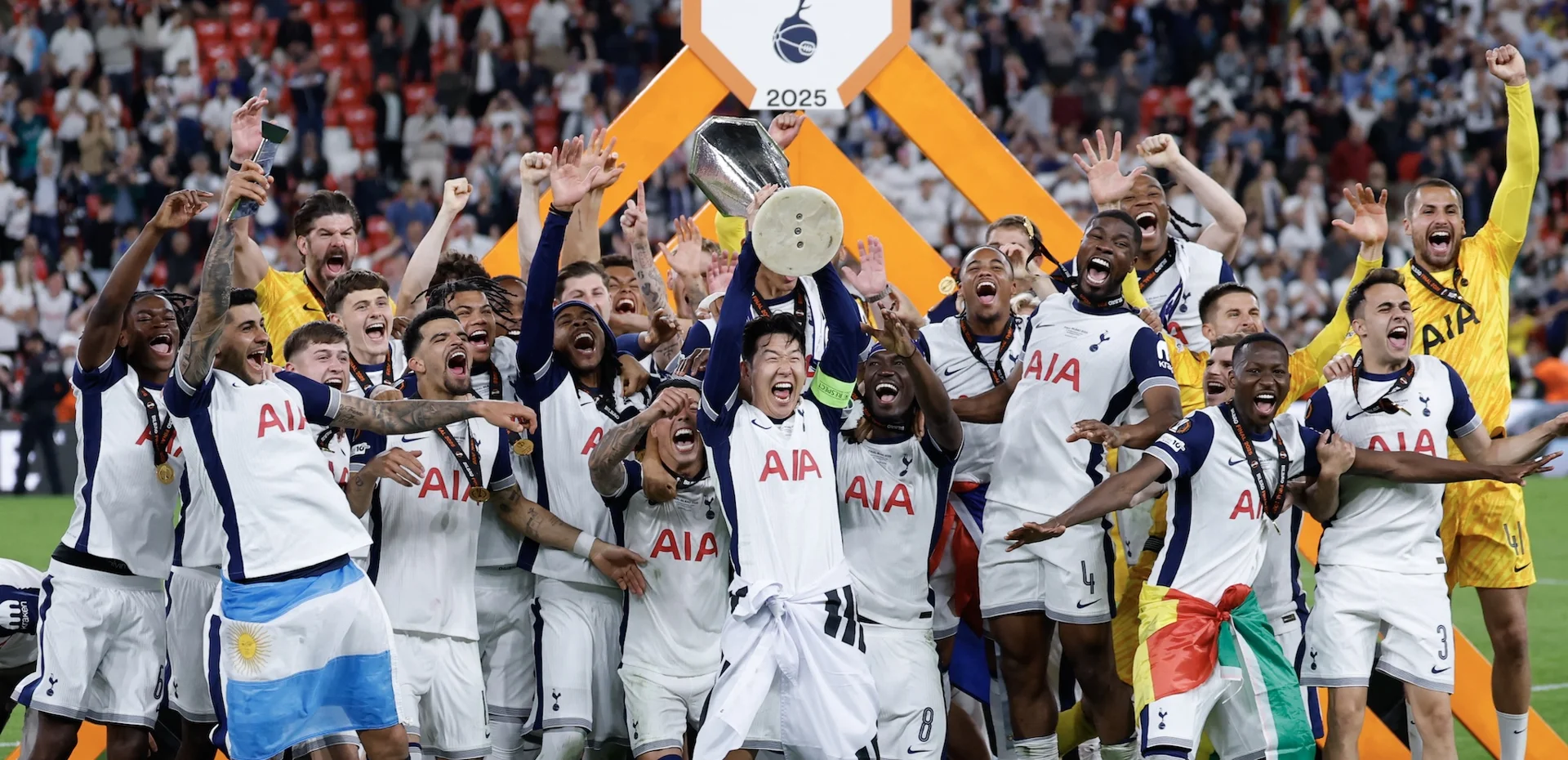
UEFA's silver Europa League trophy weighs 15 kilograms and has no handles. The original remains in UEFA's custody, while the champion receives a full-size replica under the competition regulations. Medals and the presentation belong to the final night; the sporting consequences continue into the next season.

The 2026/27 Europa League winner is entitled to a place in the 2027/28 Champions League league phase if the club has not already qualified through its domestic competition. If it has qualified domestically, UEFA's access-list rebalancing rules apply; the place does not simply pass to the Europa League runner-up.
The champion will also face the 2026/27 Champions League winner in the 2027 UEFA Super Cup. Those rewards make Frankfurt both the end of one European campaign and a gateway to the next, but they belong only to the eventual winner—not to a team merely projected to reach the final.
Frankfurt and 26 May are firm enough to begin flexible planning; the teams, kickoff, public ticket sale and viewing details are not. Recheck UEFA, the qualified clubs, RMV and the relevant broadcaster before committing to non-refundable arrangements. That sequence keeps a confirmed venue from being confused with an unconfirmed seat, time or channel.
As the semi-finals end and official notices appear, replace assumptions with the published Frankfurt instructions. The final guide will remain useful precisely because every update can be attached to a clearly marked pending field.
Matchnight discussion
Ask a question or share your thoughts with other fans. Comments are reviewed before they appear. Please keep it friendly and leave out personal details.
Read our privacy policy and comment guidelines.
Loading comments…