
Aston Villa face a suspended one-match UEFA away-ticket restriction because UEFA found the club responsible for racist and/or discriminatory supporter behaviour at the 2026 Europa League final. The sanction includes an immediate €10,000 fine, but the ticket restriction is dormant during a two-year probationary period. UEFA dismissed Villa’s appeal in August 2026, leaving that conditional measure in place without closing the club’s next away end automatically.
The Aston Villa away-ticket sanction at a glance
Aston Villa supporters are not currently serving a UEFA away-ticket ban. UEFA imposed a one-match restriction after finding the club responsible for racist and/or discriminatory supporter behaviour at the 2026 Europa League final, but suspended that restriction for a two-year probationary period. The practical position is therefore a live warning with a future consequence, not an immediate closure of Villa’s next European away end.
| Question | Confirmed position |
|---|---|
| What was the finding? | Racist and/or discriminatory supporter behaviour under Article 14(2) of UEFA’s Disciplinary Regulations. |
| What did UEFA impose? | A €10,000 fine and a ban on selling tickets to away supporters for one UEFA club competition match. |
| Is the ticket ban active? | No. It was suspended for a two-year probationary period from the 24 June 2026 decision. |
| Did the appeal remove it? | No. UEFA dismissed Aston Villa’s appeal in August 2026. |
The distinction matters because the phrase away-ticket ban can sound broader than the actual order. The official UEFA decision does not suspend the club from competition, cancel home attendance or create a general prohibition on fans travelling abroad. It targets the club’s sale of an away allocation for one future UEFA club match if the suspended measure is eventually enforced.
The €10,000 fine was immediate; the ticket restriction was conditional. Villa then challenged the outcome, but The Athletic reported that the appeal was dismissed on 12 August. That left both the finding and the probation in place. A similar further offence during the probation period could bring the dormant one-match restriction into effect, although UEFA’s disciplinary body would still have to deal with the new case. For supporters, the immediate instruction is simple: do not assume an away section is closed unless Villa and UEFA say so for a specific fixture.
That final point is more than legal phrasing. An active restriction would prevent the club from selling its normal visiting allocation, changing how season-ticket holders and other eligible supporters could attend. A suspended restriction preserves the ordinary match-by-match sales process while placing the club under a defined disciplinary risk. Availability can still be limited by the host stadium, security decisions or demand, but those ordinary constraints should not be confused with enforcement of this UEFA order. The status of each trip therefore has to come from the official fixture notice and ticket announcement, not from the existence of the June ruling alone.
What happened at the 2026 Europa League final
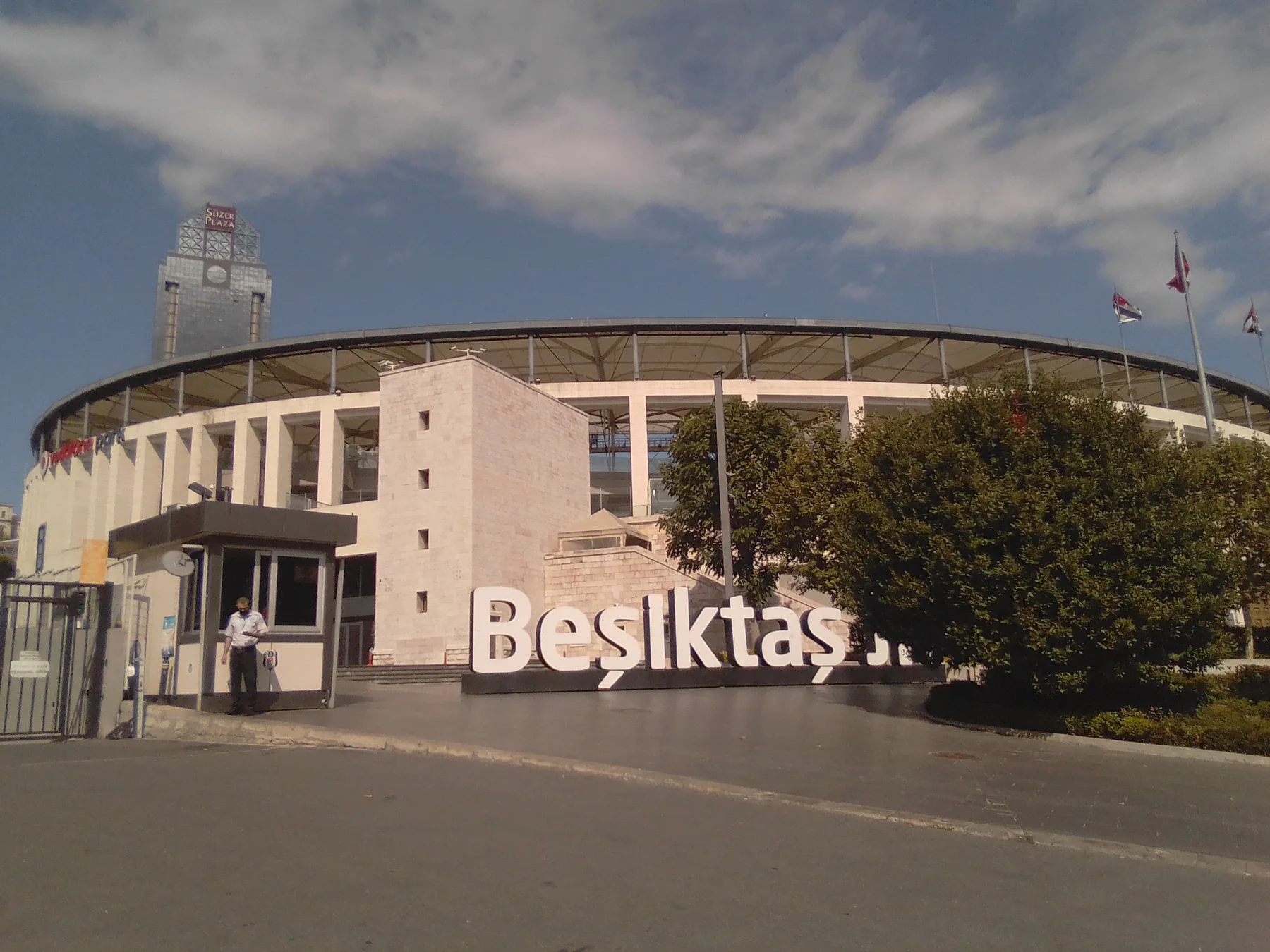
Villa won the trophy in Istanbul
The disciplinary story began on one of the most successful nights in Aston Villa’s modern history. Villa beat Freiburg 3–0 at Beşiktaş Park on 20 May 2026, winning the UEFA Cup or Europa League for the first time. UEFA’s official final report records Youri Tielemans, Emiliano Buendía and Morgan Rogers as the scorers. It was also Villa’s first European trophy for 44 years.
The timing helps explain why the later sanction could easily be missed or misunderstood. Tielemans broke the deadlock shortly before half-time, Buendía doubled the lead in added time, and Rogers finished the scoring after the interval. The team lifted the trophy that night; UEFA’s disciplinary decision appeared on 24 June, more than a month later. One event was the sporting result, the other was a governing-body response to conduct in the stadium. The finding did not change the score, remove the trophy or question Villa’s performance.
There was also a large, club-organised display before kickoff. Aston Villa’s own account says an authorised lion tifo carrying “UP THE VILLA” was held up while flags were distributed around the Villa end, with the design drawing on the 1982 European champions. That information is relevant because it prevents a damaging visual shortcut: the approved display described by the club must not be treated as the object of UEFA’s later disciplinary case.
UEFA’s case concerned a discriminatory banner
The public CEDB summary lists Villa’s incident as “racist and/or discriminatory behaviour” under Article 14(2). Contemporary reporting described the case as involving a discriminatory banner. UEFA’s public summary does not reproduce the message, name the individual responsible or set out the full evidence, so there is no value in guessing at wording that the official record leaves out.
That evidential boundary is important. A stadium can contain official choreography, approved supporter flags, personal banners and spectators seated through several different ticketing routes at the same time. The existence of one sanctioned item does not make every flag in a photograph suspect. Equally, a celebratory match image cannot establish where the relevant item appeared or who controlled it. For that reason, the cover of this article shows Morgan Rogers celebrating Villa’s third goal; it documents the final setting and nothing more.
The cleanest reading is therefore two-track. On the pitch, Villa were decisive winners and created a landmark night for their supporters. Off the pitch, UEFA later found that supporter behaviour at the same event crossed its discrimination rule and imposed a club sanction. Holding those facts together is more accurate than allowing either the victory to erase the disciplinary finding or the disciplinary finding to recast every aspect of the occasion.
Why UEFA can hold a club responsible for supporter conduct
Article 14 sets a minimum sanction for discrimination
Villa’s case sits under Article 14 of the 2026 UEFA Disciplinary Regulations, not under a rule about team selection, match integrity or player behaviour. Article 14 addresses conduct that insults the human dignity of a person or group on discriminatory grounds. When the conduct is attributed to one or more supporters, paragraph two says the responsible club or national association incurs at least a fine and either a partial stadium closure or a restriction on selling away tickets.
That minimum package explains the shape of Villa’s punishment. The €10,000 fine was paired with an attendance-related measure because the regulation does not present a fine alone as the minimum response to supporter discrimination. UEFA selected a one-match away-sales restriction rather than a partial closure of Villa Park, then suspended the ticket element. Article 6 separately lists away-ticket restrictions among the disciplinary measures available for clubs and allows different measures to be combined.
This does not mean every Article 14 case must produce the same number of matches, the same fine or the same operational consequence. Article 23 instructs the disciplinary body to consider the objective and subjective features of the offence as well as aggravating and mitigating circumstances. The public Villa entry states the result but is not a full reasoned judgment, so it would be speculation to describe precisely why the panel chose €10,000, one match and a suspended period rather than another combination.
Responsibility is not the same as a negligence finding
The difficult point for many supporters is how a club can be punished for an item apparently displayed by an individual. Article 8 supplies the regulatory link. It says a club bound by a UEFA conduct rule may face disciplinary measures when that rule is violated through the conduct of its supporters, even if the club can show that it was not at fault or negligent, unless another provision says otherwise.
Two different questions: UEFA can decide that supporter conduct makes a club disciplinarily responsible without finding that club employees created, approved or deliberately allowed the material. The public decision confirms the first proposition; it does not establish the second.
That distinction matters when assessing Villa’s later appeal. A claim that a ticket came from a neutral allocation, or that a flag was not on the club’s approved list, addresses control and prevention. It does not necessarily defeat the separate framework under which supporter conduct is attributed to a club for UEFA disciplinary purposes. Without the full appeal decision, it is not possible to say exactly how the Appeals Body balanced those points.
Nor does responsibility make preventive work irrelevant. Article 23 specifically permits effective preventive measures to count as mitigation in Article 14(2) cases. Clear flag-approval procedures, steward communication, reporting routes and a prompt response can therefore affect a sanction even where they do not erase the underlying regulatory responsibility. That is why the fairest summary is not “Villa staff were proven negligent”. It is that UEFA applied a supporter-conduct rule to the club, while leaving the detailed assessment of fault and mitigation outside the short public notice.
How the two-year suspended ban works
The one-match restriction is dormant
A suspended measure exists in law but is not being served. UEFA made the one-match restriction part of the June decision and then deferred its enforcement for a two-year probationary period. That is different from withdrawing it: Villa did not win an acquittal, and the August appeal dismissal did not erase the measure. It is equally different from an active ban: the ruling alone does not shut the visiting section for the next fixture.
The fine and the ticket restriction also have different statuses. UEFA’s notice gives no indication that the €10,000 fine was suspended; only the restriction on selling tickets to away supporters received probation. That is why “Villa were fined and given a suspended away-ticket ban” is accurate, while “Villa fans were banned for two years” is not. Two years describes the risk window, not the length of an exclusion.
Article 26 of the UEFA Disciplinary Regulations normally allows probation between one and five years. Villa’s period runs for two years from the 24 June 2026 decision. The public summary does not state an hour-by-hour expiry calculation, so supporters should treat UEFA’s and the club’s later disciplinary notices as authoritative rather than trying to infer a precise timestamp.
A similar new offence can activate it
The trigger is narrower than “any trouble”. Article 26 refers to a further offence of a similar nature committed during probation. In Villa’s case, the original finding was racist and/or discriminatory supporter behaviour. An unrelated pyrotechnic fine, a delayed kickoff or a domestic ticketing dispute should not be casually described as the same trigger. Nor should a Premier League incident be assumed to activate a UEFA club-competition order without a UEFA disciplinary process.
Even when a later allegation appears similar, enforcement is not a switch operated by headlines. The rule says the competent disciplinary body, as a rule, orders the original measure to be enforced after a qualifying further offence. That wording preserves a decision-making step. A new case would need to be assessed, the nature and timing of the conduct established, and a disciplinary outcome issued. “Could activate” is therefore more precise than promising an automatic closure before those steps occur.
Activation can come with a new punishment
Probation does not replace the sanction for a future offence. Article 26 says enforcement of the original suspended measure comes in addition to a new disciplinary measure for the new breach. If UEFA found a similar offence during Villa’s probation and followed the ordinary rule, the club could have to serve the one-match away-sales restriction from the final case and also receive whatever proportionate penalty the later case justified.
- 1. Original case: Article 14(2) finding at the 2026 final, with a fine and one-match ticket restriction.
- 2. Probation: the ticket restriction stays dormant for two years unless a similar further offence is established.
- 3. Possible later case: the disciplinary body can enforce the dormant match and impose a separate new measure.
This is a description of the mechanism, not a prediction that it will be used. No later qualifying offence is identified in the sources checked to 15 September 2026. The most useful way to read the decision is as an incentive for prevention: the immediate away end remains available through normal processes, but another similar UEFA case during the window could carry consequences from both the past and the new incident.
What Aston Villa argued on appeal
Villa disputed control of the neutral-zone ticket
Villa’s reported appeal did not deny that the banner was present. It challenged the connection between the club’s controlled away allocation and the person displaying it. The Athletic reported that, although the person appeared to support Villa, they were seated in a neutral area of Beşiktaş Park rather than the section for tickets distributed by the club.
According to sources cited in that report, UEFA had sold the ticket for the neutral area. Villa’s position was therefore that the banner could not have appeared on the flag list submitted through its own approval process and had not entered with someone using a club-supplied ticket. The appeal also said Villa were not told when the material was noticed during the match, leaving the club without an opportunity to help arrange its prompt removal.
Those points matter operationally. A club can vet flags submitted by its supporters, set conditions for its own ticket allocation and communicate with people in an identifiable section. It has less direct visibility over a neutral ticket sold by the event organiser. But this account must be labelled correctly: it is Villa’s case as reported by The Athletic, not a set of findings published by UEFA. The available public CEDB summary neither confirms nor rebuts each element.
The dismissal left the sanction intact
UEFA dismissed the appeal, so Villa did not overturn the Article 14(2) finding, the €10,000 fine or the probation attached to the one-match sales restriction. Crucially, dismissal did not convert the conditional measure into an immediate ban. Its status remained suspended, with enforcement dependent on the probation mechanism explained above.
What cannot responsibly be supplied is a detailed legal reason for the loss. The short original UEFA decision summary predates the appeal, and no full reasoned Appeals Body judgment for the case was located in the public material reviewed. It would therefore be wrong to say that UEFA rejected one particular factual claim, decided a neutral zone was part of Villa’s allocation or relied on Article 8 in a specific way unless a later published judgment says so.
The defensible conclusion is narrower. Villa presented an allocation-and-control argument; UEFA’s Appeals Body was not persuaded to remove the sanction; and the original conditional outcome survived. That unresolved tension is exactly why “supporter responsibility” and “club operational control” should not be treated as identical questions. The appeal result answers which sanction remained, but the public record does not give readers enough information to reconstruct every step in the panel’s reasoning.
Which matches and supporters could be affected
The restriction follows UEFA club competition
The CEDB order is not labelled as a Europa League-only penalty. It refers to Villa’s next one UEFA club competition match in the context of selling tickets to away supporters. If UEFA later enforces the measure, it can therefore follow the club across competition names rather than waiting for Villa to return to the Europa League.
That point became relevant when Villa qualified for the 2026–27 Champions League by winning the Europa League. UEFA’s current team profile confirms both the qualification route and Villa’s participation. Moving into the Champions League did not cancel the probation. But it also did not activate the restriction: competition scope answers where an enforced measure could apply, while Article 26 answers whether it has been activated.
Home games and domestic away trips are outside this measure
An away-ticket sales restriction is not the same measure as ordering a home match behind closed doors. It does not close Villa Park, remove home season tickets or exclude every spectator from a match. UEFA’s regulations list away-sales restrictions and home stadium closures separately, and the Villa decision chose the former.
It is also not a Premier League away ban. The decision belongs to UEFA’s club-competition system and concerns tickets that Aston Villa would sell to its travelling supporters for a UEFA match. It does not directly govern allocations at domestic league or cup fixtures. Nor is it framed as an individual immigration or travel order. If enforced, the operational effect would be that the club could not sell its normal visiting allocation for the relevant European match.
That wording should not be read as an invitation to bypass an enforced sanction. A supporter buying in a neutral or home area may breach the organiser’s sales terms, create segregation problems and face cancellation or refusal at the stadium. The distinction is useful for understanding what UEFA ordered, not for finding a loophole around it.
The next European away trip is not automatically closed
While probation remains untriggered, Villa’s away sales continue through the ordinary match-by-match process. A small allocation, eligibility cutoff, security reduction or sold-out notice could still limit access, but those outcomes are not proof that the suspended disciplinary measure has been enforced. The club’s specific ticket notice should identify the allocation and sales criteria, while UEFA’s disciplinary channels should identify any sanction affecting attendance.
Supporters planning a trip should therefore separate two checks. First, confirm that an official away allocation is being offered and whether they qualify under Villa’s sales ladder. The site’s guide to official away allocations explains that general process. Second, look for a match-specific club or UEFA statement about restrictions. A headline from June cannot substitute for either check, because a suspended measure is a continuing risk rather than a pre-announced closure of every European away end.
What Villa and travelling supporters should do now
Follow official ticket and flag instructions
Probation does not require supporters to stop travelling; it makes accurate match information more important. Buy through the channel named by Aston Villa, use the seat and entrance assigned to the ticket, and check whether the host requires matching identification. If sales terms bar away supporters from home or neutral sections, a ticket on a resale platform is not a safe substitute for the official allocation.
Flags and banners need the same match-specific discipline. Size, material, wording and advance-approval rules can change between stadiums. Something accepted at Villa Park or on a previous trip is not automatically approved at the next UEFA venue. Supporter groups should submit requested details early, carry the written approval where advised and accept a steward’s direction if an item is refused. These controls protect other people’s dignity and stadium safety as well as reducing the club’s disciplinary exposure.
For Villa, the practical lesson extends beyond the seats it sells directly. The club cannot turn every neutral ticket into its own allocation, but it can seek clear pre-match communication among UEFA, venue security and supporter liaison staff about flag checks, escalation and contact points. UEFA’s rules allow effective preventive measures to count as mitigation in Article 14(2) cases, so preparation remains meaningful even within a system that can hold a club responsible without proven negligence.
Report discriminatory conduct early
A supporter who sees discriminatory language or material should alert a steward or police officer and use the reporting channel named for that stadium. If it is safe, note the block, row, approximate seat and time; those details are more useful than a general complaint after the trip. Do not create a confrontation or circulate the discriminatory message more widely in an attempt to document it.
Aston Villa’s own guidance asks witnesses to report abuse to police or a steward and provides a discreet text route at Villa Park. The home number should not be assumed to work in Istanbul, Bruges or any other away venue; travelling fans need the host’s match guide or the club’s away briefing. The club’s ALL IN charter sets the wider standard: supporters should be able to take part without intimidation, harassment or abuse.
- Before travel: confirm the official allocation, entry conditions and prohibited-items policy.
- At the ground: use the designated entrance and report a problem through the venue’s channel as soon as it is noticed.
- After any restriction: follow club refund or rebooking instructions; do not try to evade segregation through another section.
The suspended sanction applies to the club because of a specific UEFA finding; it is not a judgment on every Villa supporter. The constructive response is equally specific: keep official sales and approval routes clear, intervene through trained staff when discriminatory conduct appears, and wait for a named match notice before treating any future away allocation as closed.
Villa’s 3–0 final victory remains a landmark sporting achievement, while the later Article 14(2) finding creates a separate and continuing disciplinary risk. The essential distinction is simple: probation is active, the one-match ticket restriction is not. Until UEFA enforces it in a future case or confirms that the period has ended, supporters should rely on official notices for each fixture and treat clear reporting, flag approval and respectful conduct as part of travelling well.

Matchnight discussion
Ask a question or share your thoughts with other fans. Comments are reviewed before they appear. Please keep it friendly and leave out personal details.
Read our privacy policy and comment guidelines.
Loading comments…