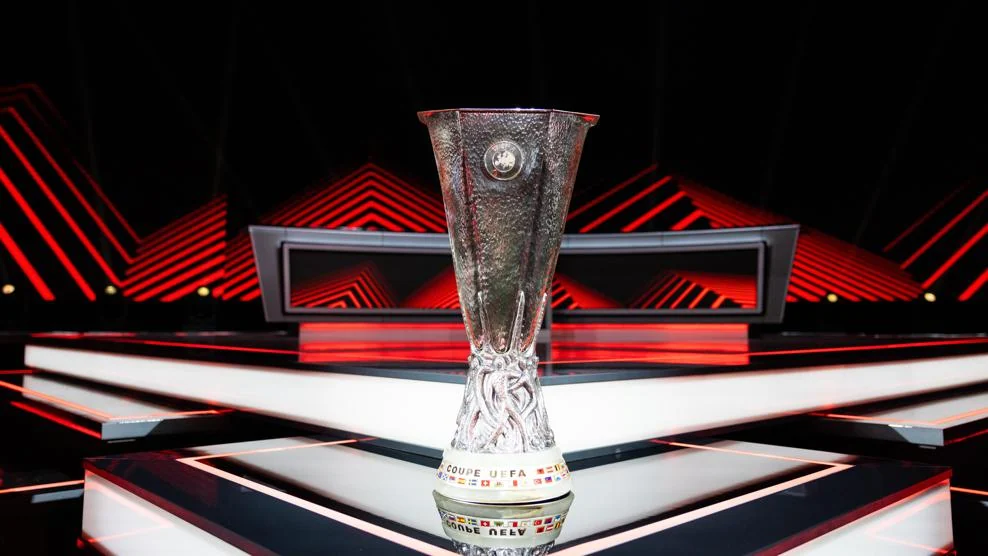
The Europa League league phase is a qualified improvement over the old group stage. Eight different opponents, a valuable top-eight bye and a genuinely volatile simultaneous final night give the competition more range. But the old four-team groups were easier to follow, internally symmetrical and completed with two fewer guaranteed matches.
This comparison tests the current format against the final 32-team group design used in 2023/24. It separates observable changes from UEFA's promotional claims and from qualitative fan reaction, then scores variety, jeopardy, fairness, clarity and workload.
The answer depends on what you want from the competition
The league phase is better at creating a broad European event. Eight different opponents replace three repeated opponents, the whole field shares one table, and the final night can change positions from the automatic last-16 places down to elimination. The old group stage was better at creating eight small competitions that anybody could understand without a live calculator. Every team in a group faced exactly the same rivals, once at home and once away.
That makes a simple yes or no misleading. A format can be more entertaining without being more symmetrical. It can keep more clubs mathematically interested while making an individual defeat feel less fatal. It can reduce the influence of one terrible group draw while asking clubs with different schedules to compete for the same table positions. Each of those statements can be true at once.
This comparison uses six tests: opponent variety, sporting jeopardy, competitive balance, schedule fairness, ease of following the competition and calendar load. It compares the 36-team system introduced in 2024/25 with the final 32-team group format used in 2023/24. Earlier Europa League eras had other field sizes and qualification routes, so folding all of them into “the old format” would distort the answer.
On those tests, the league phase wins narrowly. Variety is substantially better, the top-eight bye gives clubs a reason to climb rather than merely survive, and two completed editions have produced genuinely busy simultaneous finales. Groups win on reciprocal rivalry, common opponents and mental clarity. They also required two fewer guaranteed matches.
The fairest conclusion is therefore conditional: keep the league phase if the priority is a larger, less repetitive competition with table-wide consequences. Prefer the group stage if the priority is a compact, self-contained contest in which qualification can be explained through three direct rivals. The rest of the comparison shows why neither side of that judgement should be treated as nostalgia or marketing.
What actually changed from groups to one league
The change was not merely replacing eight mini-tables with one large table. UEFA expanded the field, added two guaranteed fixtures, altered pot exposure, removed mid-season movement between competitions and tied league position to the knockout bracket.
| Feature | 2023/24 groups | League phase |
|---|---|---|
| Clubs | 32 in eight groups | 36 in one table |
| Matches per club | Six | Eight |
| Opponents | Three, home and away | Eight, once each |
| Direct last-16 places | Eight group winners | Table positions 1–8 |
| Play-off route | Eight runners-up vs Champions League transfers | Positions 9–24 play one another |
The old six-match group stage
In 2023/24, UEFA placed 32 clubs into eight groups of four. A club met its other three group members twice, once in each stadium, over six matchdays. That produced 96 matches. The format was closed and reciprocal: if Brighton had to visit Marseille, Marseille also had to visit Brighton, and both were measured against Ajax and AEK Athens as well.
Finishing position led to four distinct outcomes. The group winner skipped directly to the round of 16. The runner-up faced a Champions League third-place side in a two-legged Europa League play-off. Third place transferred to the Conference League play-offs; fourth ended the European campaign. The stage ran from late September to mid-December, so its basic hierarchy was settled before the winter break.
The new eight-match league phase
Since 2024/25, 36 clubs have occupied a single ranking. Every club receives two opponents from each of four coefficient pots and plays one of those two at home and the other away. That gives eight different opponents, four home fixtures and four away fixtures. The entire phase contains 144 matches.
The draw is partly manual and partly digital. UEFA draws club names physically, while audited software allocates valid opponents and venues under country and scheduling constraints. Clubs cannot normally meet a domestic rival and can face no more than two teams from any other association. The complexity is part of the trade-off: balanced pot exposure is possible, but the draw is no longer something a viewer could reproduce with a handful of bowls.
The top eight go straight to the round of 16. Places nine through 24 enter the knockout phase play-offs, while positions 25 through 36 are eliminated. Nobody drops into the Conference League. The eight league dates also stretch into January, meaning the new stage is larger, longer and more connected to the knockout route than the groups it replaced.
Why variety is the league phase’s strongest case
The most convincing improvement is visible before looking at a table. An old group gave every club three opponents and then repeated all three fixtures. The league phase gives every club eight opponents and no immediate return match. UEFA describes the contrast as 48 distinct pairings in the old groups against 144 unique fixtures in the new phase. The old groups still contained 96 actual matches because each of those 48 pairings was played twice; the comparison is about variety, not pretending 48 games became 144.
For supporters, eight opponents create more discovery. A club may confront a high-possession side, a direct pressing team and an unfamiliar away environment within the same campaign. For smaller teams, there are more independent chances to create a memorable result. Viktoria Plzeň, for example, beat Real Sociedad and drew away to Eintracht Frankfurt in 2024/25 before advancing and testing league-phase winner Lazio in the round of 16.
A single upset also retains its value. Under the reciprocal model, a favourite beaten away could restore the expected order in the return fixture and sometimes overturn the head-to-head comparison. The league phase asks the underdog to carry those three points into a completely different problem. That does not guarantee progress, but it lets a surprise alter the shared table without being immediately replayed.

What the first season’s balance numbers show
UEFA’s own first-season review offers evidence consistent with greater competitive balance. The lowest-seeded Pot 4 teams averaged 1.33 points per match in 2024/25, up from 1.06 across the 2021–24 cycle. Pot 1 clubs fell from 2.08 to 1.89. On UEFA’s calculation, the points-per-match gap between the highest and lowest pots narrowed from 1.02 to 0.56.
Those figures strengthen the case; they do not finish it. UEFA is promoting a competition it organises, the sample covers one new-format season, and the identity of the 36 clubs changes. The format may contribute by making every pot face its own level as well as stronger and weaker opposition, but squad quality, form and the particular entrants also affect the result.
The defensible claim is narrower: the league phase unquestionably expands opponent variety, and its first edition did not simply turn the lowest pot into target practice. Whether that benefit outweighs the loss of reciprocal rivalry depends on what happens to fairness and jeopardy elsewhere.
Does letting 24 of 36 teams advance weaken jeopardy?
Yes, in one specific sense. Two-thirds of the field remain in the Europa League after the first cut: 24 of 36. In the old groups, only the top two in each four-team section—16 of 32, or half—stayed in the competition. A heavyweight can now absorb a poor early result with greater confidence that the wide play-off band remains reachable.
That criticism is real, but saying “24 teams qualify” without explaining what they qualify for exaggerates the safety net. There is a major difference between earning a February elimination tie and securing a place in the last 16.
Survival is not the same as reaching the last 16
Only positions one through eight go directly to the round of 16. Clubs ranked ninth to 24th enter a two-legged play-off, where they face one another; half are eliminated. The resulting last 16 therefore contains the eight automatic qualifiers and eight play-off winners. The old format also sent eight group winners directly through, then added eight winners from play-offs between group runners-up and Champions League third-place teams.
The reward ladder gives a contender three meaningful targets: finish in the top eight to save two games, finish ninth to 16th to be seeded in the play-off, and at minimum remain in the top 24. League position also helps determine the later bracket. A club that has secured 20th is not in the same position as one chasing seventh, even though both are casually described as “through”.
There is another old-format wrinkle. Group third-place teams dropped into the Conference League play-offs, meaning 24 of 32 clubs continued somewhere in UEFA competition. Under the league phase, positions 25 to 36 are eliminated from Europe. The new system is more forgiving within the Europa League but cleaner and harsher at its bottom edge because there is no parachute.
The simultaneous final night is a real upgrade
The single table pays off most clearly on Matchday 8. All 18 games start together, and a goal can move one club above the direct-qualification line while changing another club’s play-off seeding hundreds of kilometres away. In 2024/25, only four points separated eighth-place Rangers on 14 from Fenerbahçe in 24th on ten. That compression created genuine movement across both thresholds.
The second edition repeated the effect rather than exposing a one-off. Before the 2025/26 finale, 11 clubs were still competing for the final five knockout places and six of the eight direct last-16 slots were unclaimed. The 18 simultaneous matches then produced 51 goals.
Old groups could deliver sharper, more personal finales: two direct rivals might settle first and second in the same stadium while the other group game ran alongside them. The league phase trades that intimacy for scale. Early defeats may sting less, but the final evening makes more positions matter across more matches. On jeopardy, the verdict is a draw: groups concentrated the pressure; the league spreads it.
Which format is fairer?
Fairness has two meanings here. One is whether direct competitors face the same test. The other is whether the draw exposes every club to a reasonable range of strength. The old groups perform better on the first; the league phase was designed to improve the second.
Groups offered internal symmetry
Within a four-team group, comparison was exceptionally clean. Every club played the same three opponents, at the same two venues in reverse. If West Ham and Freiburg were fighting for first, each had home and away matches against Olympiacos and TSC as well as two meetings with the other. Results, goal difference and head-to-head consequences emerged from a common schedule.
That symmetry also created accountability. A coach could not blame a rival’s easier list because there was no different list. Supporters knew exactly which parallel game affected their position. The return fixture offered a tactical answer: an underdog had to show whether its first result could survive the favourite’s adjustments and home advantage.
Groups were not equally strong, however. A club could receive one elite opponent and two manageable ones while an equivalent seed elsewhere landed in a tightly matched section. Because there were only three opponents, one harsh or favourable draw dominated the entire six-game stage. Internal fairness did not produce fairness between groups.
The league phase spreads draw luck instead of removing it
The current draw gives every club two opponents from each of four coefficient pots, with one at home and one away from each pot. A top seed now meets other top seeds; a fourth-pot club also meets two fourth-pot sides. Eight opponents make any one draw less dominant, and balanced pot exposure is a serious improvement over relying on three names.
Yet the 36-team table creates a new problem. Clubs competing for eighth or 24th do not necessarily share opponents. One may host a powerful team while another visits it; one may catch a rival during an injury crisis while another meets an improving side months later. Their points appear in the same column even though the exams were different.
Coefficient pots cannot fully solve that. Coefficients reward recent European history, not present squad strength. A newly qualified club from a wealthy league may carry little personal coefficient history while being much stronger than its numerical place. Country protections, venue constraints and the requirement to complete a valid draw further narrow the possible combinations.
The league phase therefore distributes luck more widely; it does not abolish it. Its larger and pot-balanced sample is less vulnerable to one nightmare group, but its shared standings are less directly comparable. If fairness means broad exposure, the league wins. If fairness means identical schedules among direct rivals, groups win decisively.
What fans gained—and what they lost
The format debate is not only about probability. It is about what Thursday night feels like. The league phase creates a larger event with more possible opponents; the group stage created a six-part story with recurring characters. Neither emotional experience is captured by the number of teams advancing.
A bigger spectacle is harder to read
The new system offers a better fixture menu. A supporter sees eight clubs rather than three and may visit four different football cultures. Neutral viewers receive uncommon pairings instead of a return match they watched weeks earlier. February also belongs to teams that actually competed in the Europa League phase, because Champions League third-place clubs no longer drop into the play-offs.
The price is cognitive load. A four-team table could be read at a glance. If your team needed to beat the group leader while the parallel game ended level, the scenario was concrete. A 36-team table has two major cut lines, seeding bands, goal-difference movement and results from matches involving clubs your team never faces. On the final night, that complexity becomes exciting television; during an ordinary matchday, it can feel like noise.
The home-and-away relationship has disappeared too. Groups allowed coaches to revise a failed plan against the same rival and gave travelling supporters a reciprocal occasion. The league phase replaces that short rivalry with breadth. A one-off Milan visit may be more glamorous, but it does not create the same tactical conversation as two meetings.
That split appears in supporter discussion. Some fans praise variety and the chance for lower-seeded teams to play one another; others complain that the table is a blur, losses feel less consequential and clubs chase the same places on different schedules. Those comments demonstrate the competing priorities, not a vote by all Europa League fans. No representative preference survey sits behind this verdict.
Two extra matchdays carry a calendar cost
The cost is precise. The last old group stage guaranteed six matches and ended on 14 December 2023. The inaugural league phase guaranteed eight and ran to 30 January 2025. That is a 33% increase at this stage and two extra UEFA dates during a period already crowded by domestic leagues, cups and international commitments.
The comparison stays two matches higher along equivalent qualification routes. A current top-eight club reaches the round of 16 after eight league games; an old group winner did so after six. A current play-off winner from positions nine to 24 reaches it after ten games; an old runner-up arrived after eight. Better squad depth can turn those dates into opportunity, while a smaller squad may experience them as injury and travel risk.
It would still be wrong to blame the format for every workload problem. Domestic cup design, winter breaks, international duty, travel distance and recovery practice all matter. The defensible charge is that the league phase adds two guaranteed matches and extends this UEFA stage into January. More inventory may help revenue and exposure, but neither proves that the football is better for players or supporters.
Final scorecard: league phase or group stage?
A scorecard makes the split verdict clearer. These are editorial judgements based on the format rules and the first two completed league phases, not UEFA grades.
| Test | Winner | Reason |
|---|---|---|
| Opponent variety | League phase | Eight opponents instead of three |
| Final-night spectacle | League phase | Eighteen simultaneous games and several cut lines |
| Internal symmetry | Group stage | Direct rivals shared every opponent |
| Ease of following | Group stage | Four-team permutations were local and visible |
| Reward for high finish | League phase | Bye, seeding and bracket value |
| Reciprocal rivalry | Group stage | Every opponent played home and away |
| Calendar economy | Group stage | Two fewer guaranteed fixtures |
| Broad competitive balance | League phase, provisionally | First-season pot gap narrowed, but evidence is young |
Who should prefer each format
Choose the league phase if you want a club to encounter more of Europe, value a meaningful top-eight chase and enjoy a final evening in which the whole competition moves together. Choose the group stage if you want the cleanest direct comparison, a home-and-away tactical story and six fixtures that end before winter.
An even four-four score does not make the systems interchangeable. Variety and final-night consequences change what the competition can offer neutral viewers, while the group stage’s strongest advantages are clarity and symmetry. On balance, the league phase is worth retaining—but only as a qualified improvement.
The most useful repair is presentation. Standings should show an opponent-strength context beside every club and a live panel should translate each goal into four outcomes: direct last 16, seeded play-off, unseeded play-off or elimination. That would not make unequal schedules identical, but it would reduce the table blur without sacrificing the variety that gives the format its clearest edge.
Keep the variety, explain the consequences
The league phase should stay, but its presentation needs to catch up with its complexity. Show schedule-strength context beside the table and translate each live goal into bye, seeding, play-off or elimination consequences. That would preserve the broader opponent list and final-night movement while restoring some of the clarity that made a four-team group so easy to inhabit.
Matchnight discussion
Ask a question or share your thoughts with other fans. Comments are reviewed before they appear. Please keep it friendly and leave out personal details.
Read our privacy policy and comment guidelines.
Loading comments…